Laboratory of Cell Therapy for Diabetes, Institute of Regenerative Medicine and Biotherapy, Univ. Montpellier, CHU Montpellier, Montpellier, France.
Department of Endocrinology, Diabetes, and Nutrition, Univ. Montpellier, CHU Montpellier, Montpellier, France.
Stem Cell Res Ther. 2020 Apr 17;11(1):158. doi: 10.1186/s13287-020-01649-z.
Mesenchymal stromal cells (MSCs) represent an interesting tool to improve pancreatic islet transplantation. They have immunomodulatory properties and secrete supportive proteins. However, the functional properties of MSCs vary according to many factors such as donor characteristics, tissue origin, or isolation methods. To counteract this heterogeneity, we aimed to immortalize and characterize adherent cells derived from human pancreatic islets (hISCs), using phenotypic, transcriptomic, and functional analysis.
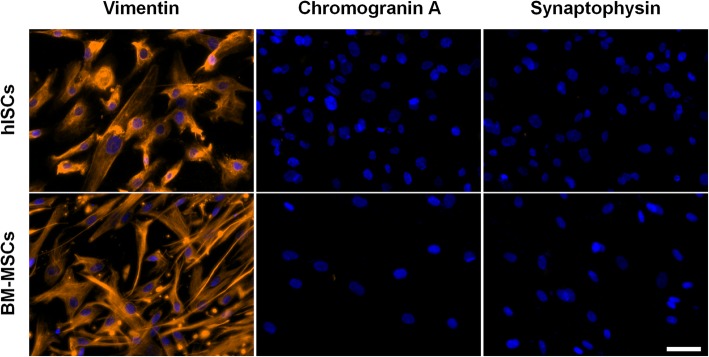
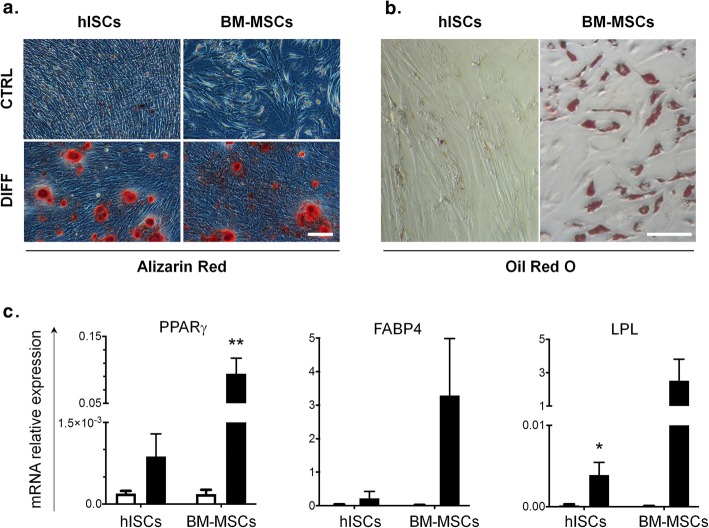
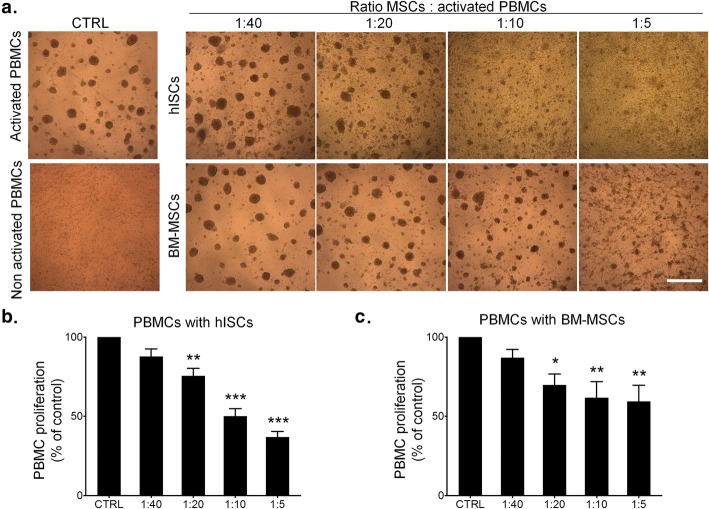
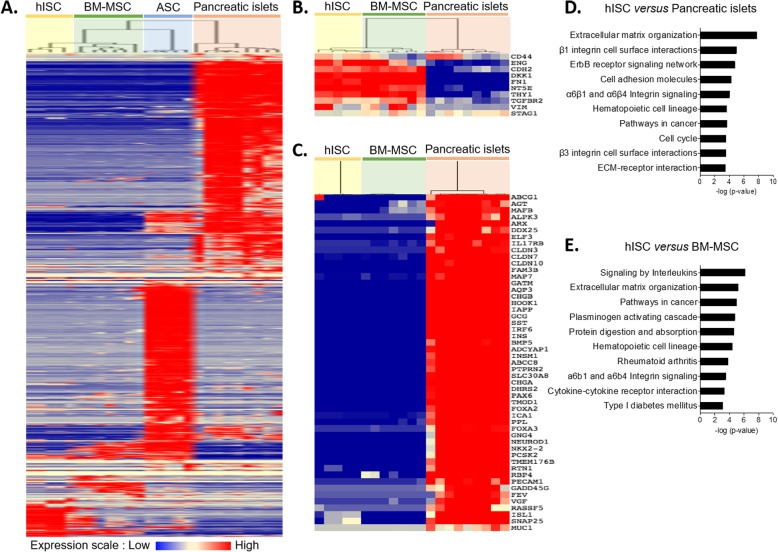
Adherent cells derived from human islets in culture were infected with a hTERT retrovirus vector and then characterized by microarray hybridization, flow cytometry analysis, and immunofluorescence assays. Osteogenic, adipogenic, and chondrogenic differentiation as well as PBMC proliferation suppression assays were used to compare the functional abilities of hISCs and MSCs. Extracellular matrix (ECM) gene expression profile analysis was performed using the SAM (Significance Analysis of Microarrays) software, and protein expression was confirmed by western blotting.
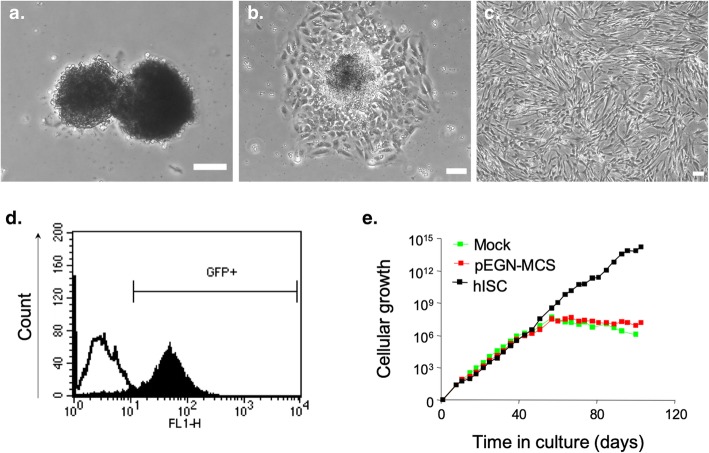
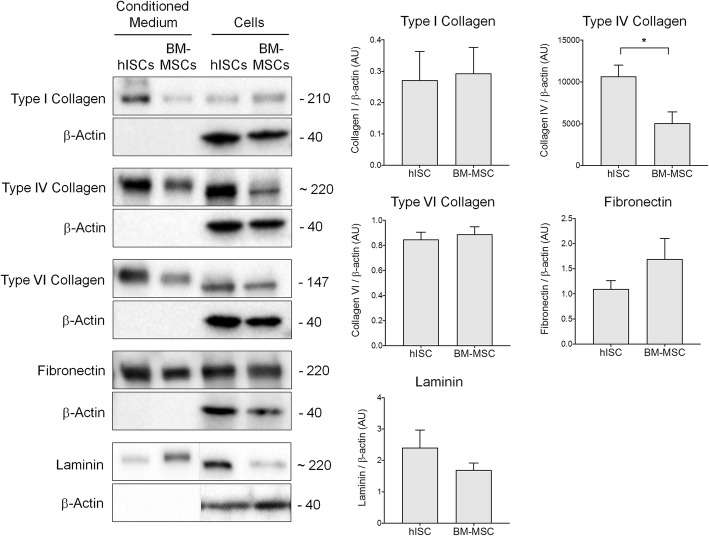
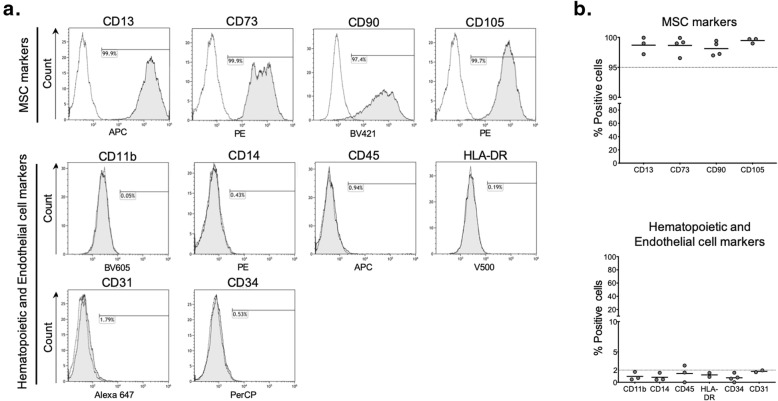
hISCs kept an unlimited proliferative potential. They exhibited several properties of MSCs such as CD73, CD90, and CD105 expression and differentiation capacity. From a functional point of view, hISCs inhibited the proliferation of activated peripheral blood mononuclear cells. The transcriptomic profile of hISCs highly clusterized with bone marrow (BM)-MSCs and revealed a differential enrichment of genes involved in the organization of the ECM. Indeed, the expression and secretion profiles of ECM proteins including collagens I, IV, and VI, fibronectin, and laminins, known to be expressed in abundance around and within the islets, were different between hISCs and BM-MSCs.
We generated a new human cell line from pancreatic islets, with MSCs properties and retaining some pancreatic specificities related to the production of ECM proteins. hISCs appear as a very promising tool in islet transplantation by their availability (as a source of inexhaustible source of cells) and ability to secrete a supportive "pancreatic" microenvironment.
间充质基质细胞(MSCs)代表了改善胰岛移植的一种有前途的工具。它们具有免疫调节特性并分泌支持性蛋白质。然而,MSCs 的功能特性因供体特征、组织来源或分离方法等多种因素而异。为了克服这种异质性,我们旨在使用表型、转录组和功能分析来永生化和表征源自人胰岛的贴壁细胞(hISCs)。
在培养中从人胰岛中分离的贴壁细胞用 hTERT 逆转录病毒载体感染,然后通过微阵列杂交、流式细胞术分析和免疫荧光分析进行表征。成骨、成脂和成软骨分化以及 PBMC 增殖抑制试验用于比较 hISCs 和 MSCs 的功能能力。使用 SAM(微阵列差异表达分析)软件进行细胞外基质(ECM)基因表达谱分析,并通过 Western blot 验证蛋白表达。
hISCs 保持了无限的增殖潜力。它们表现出 MSCs 的几种特性,例如 CD73、CD90 和 CD105 的表达和分化能力。从功能角度来看,hISCs 抑制了活化外周血单个核细胞的增殖。hISCs 的转录组谱与骨髓(BM)-MSCs 高度聚类,并显示出参与 ECM 组织的基因的差异富集。事实上,包括胶原蛋白 I、IV 和 VI、纤连蛋白和层粘连蛋白在内的 ECM 蛋白的表达和分泌谱在 hISCs 和 BM-MSCs 之间存在差异,这些蛋白已知在胰岛周围和内部大量表达。
我们从胰岛中生成了一种具有 MSCs 特性的新的人类细胞系,并保留了与 ECM 蛋白产生相关的一些胰岛特异性。hISCs 作为胰岛移植的一种很有前途的工具,具有可用性(作为细胞的无尽来源)和分泌支持性“胰岛”微环境的能力。