Section on Neuroadaptation and Protein Metabolism, National Institute of Mental Health, National Institutes of Health, Department of Health and Human Services, Bethesda, MD 20814.
Section on Neuroadaptation and Protein Metabolism, National Institute of Mental Health, National Institutes of Health, Department of Health and Human Services, Bethesda, MD 20814
eNeuro. 2020 Apr 29;7(2). doi: 10.1523/ENEURO.0379-19.2020. Print 2020 Mar/Apr.
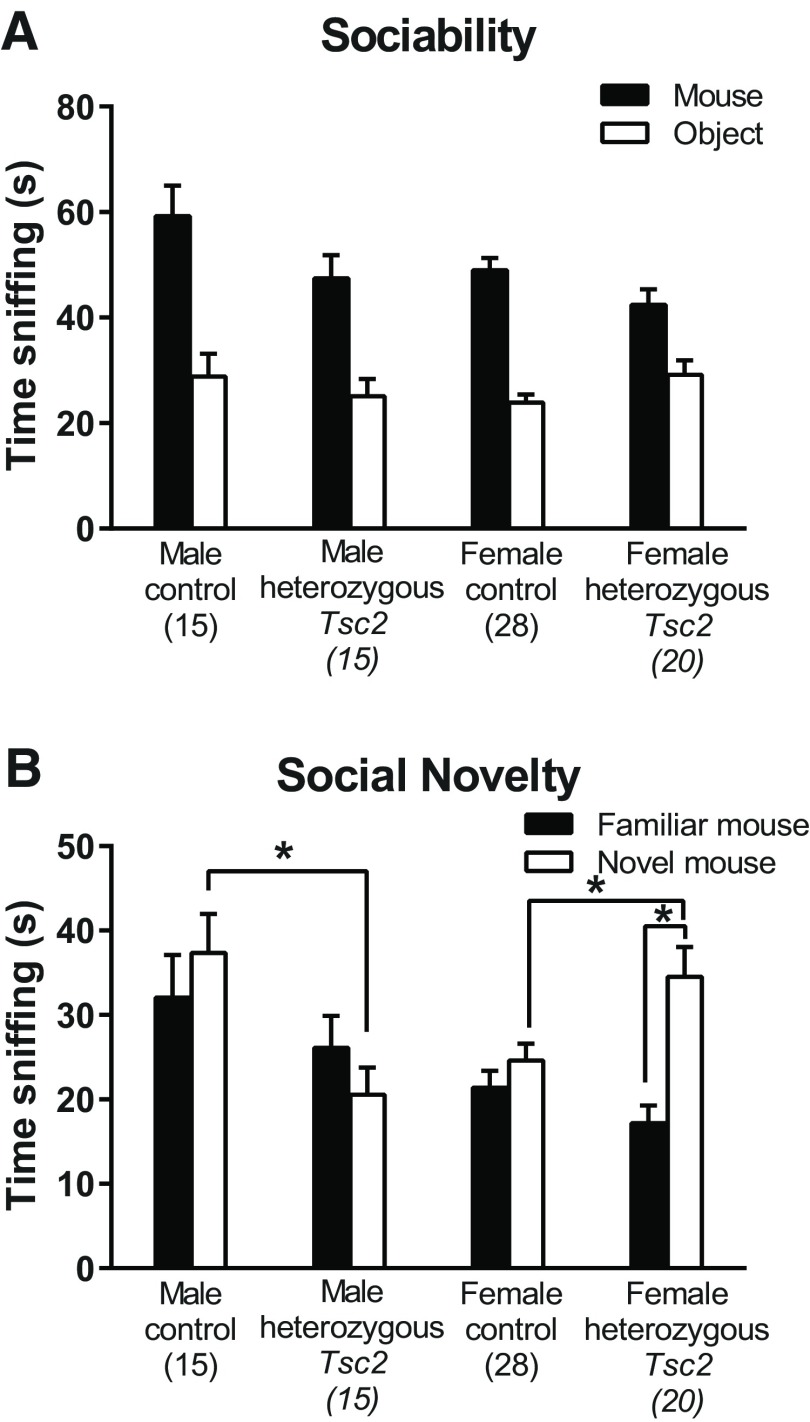
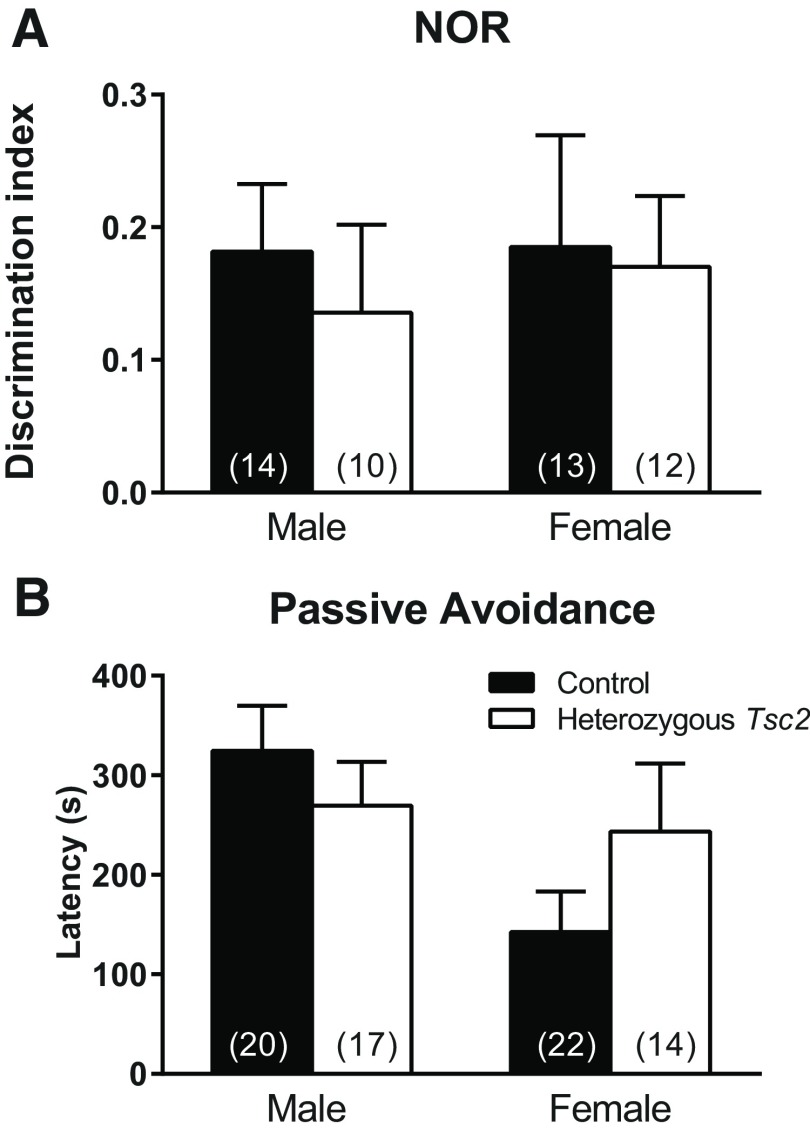
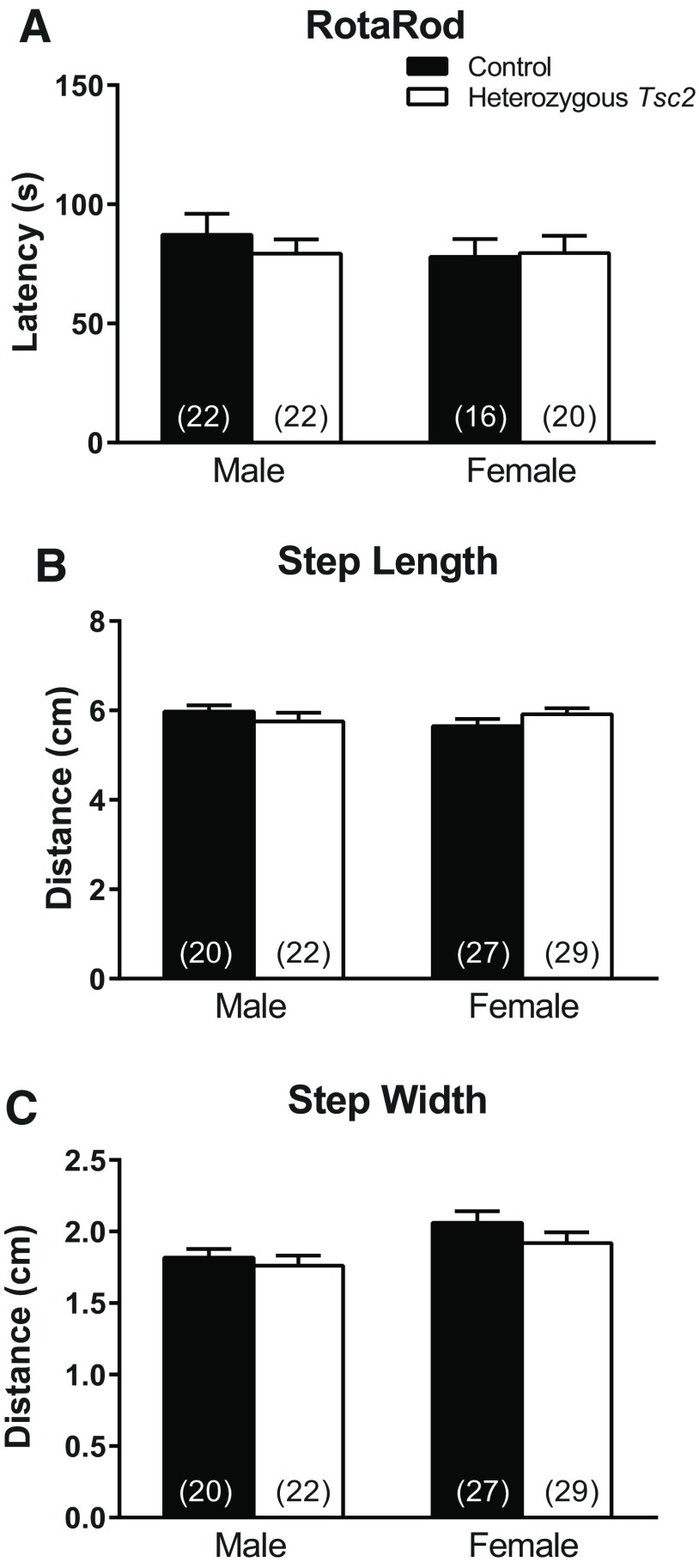
Tuberous sclerosis complex (TSC) is an autosomal dominant genetic disorder that is caused by a mutation in either or TSC affects multiple systems of the body, and patients with TSC display a range of neurologic and behavioral manifestations including seizures, intellectual disability, autism spectrum disorders, attention deficit hyperactivity disorder, anxiety, and mood disorders. Whereas behavioral phenotypes of many mouse models have been studied, the effects of sex have, for the most part, not been explored. We studied adult male and female heterozygous and control mice to investigate the influence of sex and genotype on behavior. On a test of social preference, heterozygous mice, regardless of sex, demonstrated lower preference for the stranger mouse than control mice. In the open field, heterozygous males and control females habituated to the open field with decreasing anxiety-like behavior over time, whereas heterozygous females did not show habituation to the open field environment. We did not find any statistically significant effects of genotype on open field activity, learning and memory or motor function. Our results highlight phenotype differences in heterozygous mice, some of which are influenced by sex. A consideration of how sex influences the behavioral phenotypes of TSC is critical to develop a more complete understanding of the disorder and better target future pharmacological treatments.
结节性硬化症复合征(TSC)是一种常染色体显性遗传疾病,由 TSC1 或 TSC2 中的突变引起。TSC 影响身体的多个系统,TSC 患者表现出一系列神经和行为表现,包括癫痫、智力障碍、自闭症谱系障碍、注意缺陷多动障碍、焦虑和情绪障碍。虽然已经研究了许多小鼠模型的行为表型,但性别影响在很大程度上尚未得到探索。我们研究了成年雄性和雌性杂合子及对照小鼠,以研究性别和基因型对行为的影响。在社会偏好测试中,无论性别如何,杂合子小鼠对陌生小鼠的偏好均低于对照小鼠。在旷场中,杂合子雄性和对照雌性随着时间的推移逐渐适应旷场环境,焦虑样行为减少,而杂合子雌性则未表现出对旷场环境的适应。我们没有发现基因型对旷场活动、学习和记忆或运动功能有任何统计学上显著的影响。我们的结果突出了杂合子小鼠的表型差异,其中一些受性别影响。考虑性别如何影响 TSC 的行为表型对于更全面地了解该疾病并更好地针对未来的药物治疗至关重要。