Coimbra Institute for Biomedical Imaging and Translational Research (CIBIT), R. Santa Comba, University of Coimbra, Coimbra, Portugal.
Institute for Nuclear Sciences Applied to Health (ICNAS), R. Santa Comba, University of Coimbra, Coimbra, Portugal.
Epilepsia Open. 2024 Oct;9(5):1710-1722. doi: 10.1002/epi4.12955. Epub 2024 Jul 15.
Comorbidity of epilepsy and autism in tuberous sclerosis complex 2 (TSC2) is very frequent, but the link between these conditions is still poorly understood. To study neurological problems related to autism, the scientific community has been using an animal model of TSC2, Tsc2 mice. However, it is still unknown whether this model has the propensity to exhibit increased seizure susceptibility. Further, the importance of sex and/or the circadian cycle in this biological process has never been addressed. This research aimed to determine whether male and female Tsc2 mice have altered seizure susceptibility at light and dark phases.
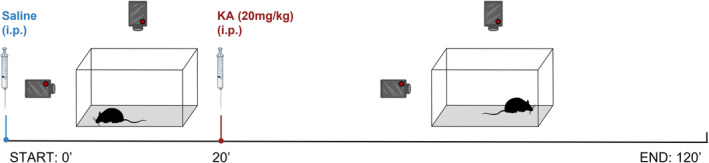
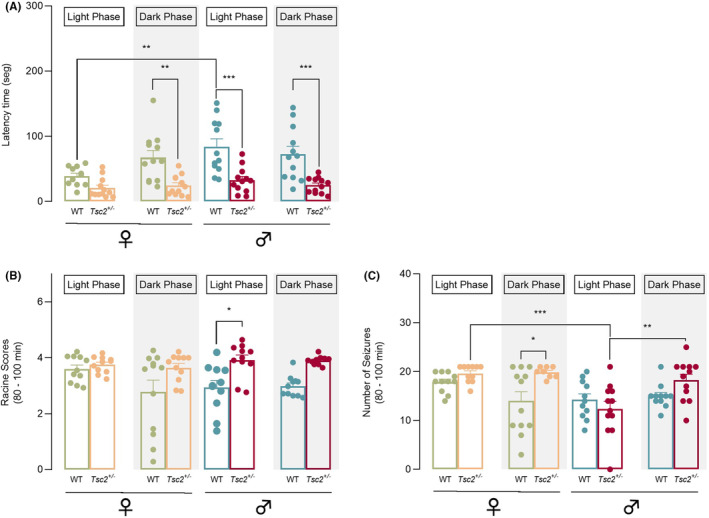
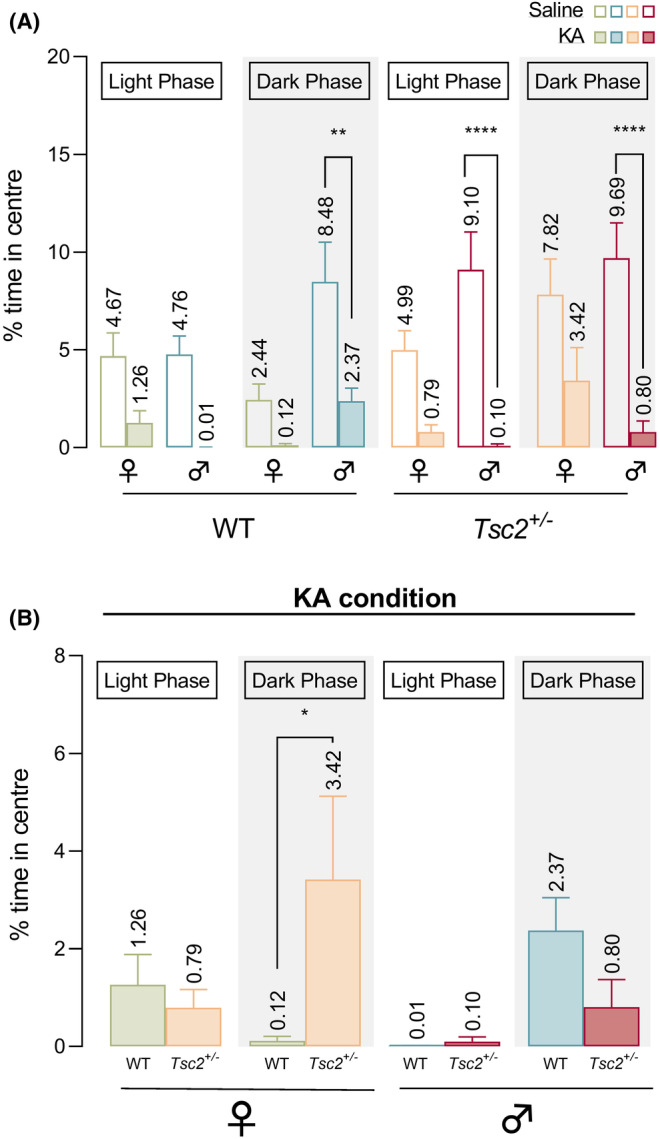
We assessed seizure susceptibility and progression in a Tsc2 mouse model using the chemical convulsant kainic acid (KA), a potent agonist of the AMPA/kainate class of glutamate receptors. Both male and female animals at adult age were evaluated during non-active and active periods. Seizure severity was determined by integrating individual scores per mouse according to a modified Racine scale. Locomotor behavior was monitored during control and after KA administration.
We found increased seizure susceptibility in Tsc2 mice with a significant influence of sex and circadian cycle on seizure onset, progression, and behavioral outcomes. While, compared to controls, Tsc2 males overall exhibited higher susceptibility independently of circadian cycle, Tsc2 females were more susceptible during the dark and post-ovulatory phase. Interestingly, sexual dimorphisms related to KA susceptibility were always reported during light phase independently of the genetic background, with females being the most vulnerable.
The enhanced susceptibility in the Tsc2 mouse model suggests that other neurological alterations, beside brain lesions, may be involved in seizure occurrence for TSC. Importantly, our work highlighted the importance of considering biological sex and circadian cycle for further studies of TSC-related epilepsy research.
Tuberous sclerosis complex (TSC) is a rare genetic disorder. It causes brain lesions and is linked to epilepsy, intellectual disability, and autism. We wanted to investigate epilepsy in this model. We found that these mice have more induced seizures than control animals. Our results show that these mice can be used in future epilepsy research for this disorder. We also found that sex and time of day can influence the results. This must be considered in this type of research.
结节性硬化症复合 2 型(TSC2)中癫痫和自闭症共病非常常见,但这些疾病之间的联系仍知之甚少。为了研究与自闭症相关的神经问题,科学界一直在使用 TSC2 的动物模型——Tsc2 小鼠。然而,目前尚不清楚该模型是否有增加癫痫易感性的倾向。此外,性别和/或昼夜节律在这一生物学过程中的重要性从未被提及。本研究旨在确定雄性和雌性 Tsc2 小鼠在亮暗期是否有改变的癫痫易感性。
我们使用化学致惊厥剂海人酸(KA)评估 Tsc2 小鼠模型的癫痫易感性和进展,KA 是 AMPA/ kainate 类谷氨酸受体的有效激动剂。成年雄性和雌性动物在非活动期和活动期均进行评估。根据改良的 Racine 量表,通过整合每个小鼠的个体评分来确定癫痫严重程度。在对照和 KA 给药后监测运动行为。
我们发现 Tsc2 小鼠的癫痫易感性增加,性别和昼夜节律对癫痫发作的开始、进展和行为结果有显著影响。与对照组相比,Tsc2 雄性总体上表现出不受昼夜节律影响的更高易感性,而 Tsc2 雌性在暗期和排卵后阶段更易受影响。有趣的是,与 KA 易感性相关的性别二态性无论遗传背景如何,总是在亮期报告,而雌性是最脆弱的。
Tsc2 小鼠模型的易感性增加表明,除了脑损伤之外,其他神经改变可能与 TSC 相关的癫痫发作有关。重要的是,我们的工作强调了在 TSC 相关癫痫研究中考虑生物学性别和昼夜节律的重要性。