United States Environmental Protection Agency, Arlington, VA, USA.
Emeritus Professor, Department of Toxicology, Purdue University, West Lafayette, IN, USA.
Mol Biol Rep. 2020 Jun;47(6):4631-4650. doi: 10.1007/s11033-020-05427-1. Epub 2020 Apr 18.
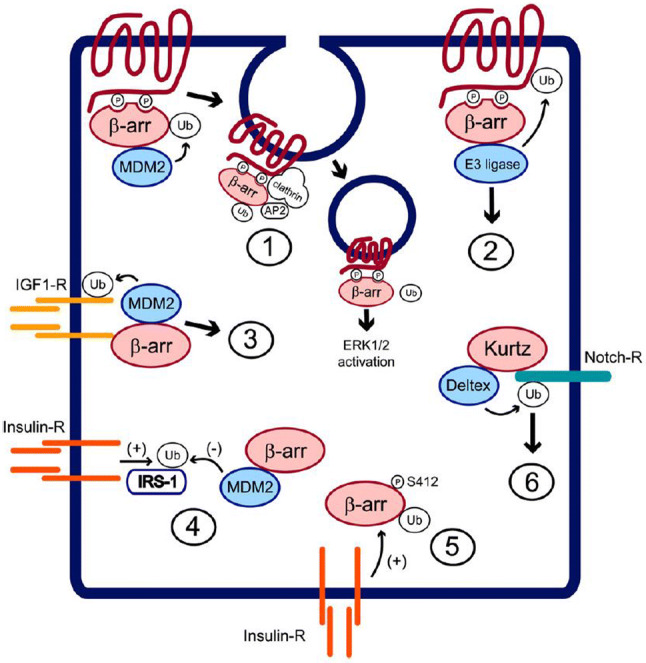
Neoplastically transformed astrocytes express functionally active cell surface β adrenergic receptors (βARs). Treatment of glioma models in vitro and in vivo with β adrenergic agonists variably amplifies or attenuates cellular proliferation. In the majority of in vivo models, β adrenergic agonists generally reduce cellular proliferation. However, treatment with β adrenergic agonists consistently reduces tumor cell invasive potential, angiogenesis, and metastasis. β adrenergic agonists induced decreases of invasive potential are chiefly mediated through reductions in the expression of matrix metalloproteinases types 2 and 9. Treatment with β adrenergic agonists also clearly reduce tumoral neoangiogenesis, which may represent a putatively useful mechanism to adjuvantly amplify the effects of bevacizumab. Bevacizumab is a monoclonal antibody targeting the vascular endothelial growth factor receptor. We may accordingly designate βagonists to represent an enhancer of bevacizumab. The antiangiogenic effects of β adrenergic agonists may thus effectively render an otherwise borderline effective therapy to generate significant enhancement in clinical outcomes. β adrenergic agonists upregulate expression of the major histocompatibility class II DR alpha gene, effectively potentiating the immunogenicity of tumor cells to tumor surveillance mechanisms. Authors have also demonstrated crossmodal modulation of signaling events downstream from the β adrenergic cell surface receptor and microtubular polymerization and depolymerization. Complex effects and desensitization mechanisms of the β adrenergic signaling may putatively represent promising therapeutic targets. Constant stimulation of the β adrenergic receptor induces its phosphorylation by β adrenergic receptor kinase (βARK), rendering it a suitable substrate for alternate binding by β arrestins 1 or 2. The binding of a β arrestin to βARK phosphorylated βAR promotes receptor mediated internalization and downregulation of cell surface receptor and contemporaneously generates a cell surface scaffold at the βAR. The scaffold mediated activation of extracellular regulated kinase 1/2, compared with protein kinase A mediated activation, preferentially favors cytosolic retention of ERK1/2 and blunting of nuclear translocation and ensuant pro-transcriptional activity. Thus, βAR desensitization and consequent scaffold assembly effectively retains the cytosolic homeostatic functions of ERK1/2 while inhibiting its pro-proliferative effects. We suggest these mechanisms specifically will prove quite promising in developing primary and adjuvant therapies mitigating glioma growth, angiogenesis, invasive potential, and angiogenesis. We suggest generating compounds and targeted mutations of the β adrenergic receptor favoring β arrestin binding and scaffold facilitated activation of ERK1/2 may hold potential promise and therapeutic benefit in adjuvantly treating most or all cancers. We hope our discussion will generate fruitful research endeavors seeking to exploit these mechanisms.
神经瘤转化星形胶质细胞表达功能性细胞表面β肾上腺素能受体(βAR)。β肾上腺素能激动剂体外和体内治疗胶质母细胞瘤模型可不同程度地放大或减弱细胞增殖。在大多数体内模型中,β肾上腺素能激动剂通常会降低细胞增殖。然而,β肾上腺素能激动剂治疗一致降低肿瘤细胞的侵袭潜能、血管生成和转移。β肾上腺素能激动剂诱导的侵袭潜能降低主要是通过降低基质金属蛋白酶 2 和 9 的表达来介导的。β肾上腺素能激动剂治疗还明显减少肿瘤新生血管生成,这可能代表一种潜在有用的机制来辅助增强贝伐单抗的效果。贝伐单抗是一种针对血管内皮生长因子受体的单克隆抗体。因此,我们可以将β激动剂指定为贝伐单抗的增强剂。β肾上腺素能激动剂的抗血管生成作用可以有效地使原本边缘有效的治疗方法产生显著增强的临床效果。β肾上腺素能激动剂上调主要组织相容性复合体 II DRα基因的表达,有效地增强肿瘤细胞对肿瘤监视机制的免疫原性。作者还证明了β肾上腺素能细胞表面受体下游信号事件的跨模态调制以及微管聚合和解聚。β肾上腺素能信号的复杂效应和脱敏机制可能代表有前途的治疗靶点。β肾上腺素能受体的持续刺激通过β肾上腺素能受体激酶(βARK)使β肾上腺素能受体磷酸化,使其成为β arrestin 1 或 2 交替结合的合适底物。β arrestin 与磷酸化的β AR 的结合促进了受体介导的内化和细胞表面受体的下调,同时在β AR 上生成细胞表面支架。与蛋白激酶 A 介导的激活相比,支架介导的细胞外调节激酶 1/2 的激活更有利于 ERK1/2 的胞质保留,并削弱核易位和随后的转录前活性。因此,βAR 脱敏和随后的支架组装有效地保留了 ERK1/2 的胞质稳态功能,同时抑制其促增殖作用。我们认为这些机制在开发减轻神经胶质瘤生长、血管生成、侵袭潜能和血管生成的原发性和辅助治疗方面将非常有前途。我们建议生成有利于β arrestin 结合和支架促进 ERK1/2 激活的β肾上腺素能受体的化合物和靶向突变,可能在辅助治疗大多数或所有癌症方面具有潜在的益处。我们希望我们的讨论将激发寻求利用这些机制的富有成效的研究努力。