Experimental and Molecular Pathology, Institute of Pathology, Ludwig-Maximilians-University Munich, Munich, Germany.
Institute of Pathology, Ludwig-Maximilians-University Munich, Munich, Germany; German Cancer Consortium, Partner site Munich, Munich, Germany; German Cancer Research Center, Heidelberg, Germany.
Cell Mol Gastroenterol Hepatol. 2020;10(2):391-418. doi: 10.1016/j.jcmgh.2020.04.002. Epub 2020 Apr 15.
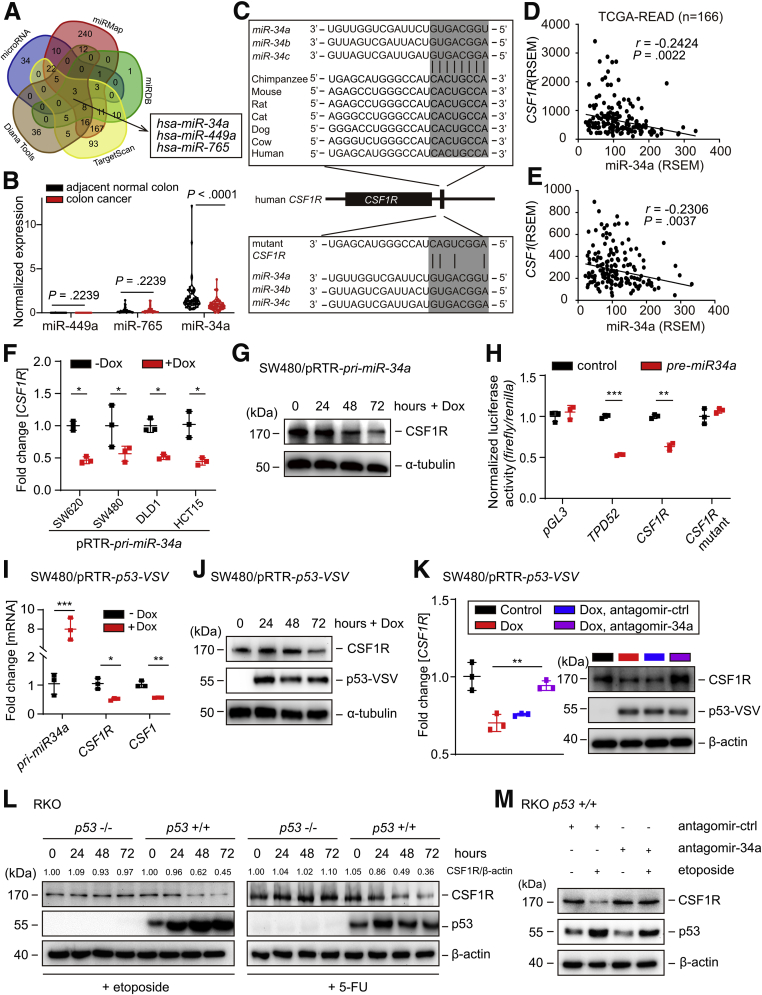
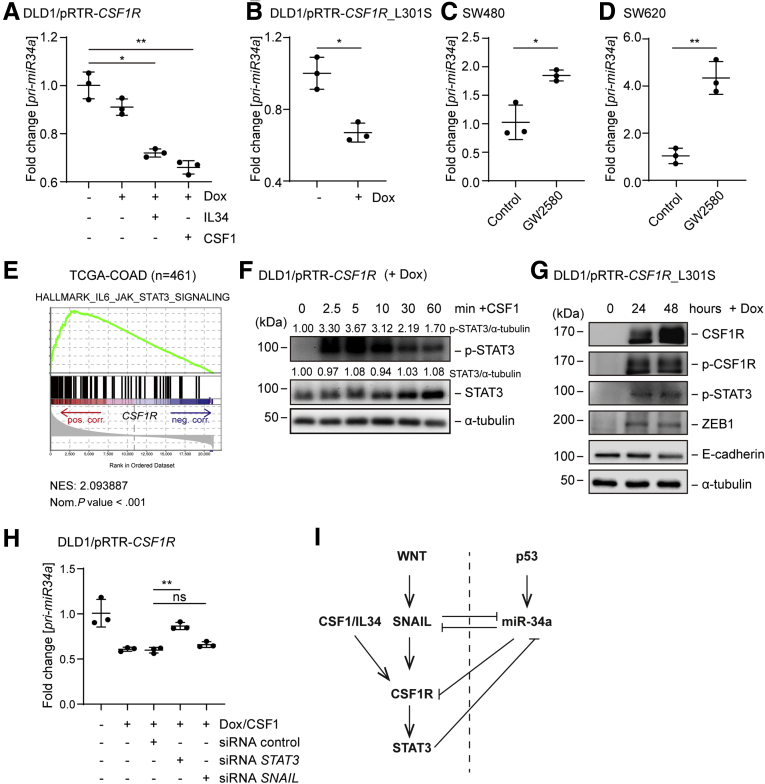
BACKGROUND & AIMS: The miR-34a gene is a direct target of p53 and is commonly silenced in colorectal cancer (CRC). Here we identified the receptor tyrosine kinase CSF1R as a direct miR-34a target and characterized CSF1R as an effector of p53/miR-34a-mediated CRC suppression.
Analyses of TCGA-COAD and three other CRC cohorts for association of mRNA expression and signatures with patient survival and molecular subtypes. Bioinformatics identification and experimental validation of miRNA and transcription factor targets. Functional analysis of factors/pathways in the regulation of epithelial-mesenchymal transition (EMT), invasion, migration, acquired chemo-resistance and metastasis. Analyses of protein expression and CpG methylation within primary human colon cancer samples.
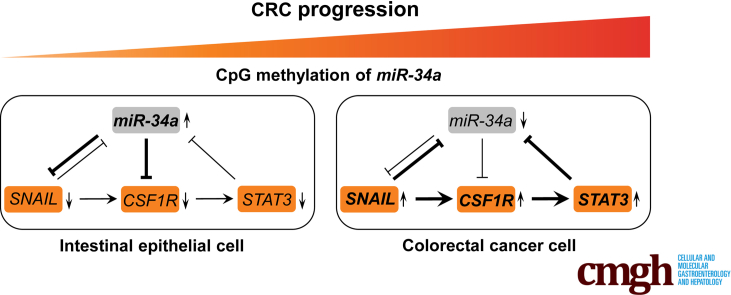
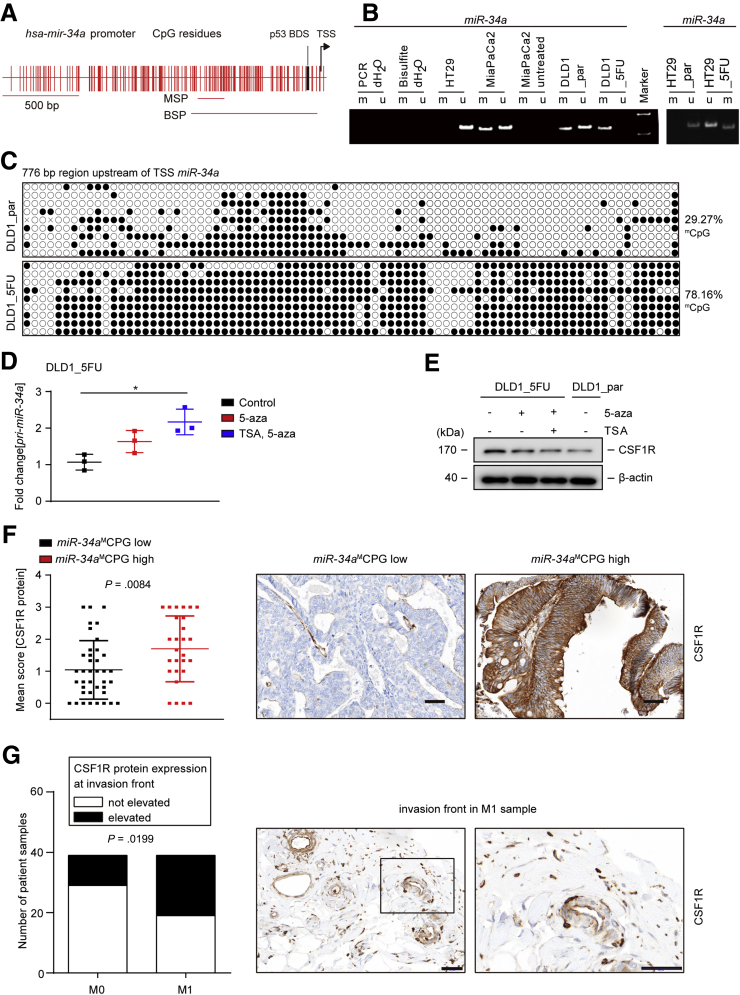
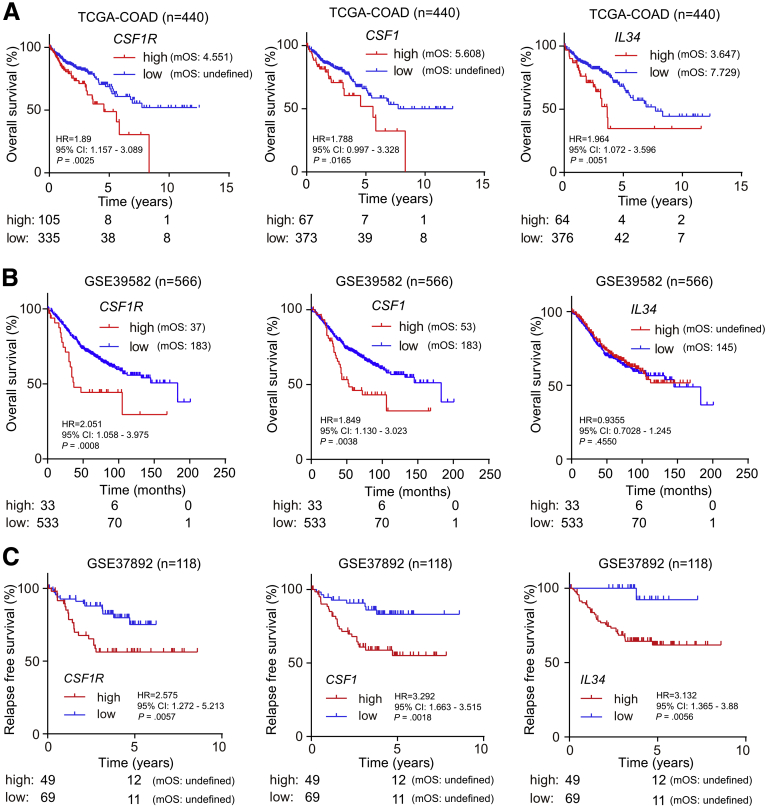
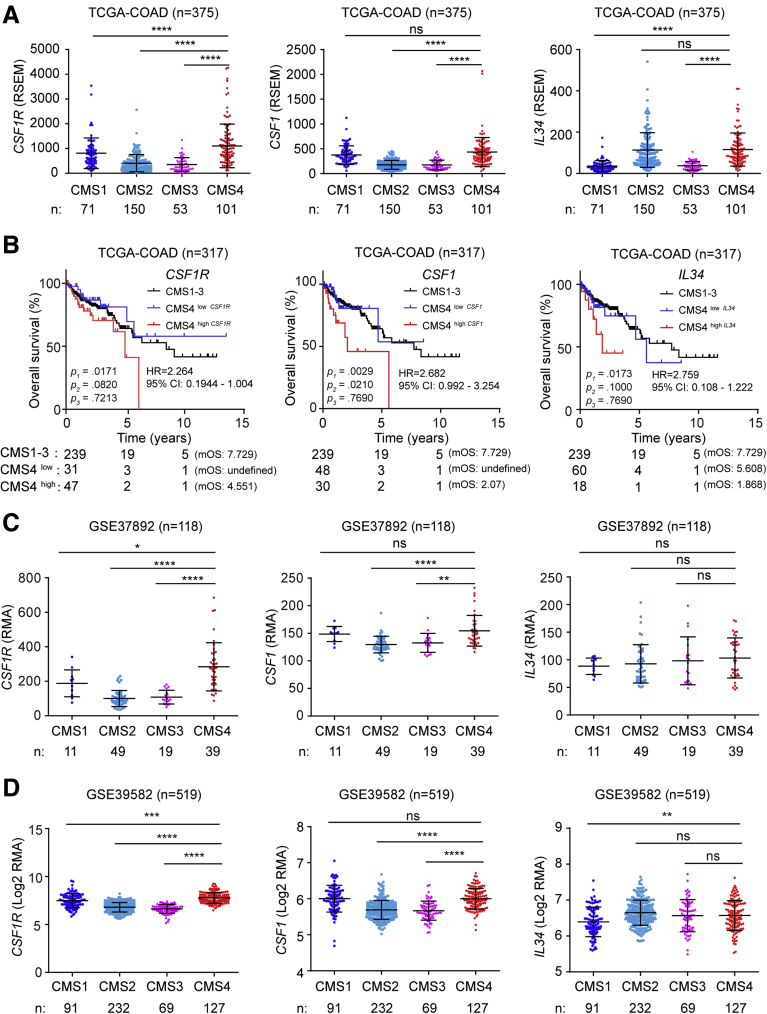
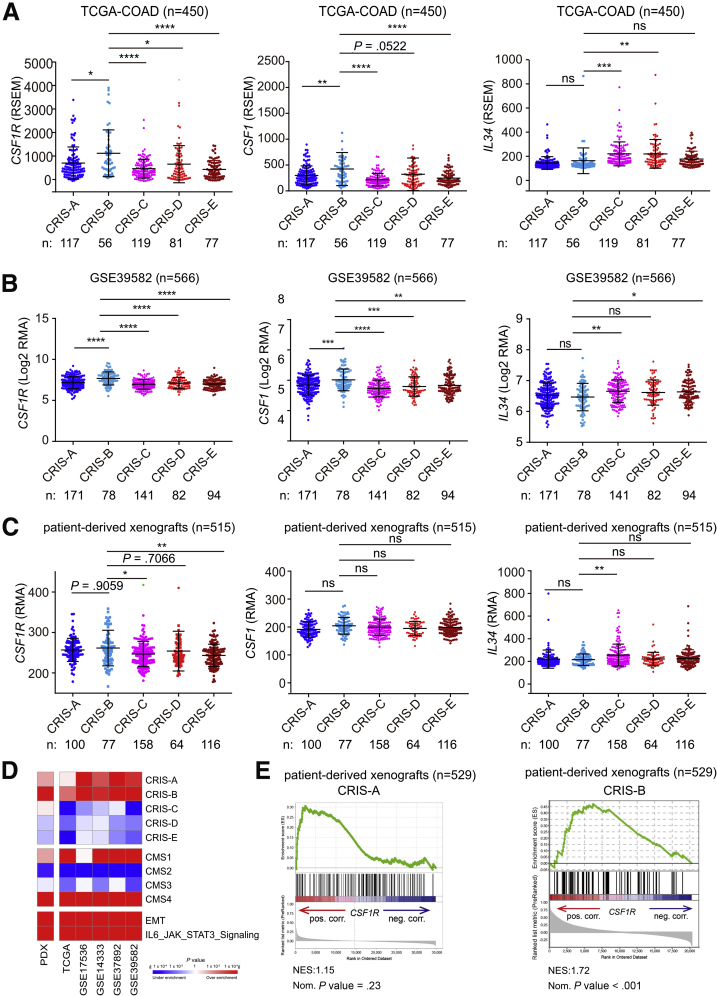
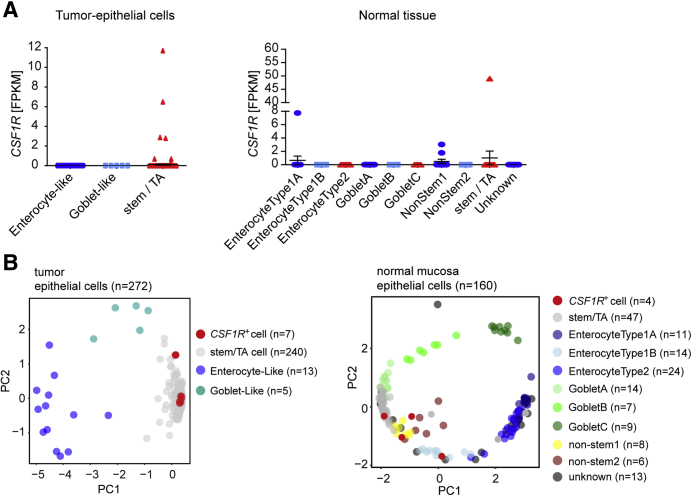
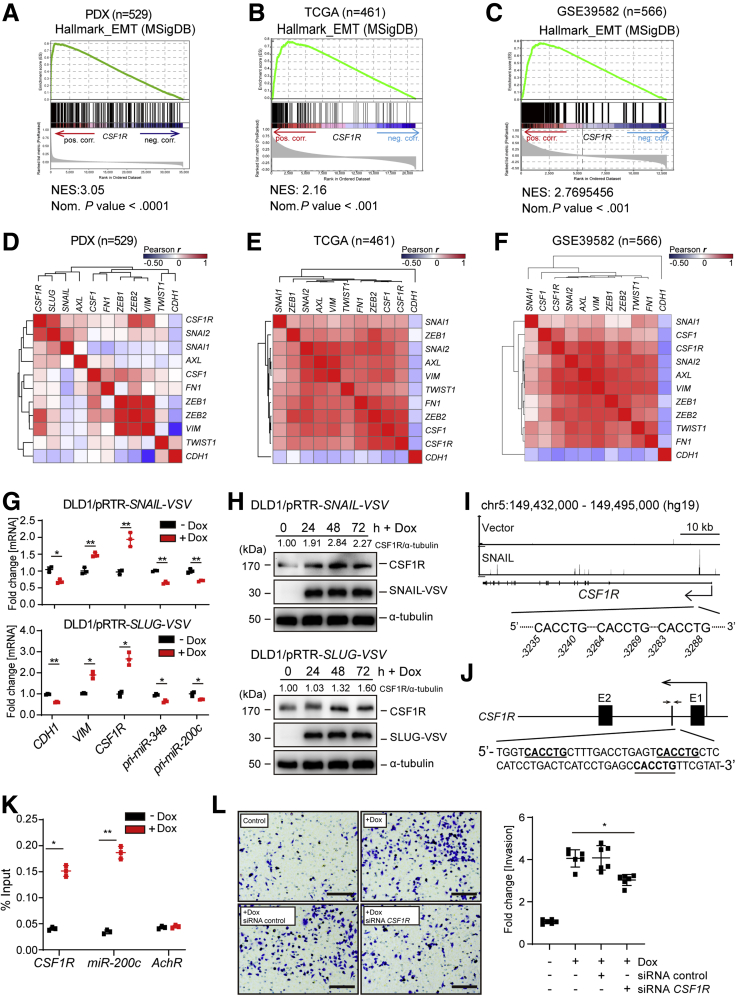
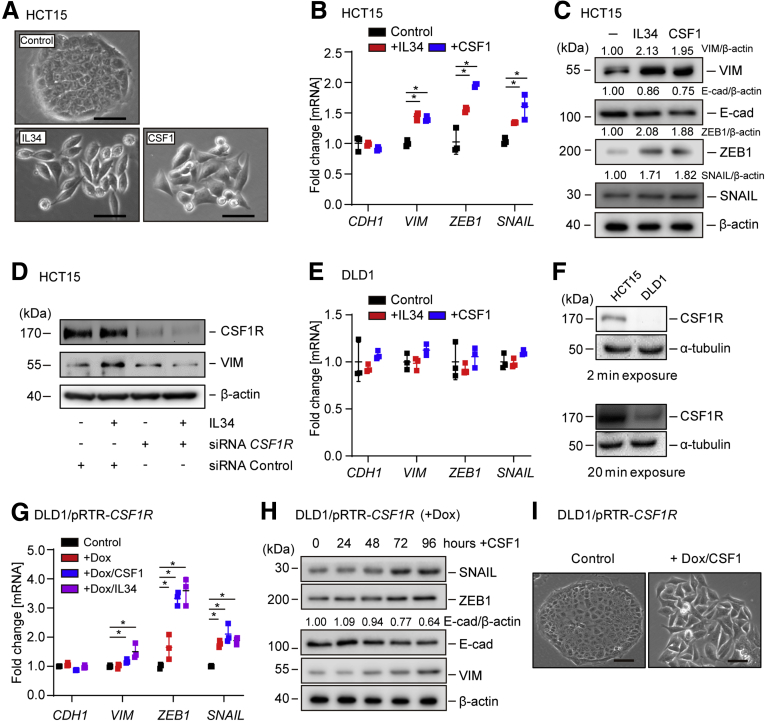
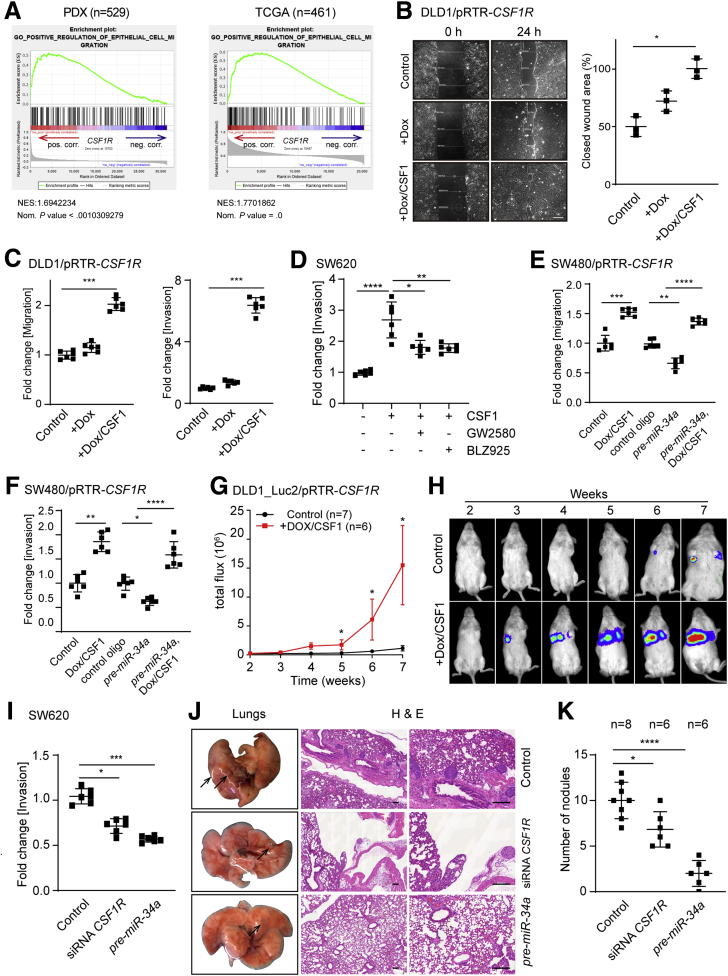
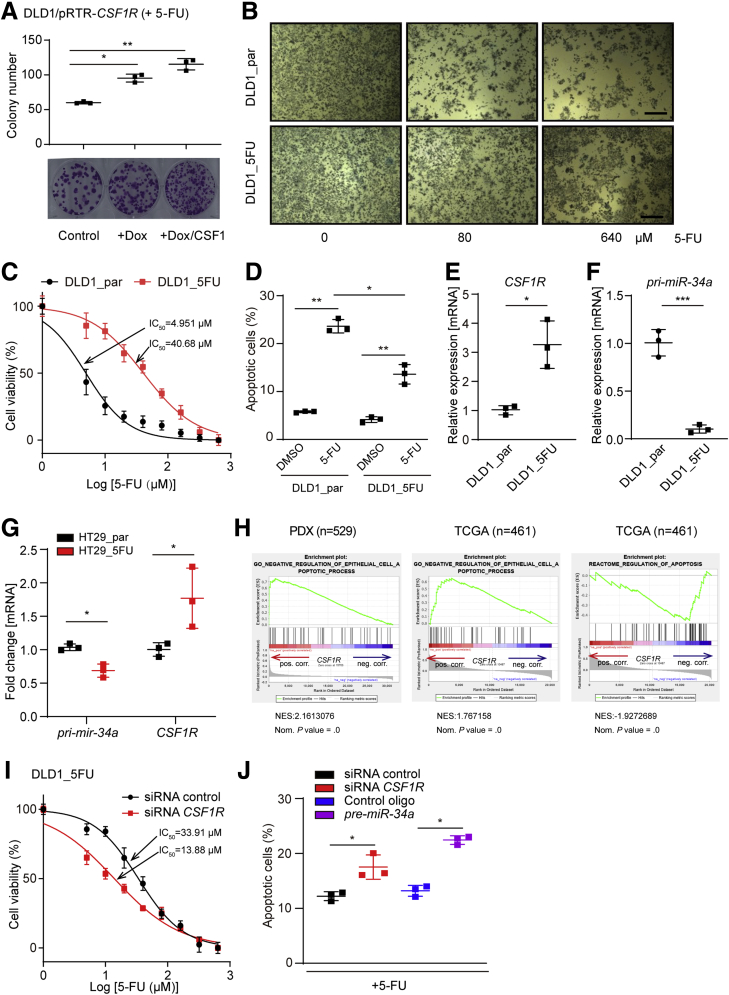
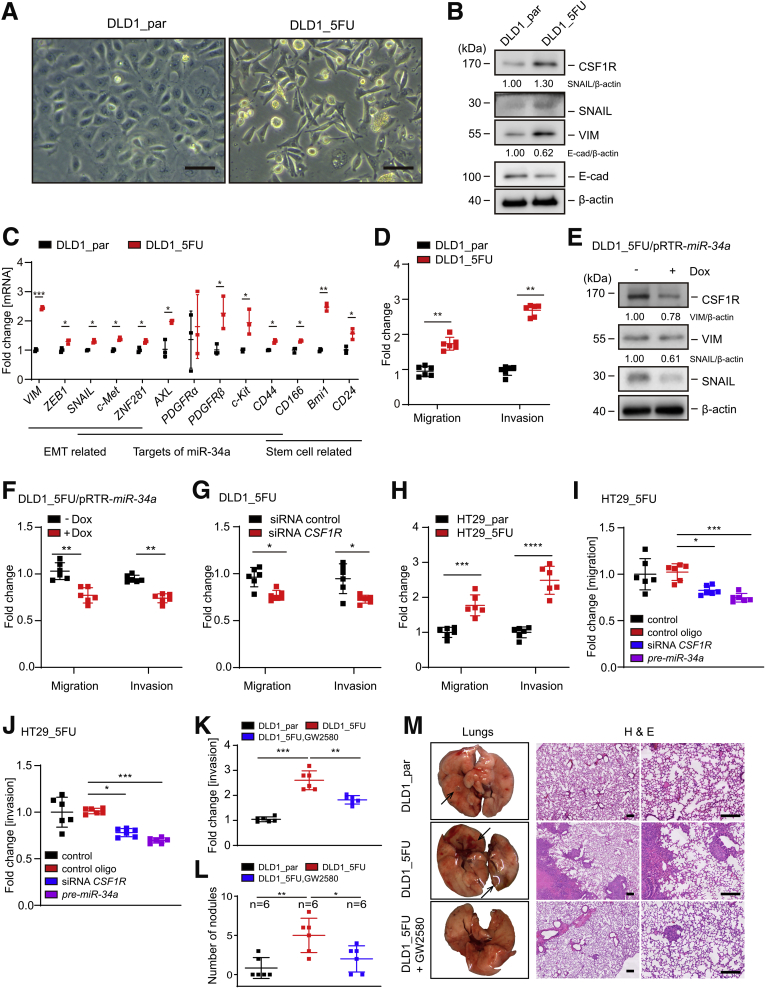
In primary CRCs increased CSF1R, CSF1 and IL34 expression was associated with poor patient survival and a mesenchymal-like subtype. CSF1R displayed an inverse correlation with miR-34a expression. This was explained by direct inhibition of CSF1R by miR-34a. Furthermore, p53 repressed CSF1R via inducing miR-34a, whereas SNAIL induced CSF1R both directly and indirectly via repressing miR-34a in a coherent feed-forward loop. Activation of CSF1R induced EMT, migration, invasion and metastasis of CRC cells via STAT3-mediated down-regulation of miR-34a. 5-FU resistance of CRC cells was mediated by CpG-methylation of miR-34a and the resulting elevated expression of CSF1R. In primary CRCs elevated expression of CSF1R was detected at the tumor invasion front and was associated with CpG methylation of the miR-34a promoter as well as distant metastasis.
The reciprocal inhibition between miR-34a and CSF1R and its loss in tumor cells may be relevant for therapeutic and prognostic approaches towards CRC management.
miR-34a 基因是 p53 的直接靶标,在结直肠癌(CRC)中通常被沉默。在这里,我们确定了受体酪氨酸激酶 CSF1R 是 miR-34a 的直接靶标,并将 CSF1R 鉴定为 p53/miR-34a 介导的 CRC 抑制的效应物。
分析 TCGA-COAD 和另外三个 CRC 队列中 mRNA 表达和特征与患者生存和分子亚型的关联。miRNA 和转录因子靶标的生物信息学鉴定和实验验证。上皮-间充质转化(EMT)、侵袭、迁移、获得化疗耐药和转移调节中的因素/途径的功能分析。分析原发性人结肠癌样本中的蛋白表达和 CpG 甲基化。
在原发性 CRC 中,CSF1R、CSF1 和 IL34 的表达增加与患者生存不良和间充质样亚型相关。CSF1R 与 miR-34a 的表达呈负相关。这可以通过 miR-34a 直接抑制 CSF1R 来解释。此外,p53 通过诱导 miR-34a 来抑制 CSF1R,而 SNAIL 通过直接和间接抑制 miR-34a 在一个一致的正反馈环中诱导 CSF1R。CSF1R 的激活通过 STAT3 介导的 miR-34a 下调诱导 CRC 细胞的 EMT、迁移、侵袭和转移。CRC 细胞对 5-FU 的耐药性是通过 miR-34a 的 CpG 甲基化和 CSF1R 的表达升高介导的。在原发性 CRC 中,在肿瘤侵袭前沿检测到 CSF1R 的高表达,并与 miR-34a 启动子的 CpG 甲基化以及远处转移相关。
miR-34a 和 CSF1R 之间的相互抑制及其在肿瘤细胞中的缺失可能与 CRC 管理的治疗和预后方法相关。