Department of Pathology, University of Michigan Medical School, Ann Arbor, MI, 48109, USA.
Medical Scientist Training Program, University of Michigan Medical School, Ann Arbor, MI, 48109, USA.
Acta Neuropathol. 2020 Jul;140(1):63-80. doi: 10.1007/s00401-020-02156-4. Epub 2020 Apr 18.
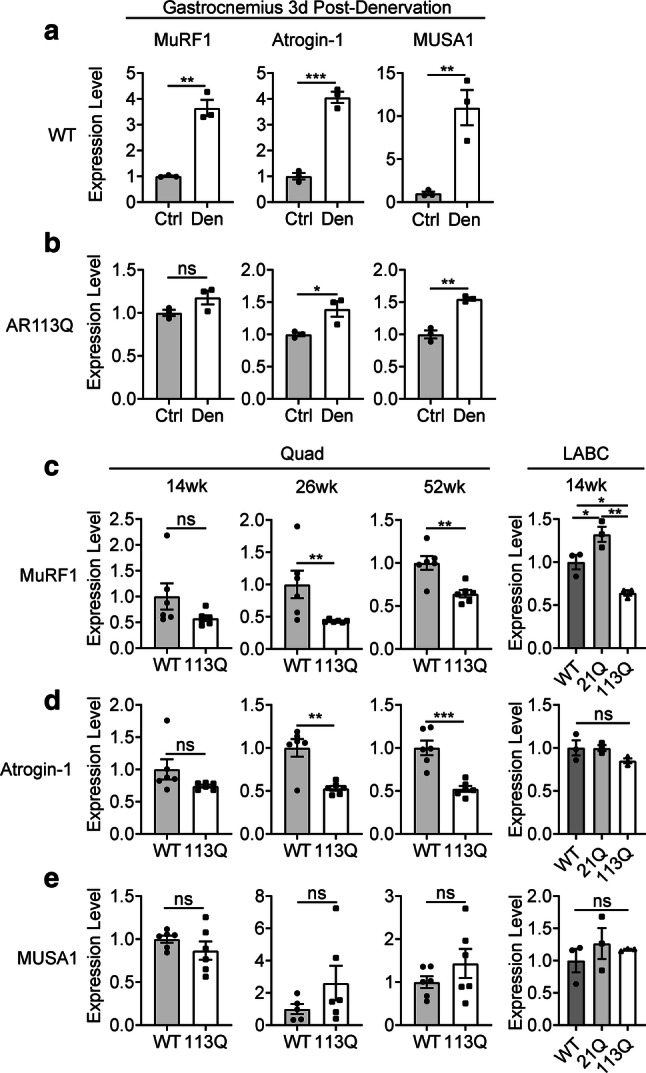
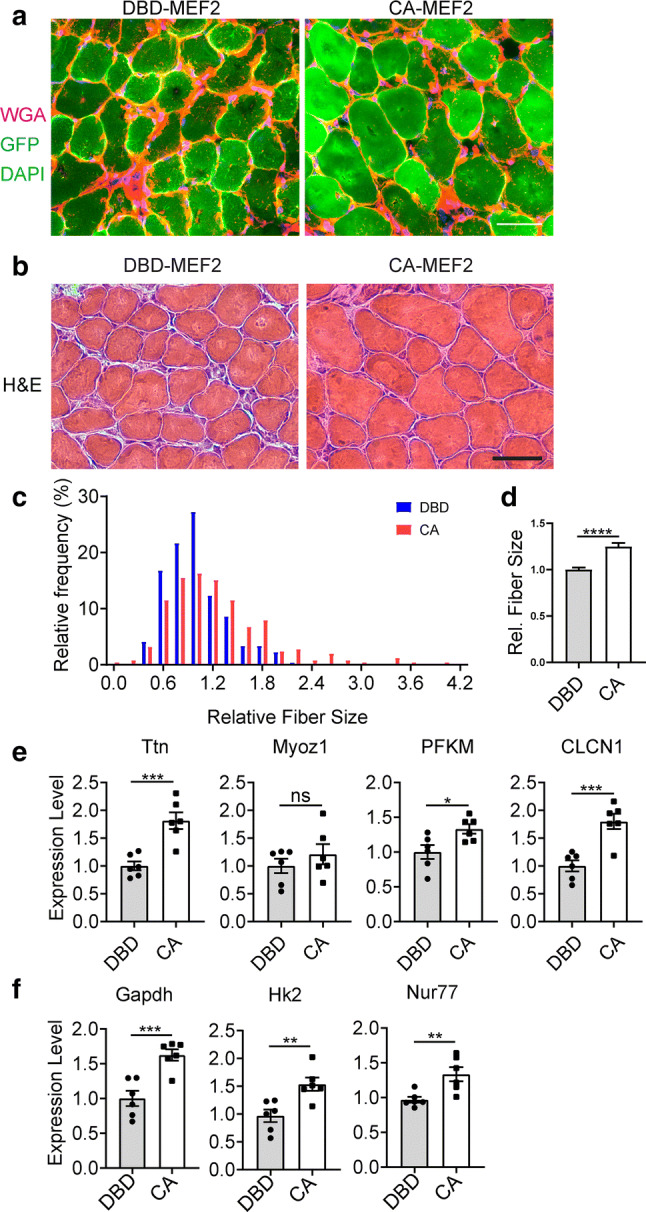
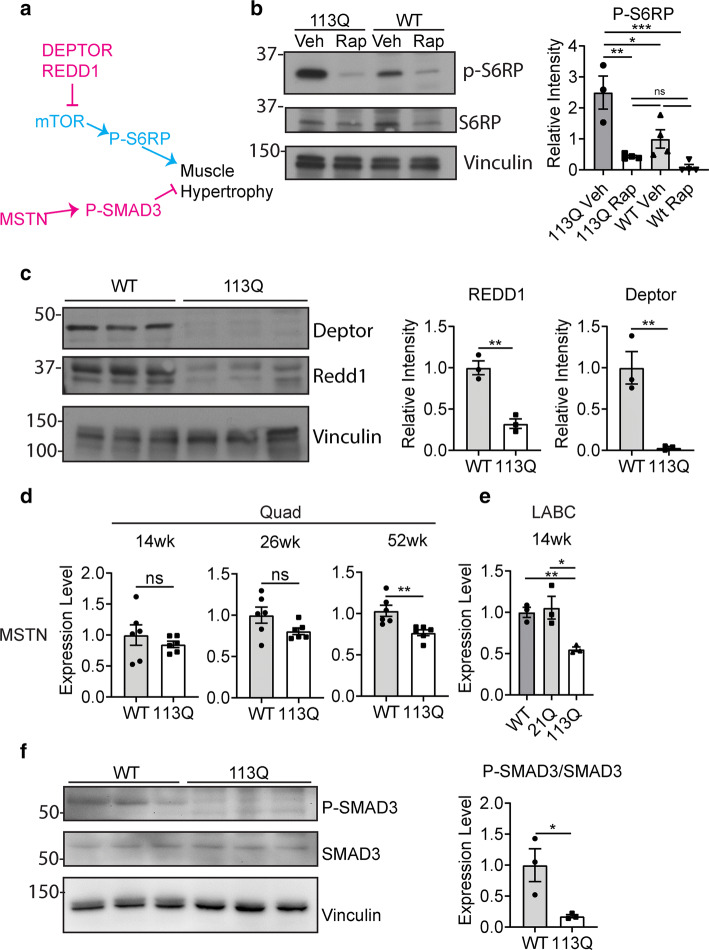
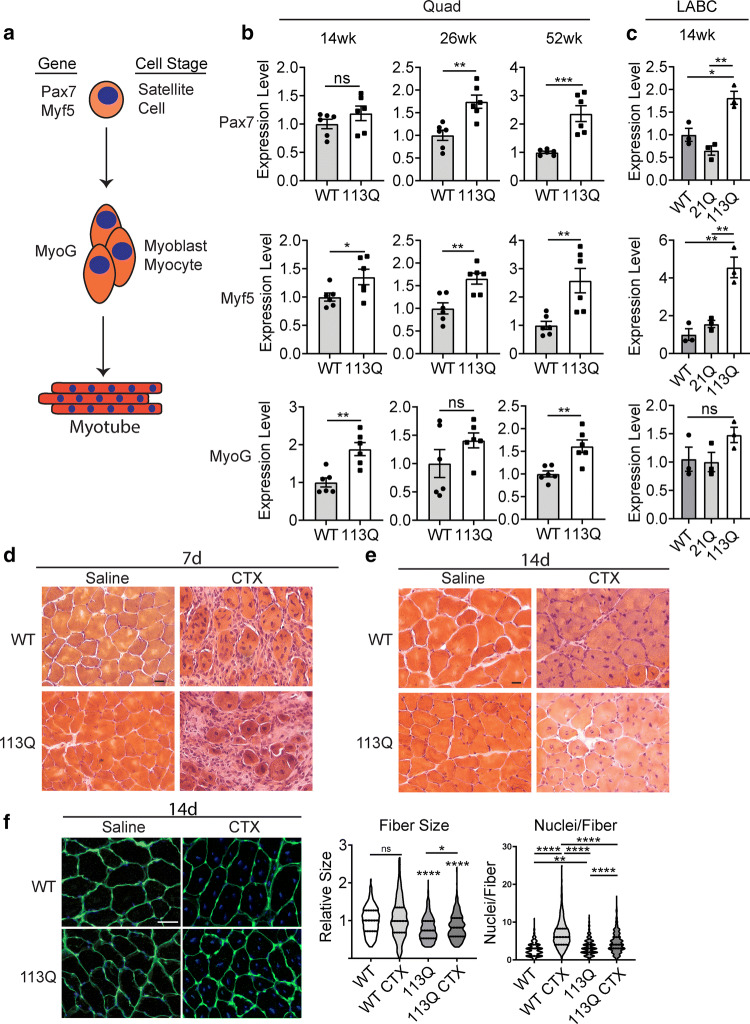
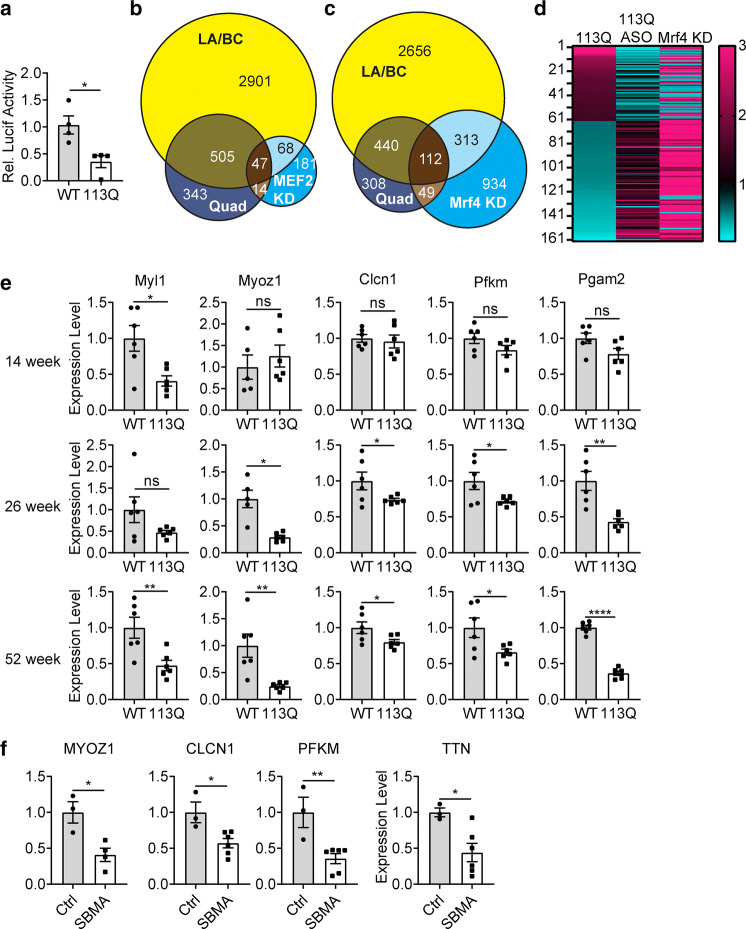
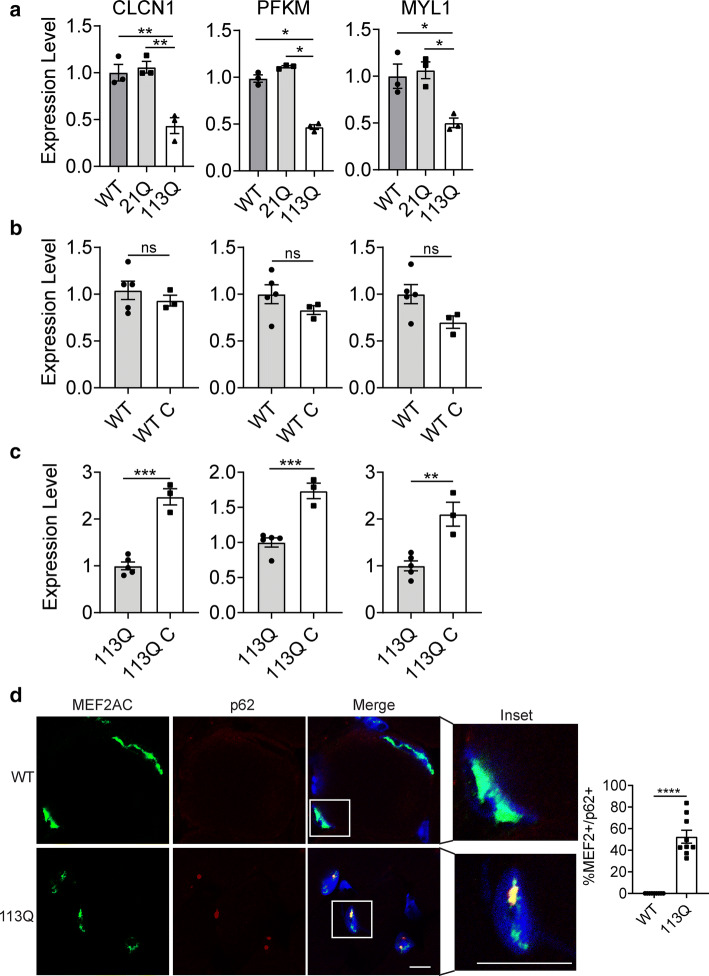
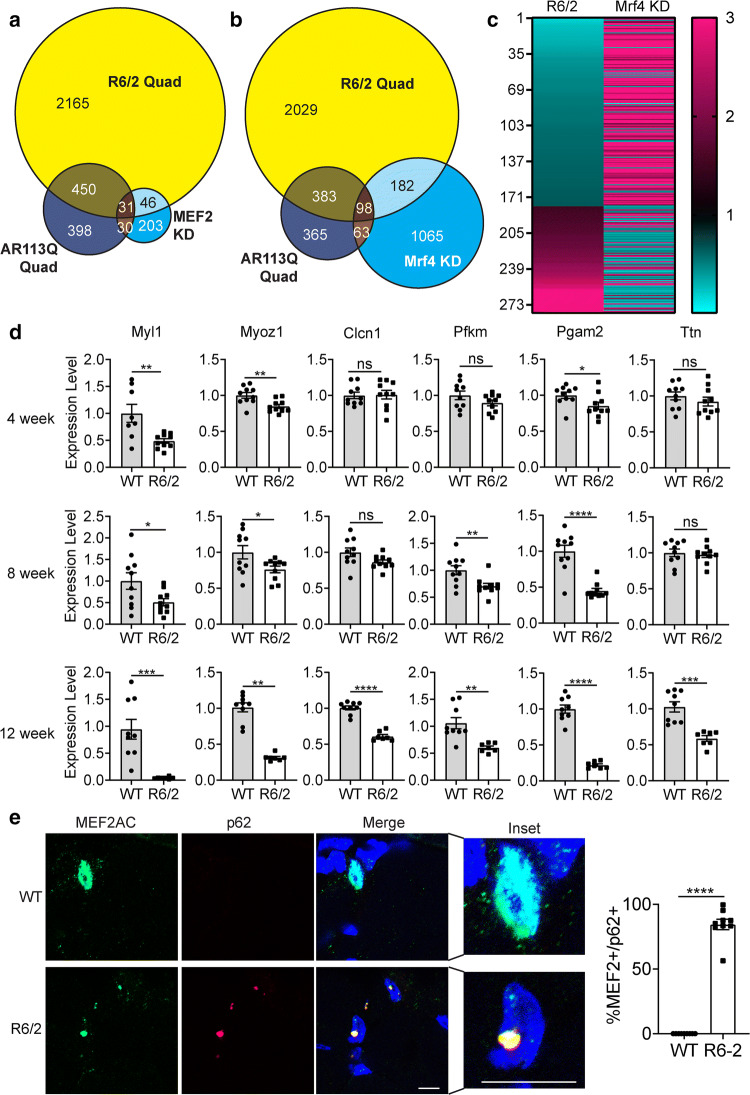
Polyglutamine (polyQ) tract expansion leads to proteotoxic misfolding and drives a family of nine diseases. We study spinal and bulbar muscular atrophy (SBMA), a progressive degenerative disorder of the neuromuscular system caused by the polyQ androgen receptor (AR). Using a knock-in mouse model of SBMA, AR113Q mice, we show that E3 ubiquitin ligases which are a hallmark of the canonical muscle atrophy machinery are not induced in AR113Q muscle. Similarly, we find no evidence to suggest dysfunction of signaling pathways that trigger muscle hypertrophy or impairment of the muscle stem cell niche. Instead, we find that skeletal muscle atrophy is characterized by diminished function of the transcriptional regulator Myocyte Enhancer Factor 2 (MEF2), a regulator of myofiber homeostasis. Decreased expression of MEF2 target genes is age- and glutamine tract length-dependent, occurs due to polyQ AR proteotoxicity, and is associated with sequestration of MEF2 into intranuclear inclusions in muscle. Skeletal muscle from R6/2 mice, a model of Huntington disease which develops progressive atrophy, also sequesters MEF2 into inclusions and displays age-dependent loss of MEF2 target genes. Similarly, SBMA patient muscle shows loss of MEF2 target gene expression, and restoring MEF2 activity in AR113Q muscle rescues fiber size and MEF2-regulated gene expression. This work establishes MEF2 impairment as a novel mechanism of skeletal muscle atrophy downstream of toxic polyglutamine proteins and as a therapeutic target for muscle atrophy in these disorders.
多聚谷氨酰胺(polyQ)重复序列扩展导致蛋白毒性错误折叠,并引发了九种疾病。我们研究了脊髓延髓肌萎缩症(SBMA),这是一种由多聚谷氨酰胺雄激素受体(AR)引起的进行性神经肌肉系统退行性疾病。使用 SBMA 的敲入小鼠模型,即 AR113Q 小鼠,我们发现 E3 泛素连接酶(其是经典肌肉萎缩机制的标志)在 AR113Q 肌肉中并未被诱导。同样,我们没有发现任何证据表明引发肌肉肥大的信号通路或肌肉干细胞龛的功能障碍。相反,我们发现骨骼肌萎缩的特征是转录调节因子肌细胞增强因子 2(MEF2)的功能减弱,MEF2 是肌纤维稳态的调节剂。MEF2 靶基因的表达减少与年龄和谷氨酰胺重复序列长度有关,是由于多聚谷氨酰胺 AR 的蛋白毒性引起的,并且与 MEF2 在内核内包涵体中的隔离有关。亨廷顿病模型 R6/2 小鼠的骨骼肌也将 MEF2 隔离到包涵体中,并表现出 MEF2 靶基因随年龄的丢失。同样,SBMA 患者的肌肉也显示出 MEF2 靶基因表达的丢失,并且在 AR113Q 肌肉中恢复 MEF2 活性可挽救纤维大小和 MEF2 调节的基因表达。这项工作确立了 MEF2 损伤作为毒性多聚谷氨酰胺蛋白下游骨骼肌萎缩的新机制,以及这些疾病中肌肉萎缩的治疗靶点。