Department of Physiology, School of Medicine, Tehran University of Medical Sciences, Tehran, Iran.
Electrophysiology Research Center, Neuroscience Institute, Tehran University of Medical Sciences, Tehran, Iran.
Iran Biomed J. 2020 Jul;24(4):220-8. doi: 10.29252/ibj.24.4.220. Epub 2020 Feb 29.
The most important cause of neurodegeneration in Alzheimer's disease (AD) is associated with inflammation and oxidative stress. Probiotics are microorganisms that are believed to be beneficial to human and animals. Probiotics reduce oxidative stress and inflammation in some cases. Therefore, this study determined the effects of probiotics mixture on the biomarkers of oxidative stress and inflammation in an AD model of rats.
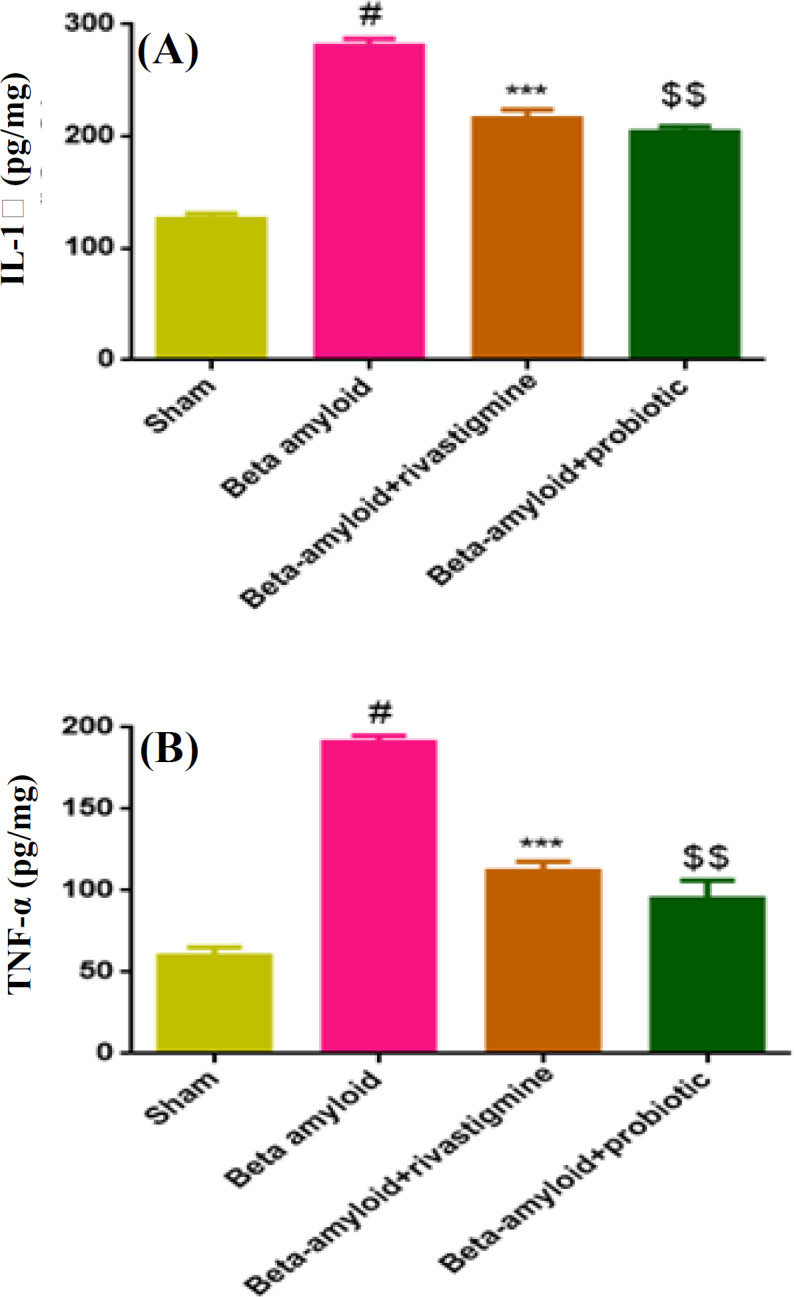
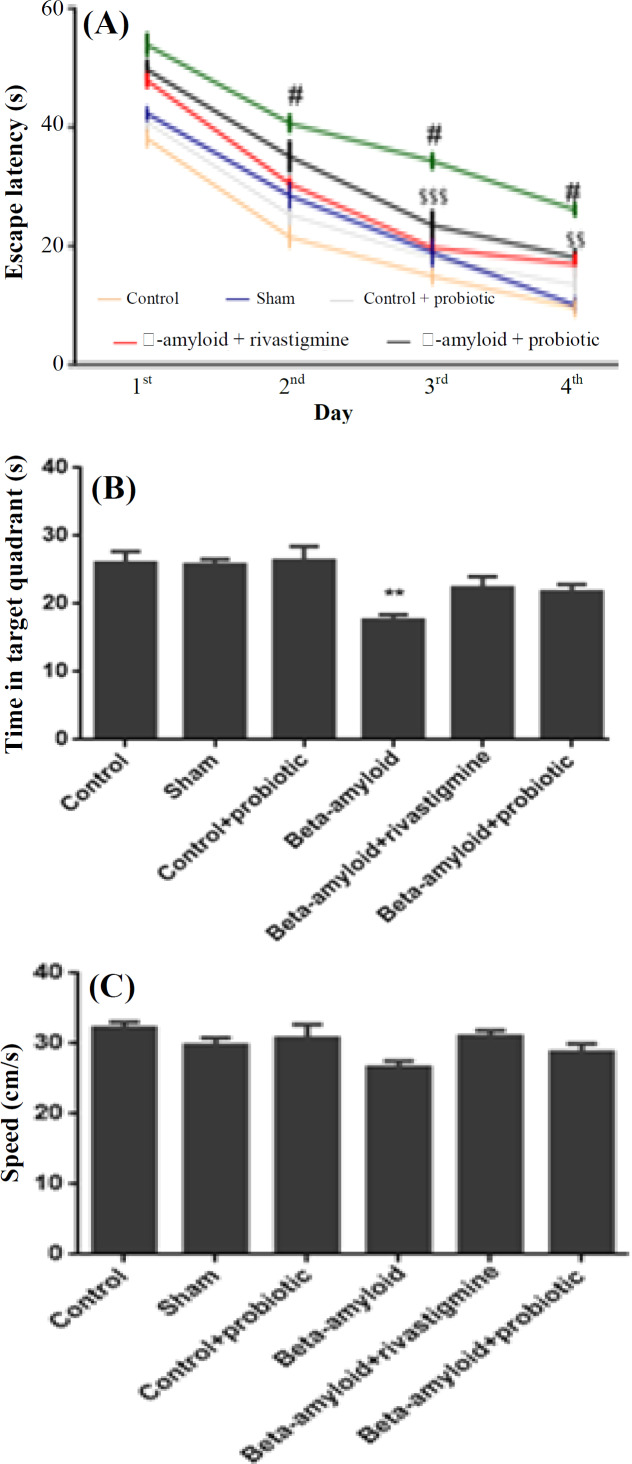
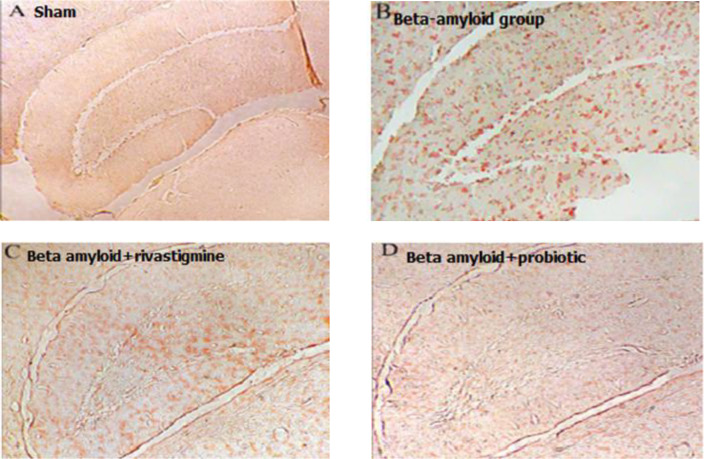
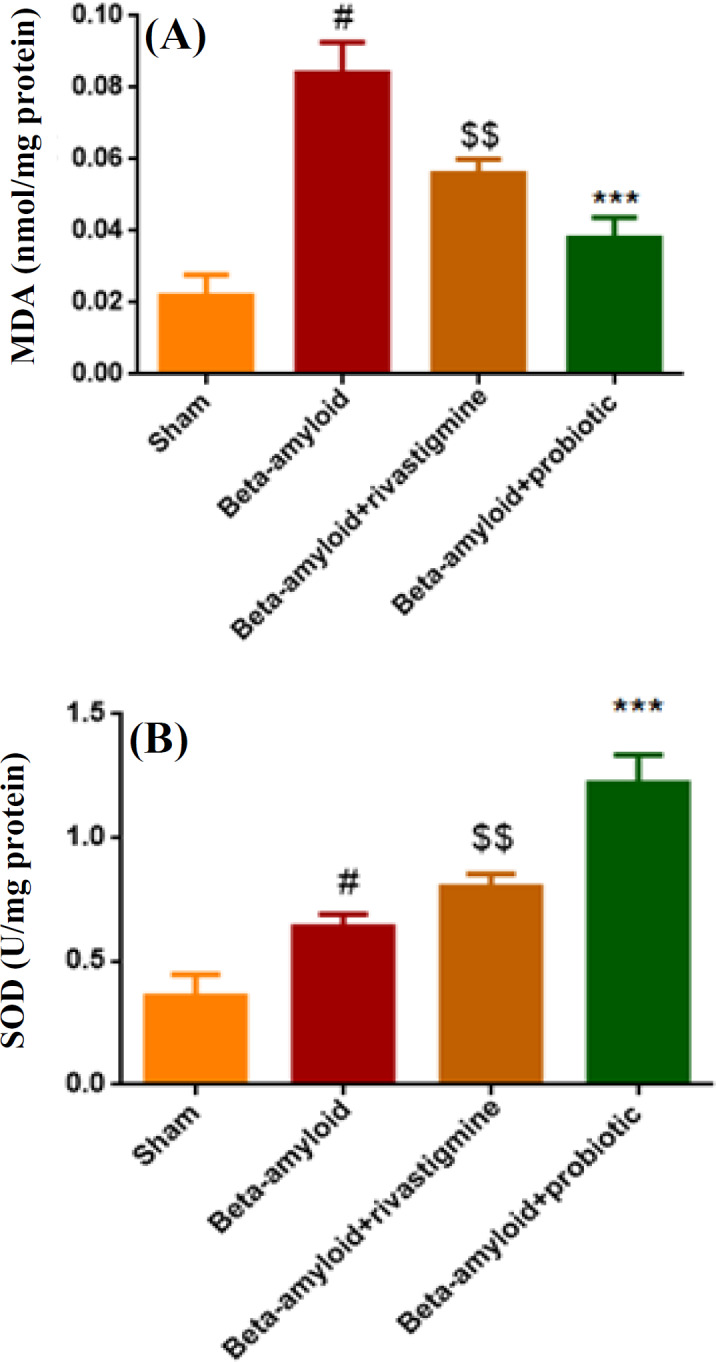
In this study, 50 rats were allocated to five groups, namely control, sham, and AD groups with Aβ1-40 intra-hippocampal injection, as well as AD + rivastigmine and AD + probiotics groups with Aβ1-40 intra-hippocampal injection and 2 ml (1010 CFU) of probiotics (Lactobacillus reuteri, Lactobacillus rhamnosus, and Bifidobacterium infantis) orally once a day for 10 weeks. MWM was used to assess memory and learning. To detect Aβ plaque, Congo red staining was used. Oxidative stress was monitored by measuring the MDA level and SOD activity, and to assess inflammation markers (IL-1β and TNF-α) in the hippocampus, ELISA method was employed..
Spatial memory improved significantly in treatment group as measured by MWM. Probiotics administration reduced Aβ plaques in AD rats. MDA decreased and SOD increased in the treatment group. Besides, probiotics reduced IL-1β and TNF-α as inflammation markers in the AD model of rats.
Our data revealed that probiotics are helpful in attenuating inflammation and oxidative stress in AD.
阿尔茨海默病(AD)中神经退行性变的最重要原因与炎症和氧化应激有关。益生菌是被认为对人类和动物有益的微生物。益生菌在某些情况下可减轻氧化应激和炎症。因此,本研究旨在确定益生菌混合物对 AD 大鼠模型氧化应激和炎症生物标志物的影响。
在这项研究中,将 50 只大鼠分为五组,分别为对照组、假手术组、海马内注射 Aβ1-40 的 AD 组,以及海马内注射 Aβ1-40 并每天口服 2ml(1010CFU)益生菌(鼠李糖乳杆菌、罗伊氏乳杆菌和婴儿双歧杆菌)的 AD+利伐斯的明组和 AD+益生菌组,共 10 周。MWM 用于评估记忆和学习。使用刚果红染色检测 Aβ 斑块。通过测量 MDA 水平和 SOD 活性来监测氧化应激,并且通过 ELISA 方法评估海马中的炎症标志物(IL-1β和 TNF-α)。
MWM 测量结果显示,治疗组的空间记忆显著改善。益生菌给药减少了 AD 大鼠中的 Aβ 斑块。治疗组 MDA 降低,SOD 增加。此外,益生菌减少了 AD 大鼠模型中的炎症标志物 IL-1β 和 TNF-α。
我们的数据表明,益生菌有助于减轻 AD 中的炎症和氧化应激。