Division of Life Sciences, College of Life Science and Bioengineering, Incheon National University, Incheon, South Korea.
Department of Nuclear Medicine, Severance Hospital, Yonsei University College of Medicine, Seoul, 120-749, South Korea.
BMC Cancer. 2020 Apr 19;20(1):332. doi: 10.1186/s12885-020-06822-4.
Hepatocellular carcinoma (HCC) is the leading cause of cancer-related deaths worldwide. The only drug currently approved for clinical use in the treatment of advanced HCC is sorafenib. However, many patients with HCC show reduced sensitivity to sorafenib during treatment. SIRT3, a member of the mammalian sirtuin family, is a tumor suppressor in certain tumor types. However, only few studies have investigated the effects of SIRT3 on tumor prognosis and sorafenib sensitivity in patients with HCC. Here, we aimed to investigate the correlation between SIRT3 expression and glucose metabolism and proliferation in HCC and discover effective compounds that increase endogenous SIRT3 modulation effect of sorafenib.
To determine the correlation between SIRT3 and glucose related proteins, immunostaining was performed with liver cancer tissue using various antibodies. To investigate whether the expression of SIRT3 in HCC is related to the resistance to sorafenib, we treated sorafenib after the modulation of SIRT3 levels in HCC cell lines (overexpression in Huh7, knockdown in HepG2). We also employed PD0332991 to modulate the SIRT3 expression in HCC cell and conducted functional assays.
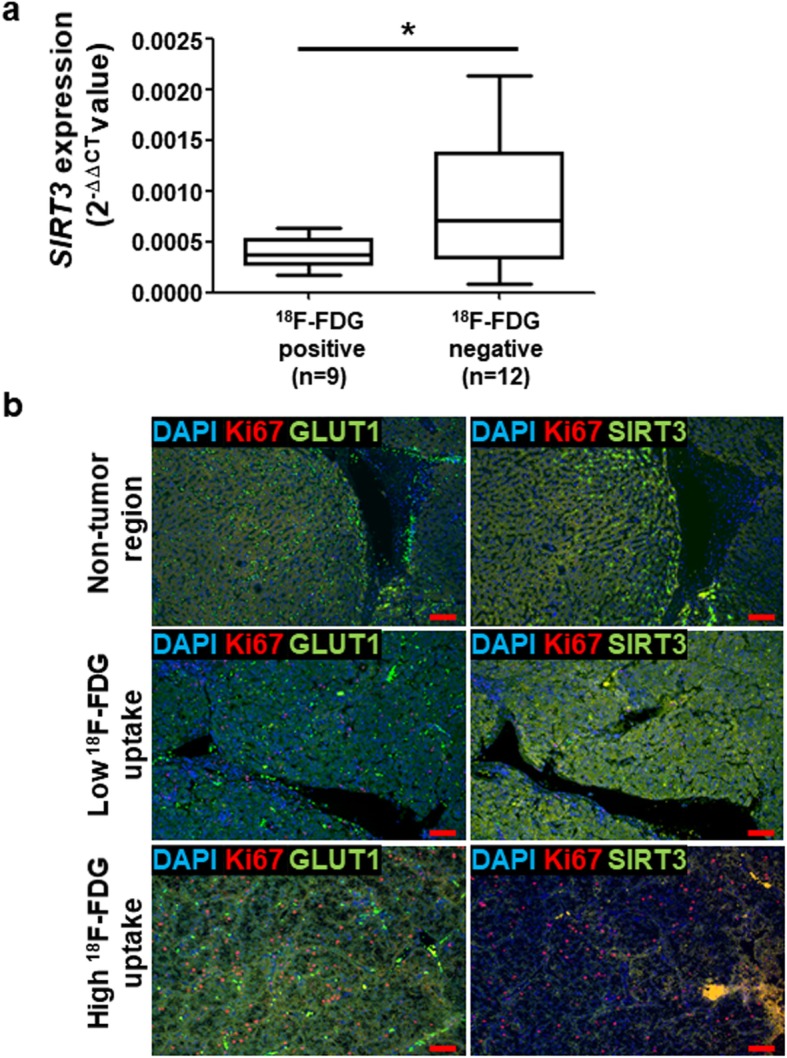
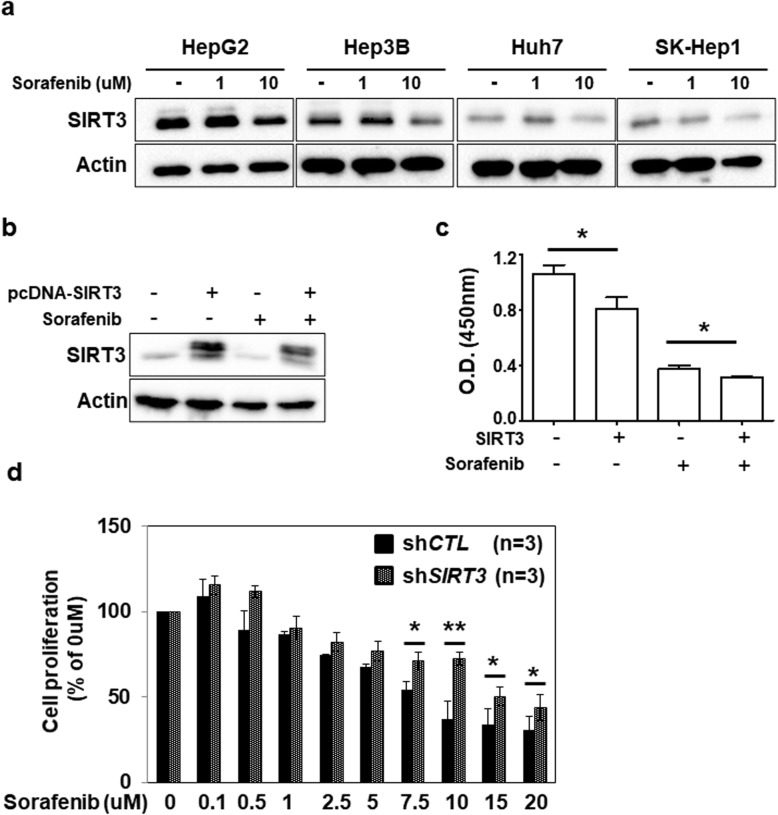
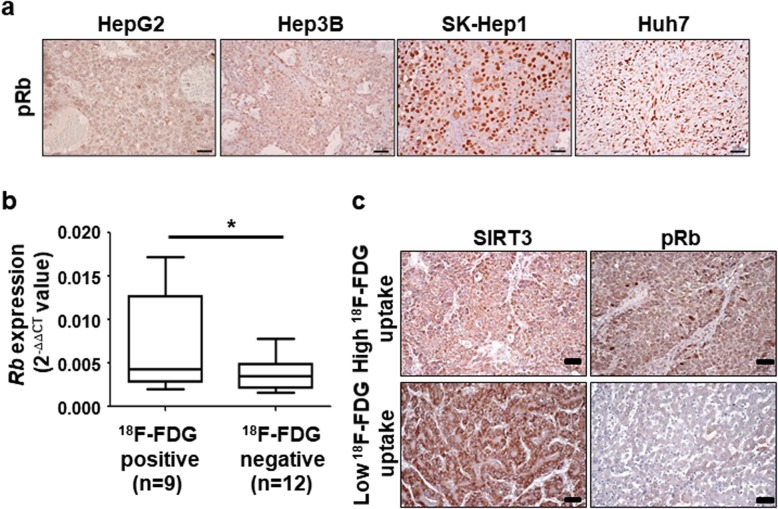
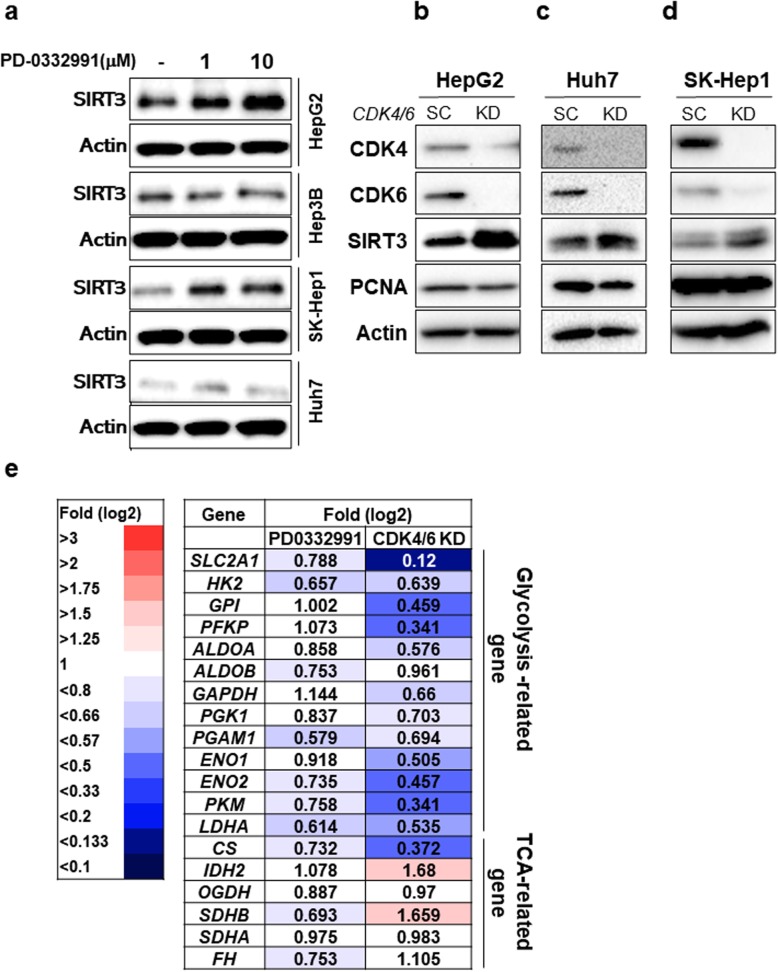
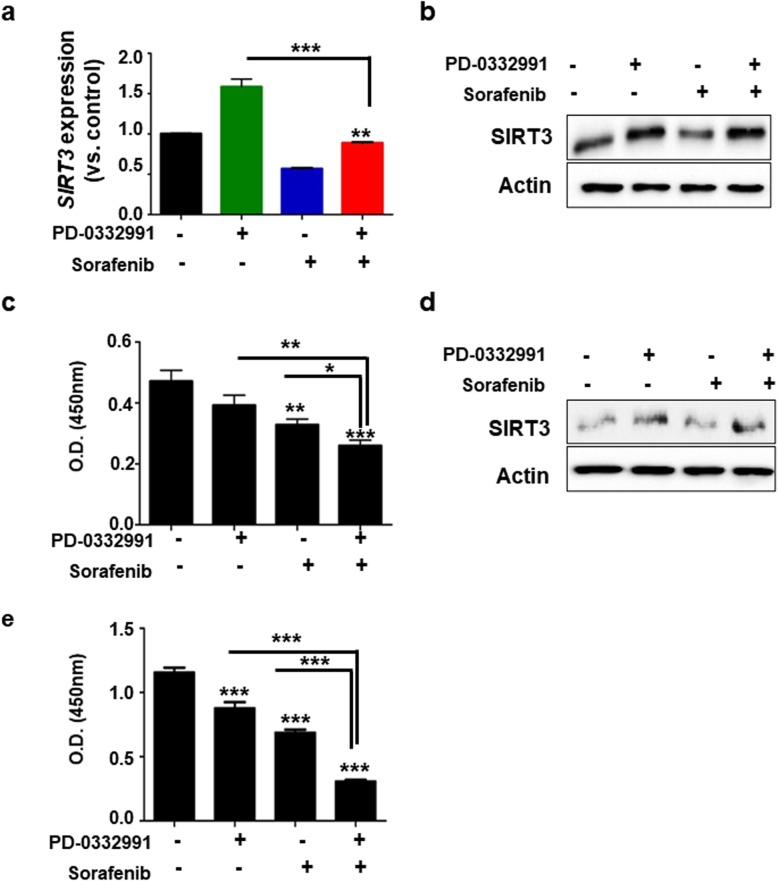
SIRT3 expression was downregulated in high glycolytic and proliferative HCC cells of human patients, xenograft model and HCC cell lines. Moreover, SIRT3 expression was downregulated after sorafenib treatment, resulting in reduced drug sensitivity in HCC cell lines. To enhance the anti-tumor effect of sorafenib, we employed PD0332991 (CDK4/6-Rb inhibitor) based on the correlation between SIRT3 and phosphorylated retinoblastoma protein in HCC. Notably, combined treatment with sorafenib and PD0332991 showed an enhancement of the anti-tumor effect in HCC cells.
Our data suggest that the modulation of SIRT3 by CDK4/6 inhibition might be useful for HCC therapy together with sorafenib, which, unfortunately, has limited efficacy and whose use is often associated with drug resistance.
肝细胞癌(HCC)是全球癌症相关死亡的主要原因。目前唯一被批准用于治疗晚期 HCC 的临床药物是索拉非尼。然而,许多 HCC 患者在治疗过程中对索拉非尼的敏感性降低。SIRT3 是哺乳动物 Sirtuin 家族的成员,是某些肿瘤类型的肿瘤抑制因子。然而,只有少数研究调查了 SIRT3 对 HCC 患者肿瘤预后和索拉非尼敏感性的影响。在这里,我们旨在研究 SIRT3 表达与 HCC 中葡萄糖代谢和增殖之间的相关性,并发现有效化合物来增加索拉非尼对 SIRT3 的内源性调节作用。
为了确定 SIRT3 与葡萄糖相关蛋白之间的相关性,我们使用各种抗体对肝癌组织进行免疫染色。为了研究 HCC 中 SIRT3 的表达是否与索拉非尼耐药有关,我们在 HCC 细胞系中调节 SIRT3 水平(Huh7 过表达,HepG2 敲低)后进行索拉非尼处理。我们还使用 PD0332991 调节 HCC 细胞中的 SIRT3 表达,并进行功能测定。
在人类患者、异种移植模型和 HCC 细胞系中,高糖酵解和增殖性 HCC 细胞中的 SIRT3 表达下调。此外,索拉非尼处理后 SIRT3 表达下调,导致 HCC 细胞系中药物敏感性降低。为了增强索拉非尼的抗肿瘤作用,我们根据 SIRT3 与 HCC 中磷酸化视网膜母细胞瘤蛋白之间的相关性,使用 PD0332991(CDK4/6-Rb 抑制剂)。值得注意的是,索拉非尼和 PD0332991 联合治疗可增强 HCC 细胞的抗肿瘤作用。
我们的数据表明,CDK4/6 抑制对 SIRT3 的调节可能对 HCC 治疗与索拉非尼一起使用有用,不幸的是,索拉非尼的疗效有限,其使用通常与耐药性有关。