Beijing YouAn Hospital, Capital Medical University, Beijing Institute of Hepatology, Beijing, China.
Beijing Precision Medicine and Transformation Engineering Technology Research Center of Hepatitis and Liver Cancer, Beijing, China.
Clin Infect Dis. 2020 Nov 19;71(16):2052-2060. doi: 10.1093/cid/ciaa462.
The World Health Organization characterizes novel coronavirus disease 2019 (COVID-19), which is caused by severe acute respiratory syndrome coronavirus 2 (SARS-CoV-2), as a pandemic. Here, we investigated the clinical, cytokine levels; T-cell proportion; and related gene expression occurring in patients with COVID-19 on admission and after initial treatment.
Eleven patients diagnosed with COVID-19 with similar initial treatment regimens were enrolled in the hospital. Plasma cytokine, peripheral T cell proportions, and microfluidic quantitative polymerase chain reaction analyses for gene expression were conducted.
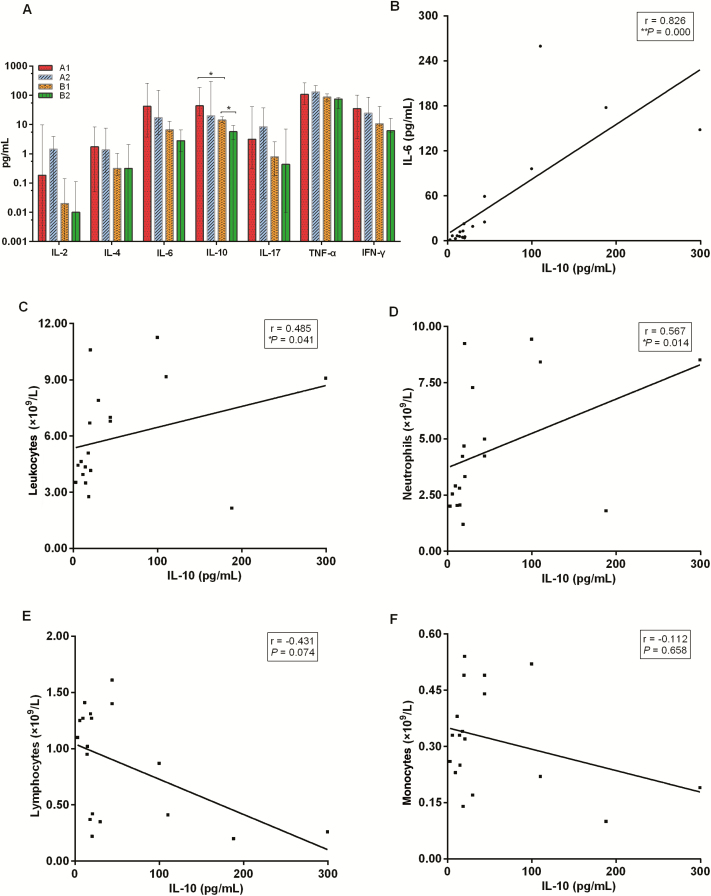
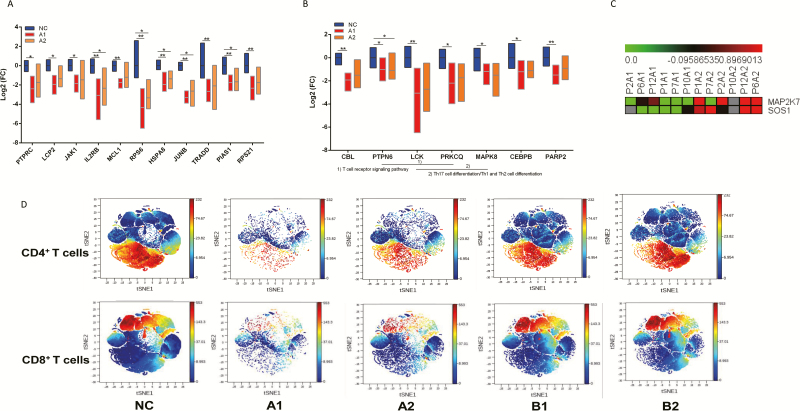
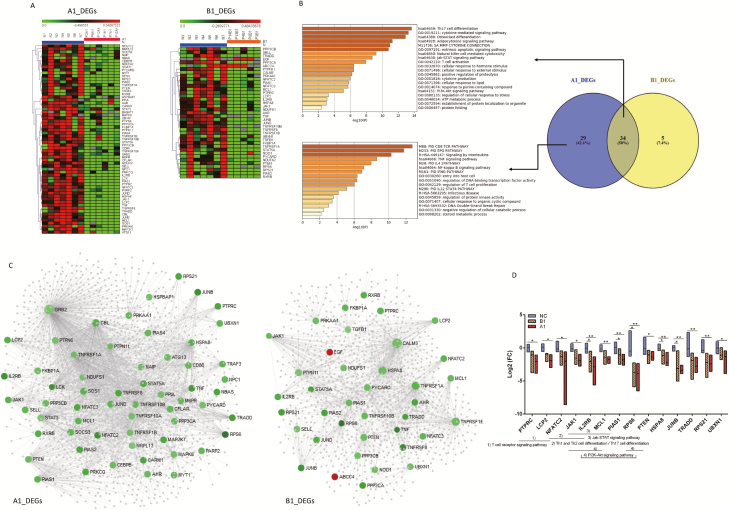
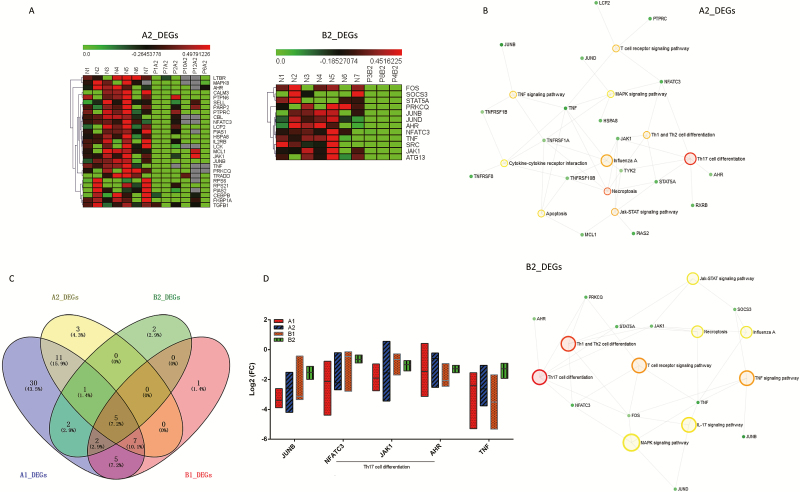
Five patients with mild and 6 with severe disease were included. Cough and fever were the primary symptoms in the 11 COVID-19 cases. Older age, higher neutrophil count, and higher C-reactive protein levels were found in severe cases. IL-10 level significantly varied with disease progression and treatment. Decreased T-cell proportions were observed in patients with COVID-19, especially in severe cases, and all were returned to normal in patients with mild disease after initial treatment, but only CD4+ T cells returned to normal in severe cases. The number of differentially expressed genes (DEGs) increased with the disease progression, and decreased after initial treatment. All downregulated DEGs in severe cases mainly involved Th17-cell differentiation, cytokine-mediated signaling pathways, and T-cell activation. After initial treatment in severe cases, MAP2K7 and SOS1 were upregulated relative to that on admission.
Our findings show that a decreased T-cell proportion with downregulated gene expression related to T-cell activation and differentiation occurred in patients with severe COVID-19, which may help to provide effective treatment strategies for COVID-19.
世界卫生组织将由严重急性呼吸系统综合征冠状病毒 2(SARS-CoV-2)引起的 2019 年新型冠状病毒病(COVID-19)定性为大流行疾病。在此,我们研究了入院和初始治疗后 COVID-19 患者的临床、细胞因子水平、T 细胞比例和相关基因表达情况。
纳入 11 例接受类似初始治疗方案的 COVID-19 患者,进行血浆细胞因子、外周 T 细胞比例和微流控定量聚合酶链反应分析。
5 例患者病情较轻,6 例患者病情较重。11 例 COVID-19 患者的主要症状为咳嗽和发热。重症患者的年龄较大,中性粒细胞计数和 C 反应蛋白水平较高。白细胞介素 10(IL-10)水平随疾病进展和治疗而显著变化。COVID-19 患者 T 细胞比例降低,尤其是重症患者,轻症患者经初始治疗后均恢复正常,但重症患者仅 CD4+T 细胞恢复正常。差异表达基因(DEGs)的数量随疾病进展而增加,初始治疗后减少。重症患者所有下调的 DEGs 主要涉及 Th17 细胞分化、细胞因子介导的信号通路和 T 细胞激活。与入院时相比,重症患者经初始治疗后 MAP2K7 和 SOS1 上调。
我们的研究结果表明,重症 COVID-19 患者 T 细胞比例降低,与 T 细胞激活和分化相关的基因表达下调,这可能有助于为 COVID-19 提供有效的治疗策略。