Chu Xiaojie, Li Yang, Long Qiong, Xia Ye, Yao Yufeng, Sun Wenjia, Huang Weiwei, Yang Xu, Liu Cunbao, Ma Yanbing
Laboratory of Molecular Immunology, Institute of Medical Biology, Chinese Academy of Medical Science & Peking Union Medical College, Kunming, People's Republic of China; Yunnan Key Laboratory of Vaccine Research & Development on Severe Infectious Disease, Kunming, People's Republic of China; Yunnan Engineering Research Center of Vaccine Research and Development on Severe Infectious Disease, Kunming, People's Republic of China.
Int J Nanomedicine. 2016 May 27;11:2417-29. doi: 10.2147/IJN.S102467. eCollection 2016.
Therapeutic human papillomavirus (HPV) vaccines are currently being developed. However, no therapeutic efficacy has been achieved in clinical trials for the treatment of cervical intraepithelial neoplasia or cancer. One of the important issues in increasing vaccine efficacy is determining the best way to enhance tumor antigen-specific cellular immune responses. This study aimed to explore the virus-like particles (VLPs) of hepatitis B core antigen (HBcAg) as potential therapeutic vaccine carriers and to assess its immunological characteristics.
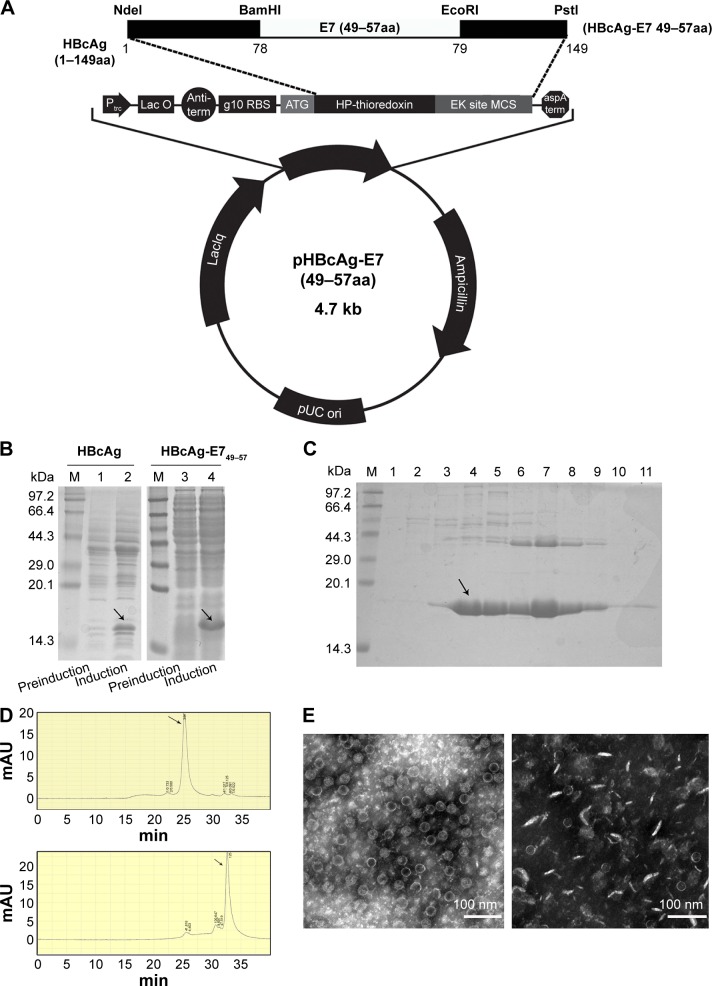
Chimeric VLPs presenting a HPV 16 cytotoxic T lymphocytes epitope E749-57 (amino acid 49-57 of the E7 protein) were prepared using recombinant genes. C57BL/6 mice were immunized with VLPs and grafted with tumor cells TC-1 which is an E7-expressing tumorigenic cell line. The dynamic tumor growth was monitored and anti-tumor immune responses were investigated.
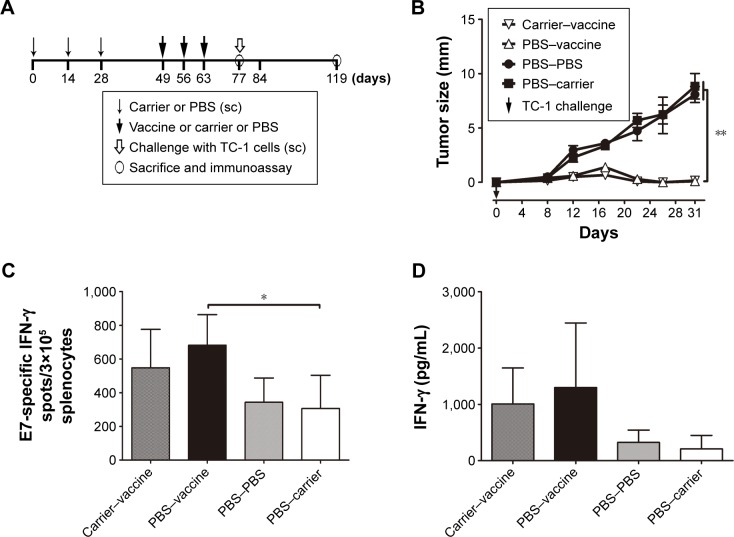
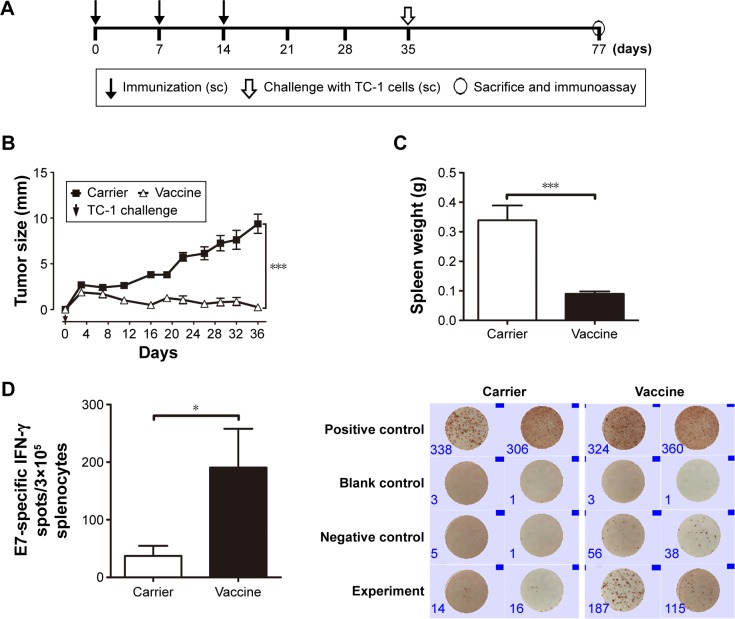
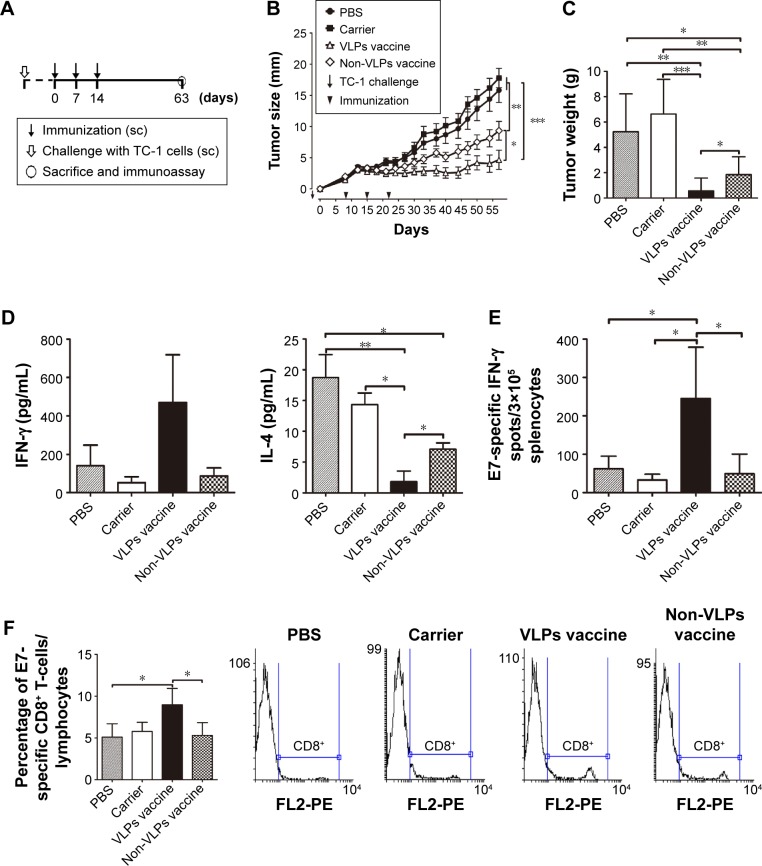
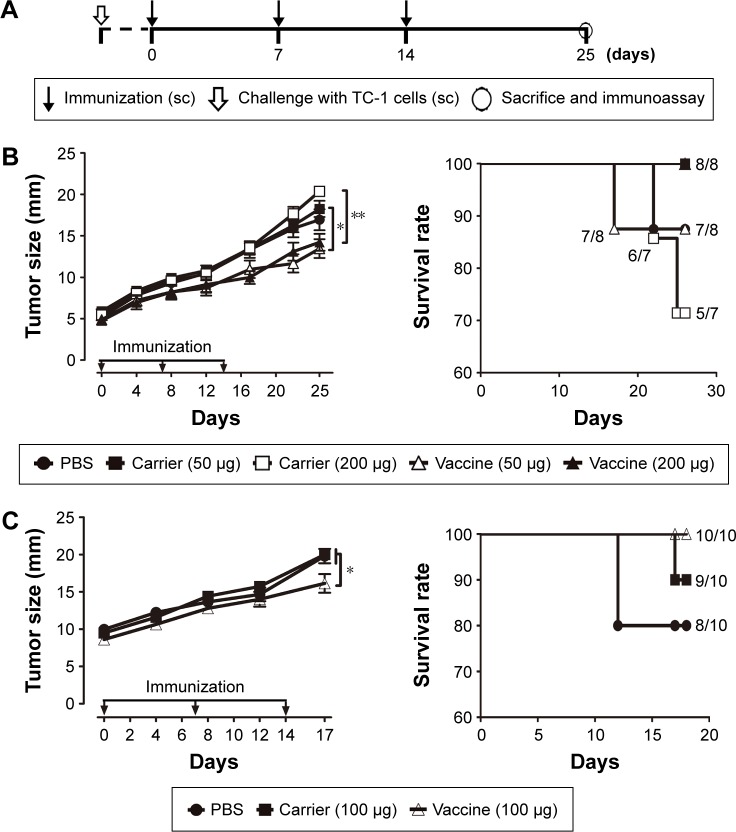
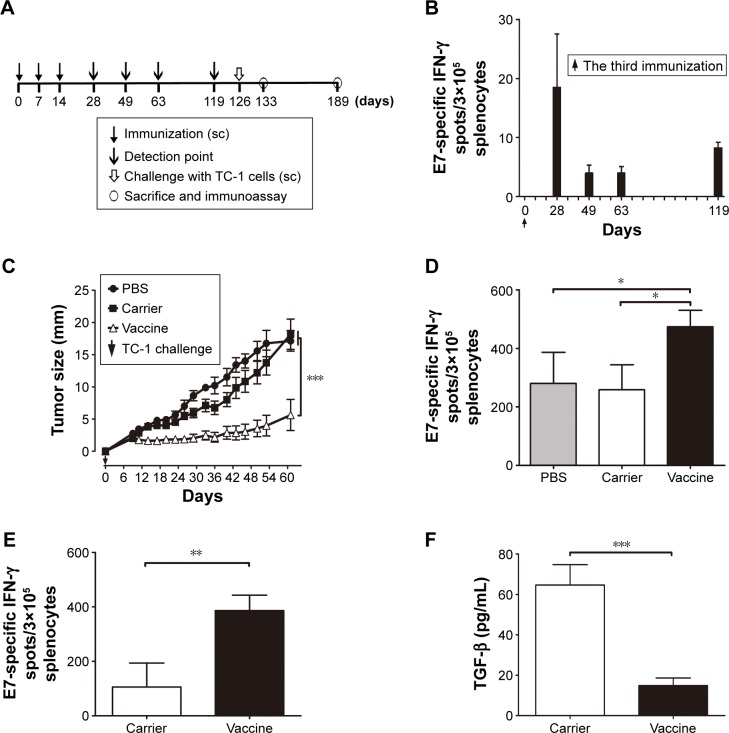
Using a preventive strategy, immunization with VLPs resulted in nearly complete suppression of tumor growth. In treatment studies, VLP immunization significantly suppressed the tumor progression in mice carrying 2-3 mm tumors and in those bearing even larger tumors with diameters up to 8-9 mm. The VLP structure was shown to be important to induce vigorous antitumor immunity and effects. In immunized mice, enhanced E749-57-specific cellular immune responses were evidenced by increased interferon (IFN)-γ expression and decreased interleukin (IL)-4 expression in splenic lymphocytes, as well as an elevated number of effector cells expressing IFN-γ in response to the in vitro stimulation of the specific peptide E749-57. In addition, effective immune memory after VLP immunization was maintained for at least 16 weeks, preventing significant tumor growth after subsequent TC-1 challenge.
While VLPs were highly immunogenic in stimulating humoral immunity, our results strongly indicated that VLPs, such as HBcAg particles, might also be potent therapeutic vaccine carriers to elicit robust cellular immune responses, even in the immunosuppressive microenvironment of a tumor.
治疗性人乳头瘤病毒(HPV)疫苗目前正在研发中。然而,在治疗宫颈上皮内瘤变或癌症的临床试验中尚未取得治疗效果。提高疫苗效力的重要问题之一是确定增强肿瘤抗原特异性细胞免疫反应的最佳方法。本研究旨在探索乙肝核心抗原(HBcAg)的病毒样颗粒(VLPs)作为潜在的治疗性疫苗载体,并评估其免疫学特性。
使用重组基因制备呈现HPV 16细胞毒性T淋巴细胞表位E749 - 57(E7蛋白的第49 - 57位氨基酸)的嵌合VLPs。用VLPs免疫C57BL / 6小鼠,并接种肿瘤细胞TC - 1,TC - 1是一种表达E7的致瘤细胞系。监测肿瘤动态生长并研究抗肿瘤免疫反应。
采用预防性策略,用VLPs免疫可几乎完全抑制肿瘤生长。在治疗研究中,VLP免疫显著抑制了携带2 - 3毫米肿瘤的小鼠以及那些携带直径达8 - 9毫米甚至更大肿瘤的小鼠的肿瘤进展。VLP结构被证明对于诱导强烈的抗肿瘤免疫和效应很重要。在免疫小鼠中,脾脏淋巴细胞中干扰素(IFN)-γ表达增加和白细胞介素(IL)-4表达降低,以及响应特异性肽E749 - 57的体外刺激而表达IFN -γ的效应细胞数量增加,证明了E749 - 57特异性细胞免疫反应增强。此外,VLP免疫后的有效免疫记忆维持至少16周,在随后的TC - 1攻击后防止肿瘤显著生长。
虽然VLPs在刺激体液免疫方面具有高度免疫原性,但我们的结果强烈表明,诸如HBcAg颗粒的VLPs也可能是有效的治疗性疫苗载体,即使在肿瘤的免疫抑制微环境中也能引发强大的细胞免疫反应。