Constantine Gregory M, Lionakis Michail S
Fungal Pathogenesis Section, Laboratory of Clinical Immunology and Microbiology, National Institute of Allergy and Infectious Diseases, National Institutes of Health, Bethesda, Maryland, 20814, USA.
F1000Res. 2020 Apr 7;9. doi: 10.12688/f1000research.22036.1. eCollection 2020.
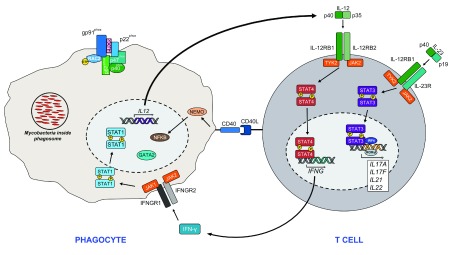
The immune system is central to our interactions with the world in which we live and importantly dictates our response to potential allergens, toxins, and pathogens to which we are constantly exposed. Understanding the mechanisms that underlie protective host immune responses against microbial pathogens is vital for the development of improved treatment and vaccination strategies against infections. To that end, inherited immunodeficiencies that manifest with susceptibility to bacterial, viral, and/or fungal infections have provided fundamental insights into the indispensable contribution of key immune pathways in host defense against various pathogens. In this mini-review, we summarize the findings from a series of recent publications in which inherited immunodeficiencies have helped illuminate the interplay of human immunity and resistance to infection.
免疫系统是我们与所处世界相互作用的核心,并且重要的是,它决定了我们对潜在过敏原、毒素和病原体的反应,而我们一直暴露于这些物质中。了解保护性宿主免疫反应对抗微生物病原体的潜在机制,对于开发更好的抗感染治疗和疫苗接种策略至关重要。为此,表现出对细菌、病毒和/或真菌感染易感性的遗传性免疫缺陷,为关键免疫途径在宿主抵御各种病原体中的不可或缺的作用提供了基本见解。在本综述中,我们总结了一系列近期出版物的研究结果,其中遗传性免疫缺陷有助于阐明人类免疫与抗感染能力之间的相互作用。