Duan Xilei, Wu Yuemeng, Zhang Zheng, Lu Zhong
Department of Dermatology, Huashan Hospital, Fudan University, Shanghai 200040, China.
Ann Transl Med. 2020 Mar;8(5):222. doi: 10.21037/atm.2020.01.07.
Keloid is an excessive fibrosis disease caused by the abnormal proliferation of collagen fibers following trauma. Previous studies have shown that genetic factors have been considered to play important roles in keloid formation. This study is aimed to investigate the regulatory network of messenger RNAs (mRNAs) microRNAs (miRNAs) and long non-coding RNAs (lncRNAs) in keloid, and identifying its key biomarkers.
We performed RNA-seq and miRNA-seq on keloid and normal skin samples. Sequencing datasets were analyzed by bioinformatics. Gene ontology (GO) and pathway analysis presented the characteristics of associated protein-coding genes. Differentially expressed ceRNAs were validated by quantitative reverse transcriptase-PCR (qRT-PCR).
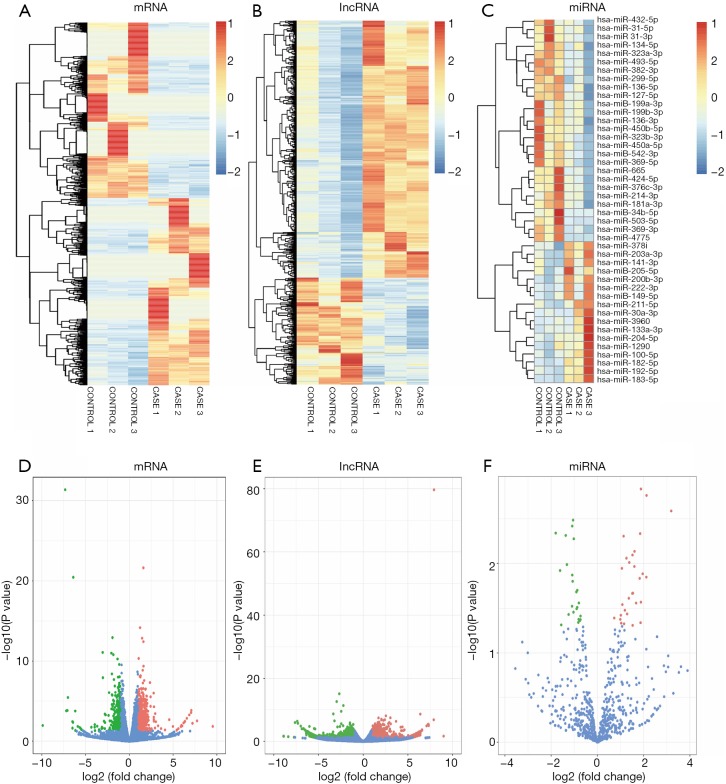
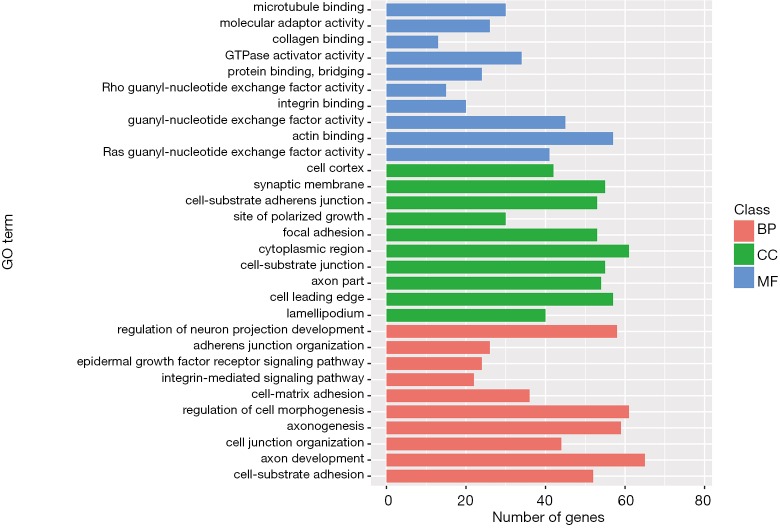
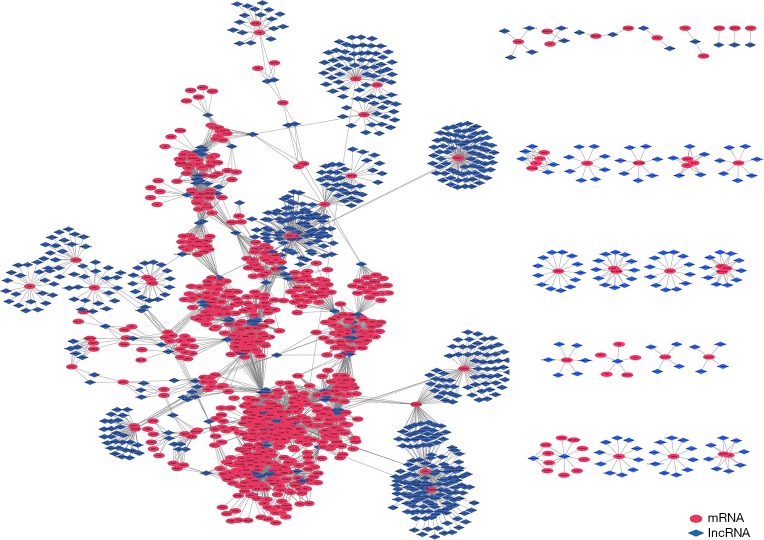
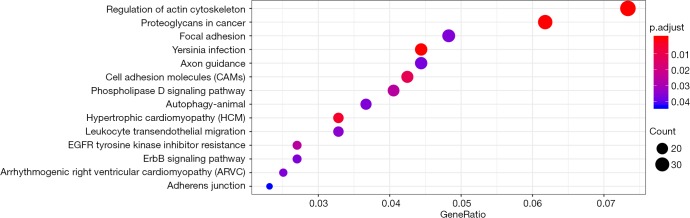
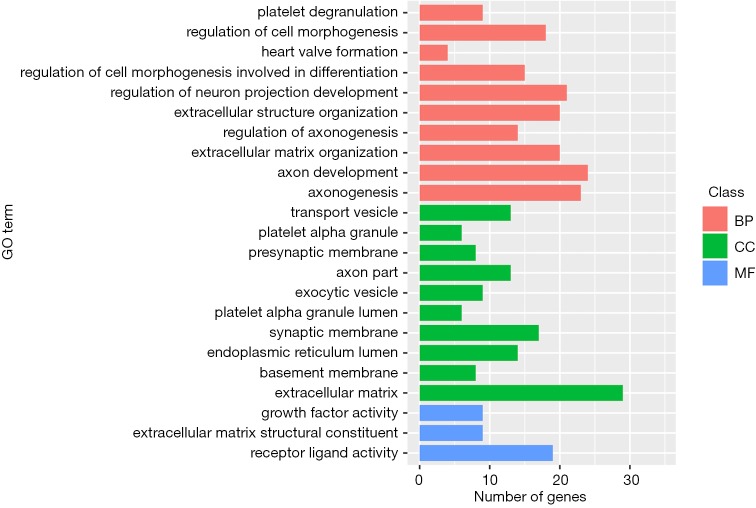
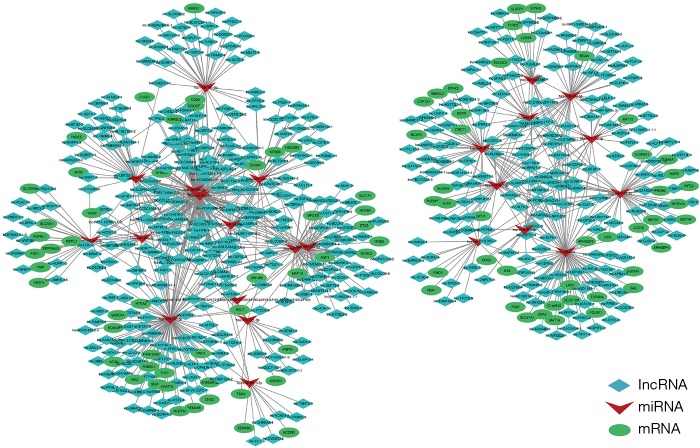
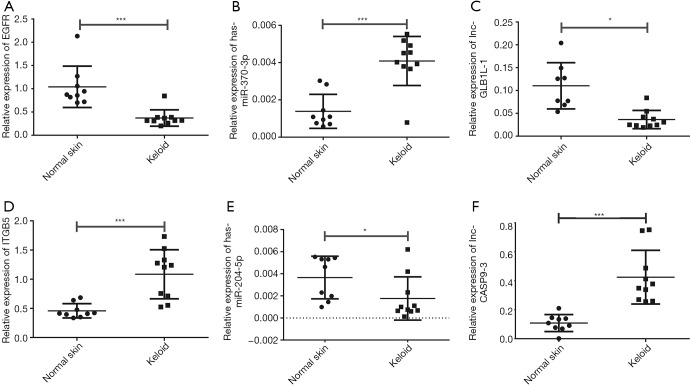
We identified a total of 319 lncRNAs, 1,533 mRNAs and 40 miRNAs as keloid-specific RNAs. Both the GO biological processes and Kyoto Encyclopedia of Genes and Genomes (KEGG) pathways were analyzed for 1,219 specific genes with differentially expressed mRNAs. Then, with 509 key lncRNAs, 25 miRNAs, and 94 mRNAs, we constructed a ceRNA network and explored any potential underlying mechanisms. In the regulation of the actin cytokeleton pathway, we validated 2 pairs of ceRNAs EGFR/miR-370-3p/lnc-GLB1L-1 and ITGB5/ miR-204/ lnc-CASP9-3 in another sample size in keloid.
Through RNA-seq and miRNA-seq, we identified keloid-associated lncRNAs, mRNAs and miRNAs, which can be used as potential therapeutic targets and biomarkers for keloid. Our study may lay a foundation for future pathogenesis studies.
瘢痕疙瘩是一种由创伤后胶原纤维异常增殖引起的过度纤维化疾病。先前的研究表明,遗传因素被认为在瘢痕疙瘩形成中起重要作用。本研究旨在探讨瘢痕疙瘩中信使核糖核酸(mRNA)、微小核糖核酸(miRNA)和长链非编码核糖核酸(lncRNA)的调控网络,并确定其关键生物标志物。
我们对瘢痕疙瘩和正常皮肤样本进行了RNA测序和miRNA测序。通过生物信息学分析测序数据集。基因本体(GO)和通路分析展示了相关蛋白质编码基因的特征。通过定量逆转录聚合酶链反应(qRT-PCR)验证差异表达的竞争性内源性RNA(ceRNA)。
我们共鉴定出319个lncRNA、1533个mRNA和40个miRNA作为瘢痕疙瘩特异性RNA。对1219个mRNA差异表达的特异性基因进行了GO生物学过程和京都基因与基因组百科全书(KEGG)通路分析。然后,我们用509个关键lncRNA、25个miRNA和94个mRNA构建了一个ceRNA网络,并探讨了潜在的机制。在肌动蛋白细胞骨架通路的调控中,我们在另一组瘢痕疙瘩样本中验证了2对ceRNA,即表皮生长因子受体(EGFR)/miR-370-3p/lnc-GLB1L-1和整合素β5(ITGB5)/miR-204/lnc-CASP9-3。
通过RNA测序和miRNA测序,我们鉴定出了与瘢痕疙瘩相关的lncRNA、mRNA和miRNA,它们可作为瘢痕疙瘩潜在的治疗靶点和生物标志物。我们的研究可能为未来的发病机制研究奠定基础。