Javed Erman, Guthrie Jacob D, Neu Justin, Chirayath George S, Huo Shouquan
Department of Chemistry, East Carolina University, Greenville, North Carolina 27858, United States.
ACS Omega. 2020 Apr 3;5(14):8393-8402. doi: 10.1021/acsomega.0c00982. eCollection 2020 Apr 14.
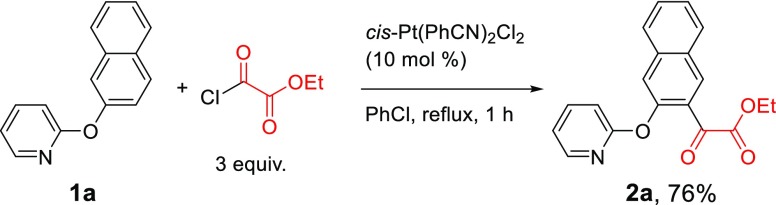
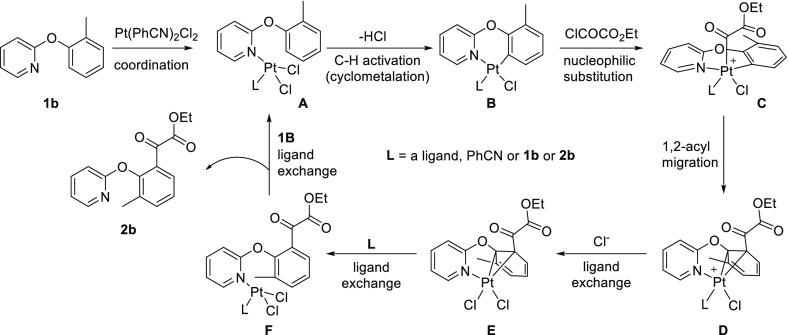
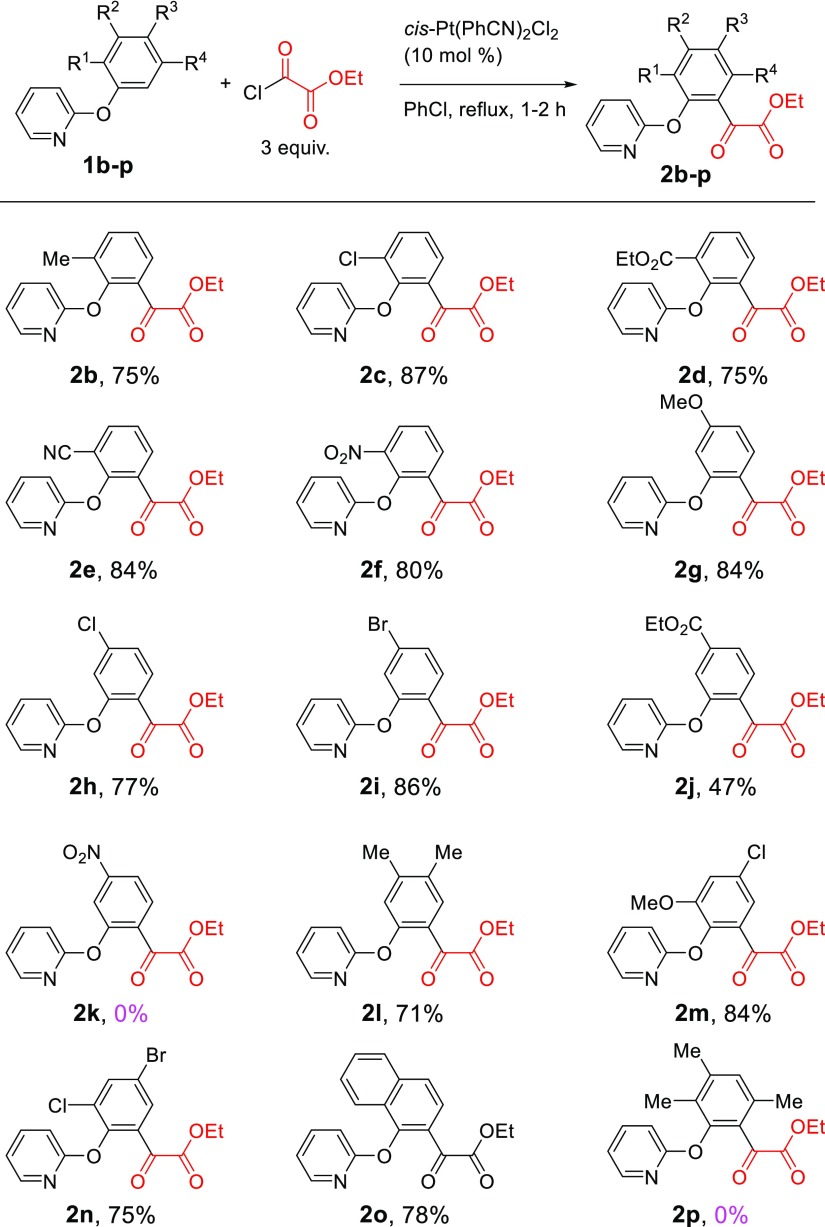
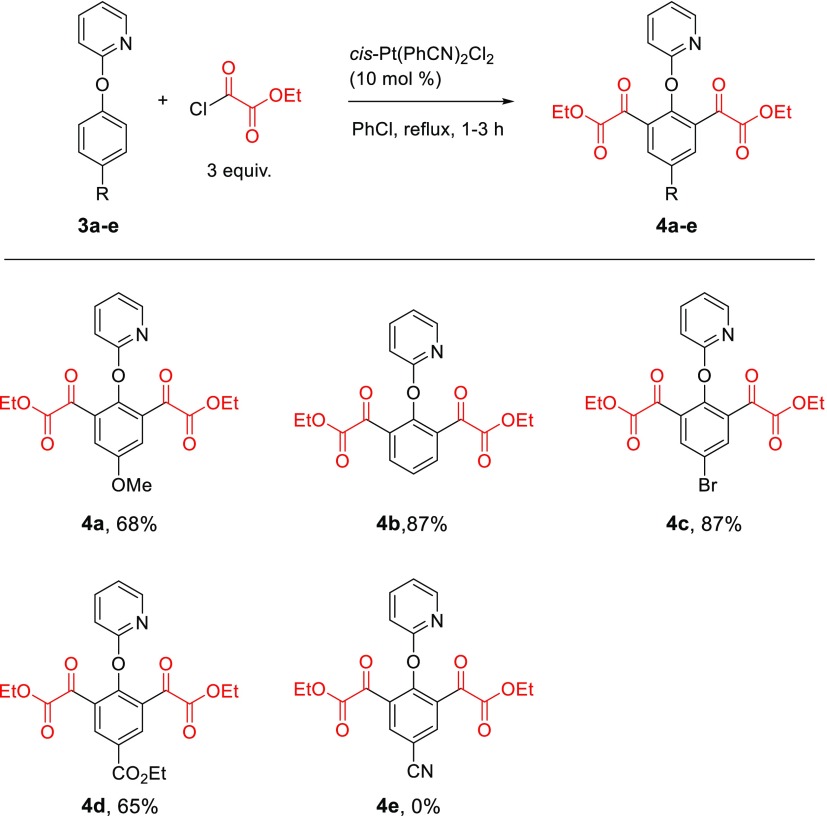
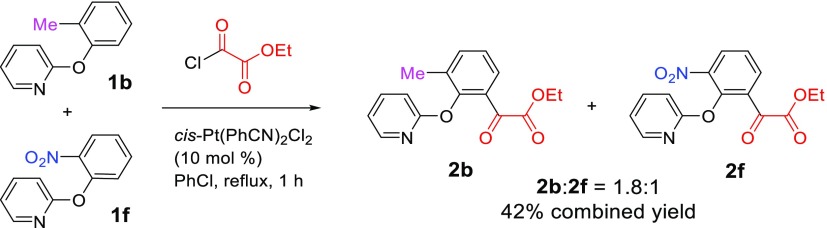
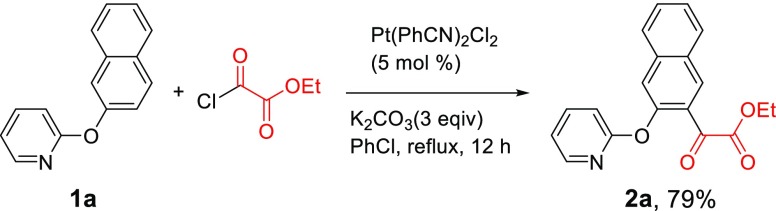
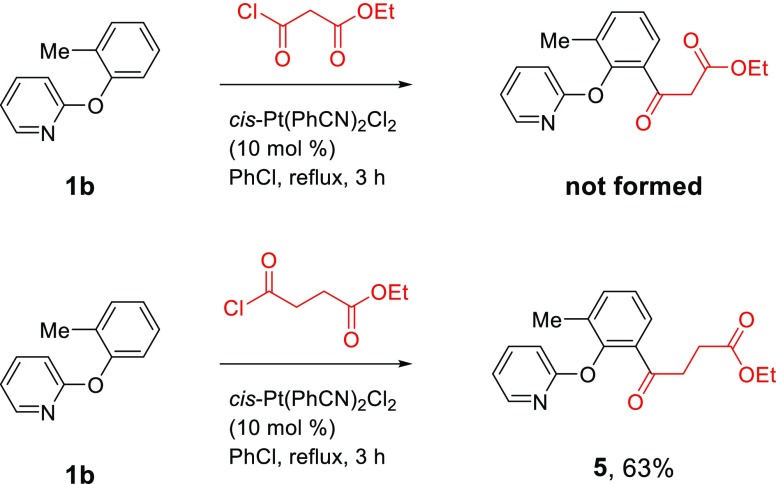
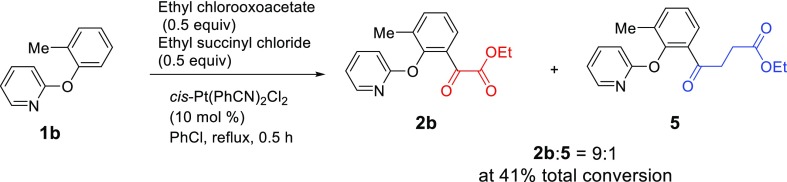
Platinum-catalyzed selective C-H acylation of 2-aryloxypyridines with ethyl chlorooxoacetate provides an efficient way of introducing an α-keto ester functional group. The reaction is oxidant-free, additive-free, and, more significantly, free of any decarbonylative side reactions. The reaction tolerates a variety of substituents from strongly electron-donating to strongly electron-withdrawing groups. Double acylation is feasible for 2-phenoxypyridine and its derivatives with only one substituent at the para position. Although the reaction of 2-(2-methylphenoxy)pyridine with ethyl malonyl chloride did not produce the desired β-keto ester, the reaction with ethyl succinyl chloride proceeded smoothly to give the γ-keto ester. Ethyl chlorooxoacetate is much more reactive than ethyl succinyl chloride in this Pt-catalyzed C-H acylation reaction.
铂催化2-芳氧基吡啶与氯代氧代乙酸乙酯的选择性C-H酰化反应提供了一种引入α-酮酯官能团的有效方法。该反应无氧化剂、无添加剂,更重要的是,没有任何脱羰副反应。该反应能耐受从强供电子基团到强吸电子基团的各种取代基。对于在对位只有一个取代基的2-苯氧基吡啶及其衍生物,双酰化是可行的。虽然2-(2-甲基苯氧基)吡啶与丙二酸单乙酯酰氯的反应没有生成所需的β-酮酯,但与琥珀酰氯乙酯的反应顺利进行,得到了γ-酮酯。在该铂催化的C-H酰化反应中,氯代氧代乙酸乙酯比琥珀酰氯乙酯反应活性高得多。