Department of Hematology, The Second Affiliated Hospital of Xi'an Jiaotong University, Xi'an 710004, China.
Department of Physiology and Pathophysiology, Xi'an Jiaotong University School of Basic Medical Sciences, Xi'an 710061, China.
Int J Infect Dis. 2020 Jul;96:19-24. doi: 10.1016/j.ijid.2020.04.027. Epub 2020 Apr 18.
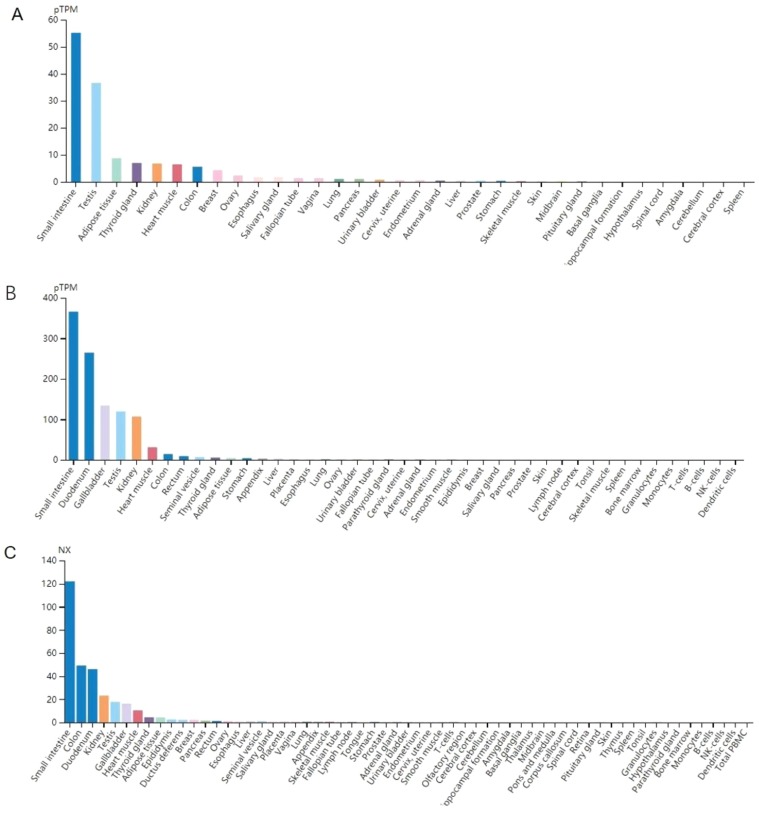
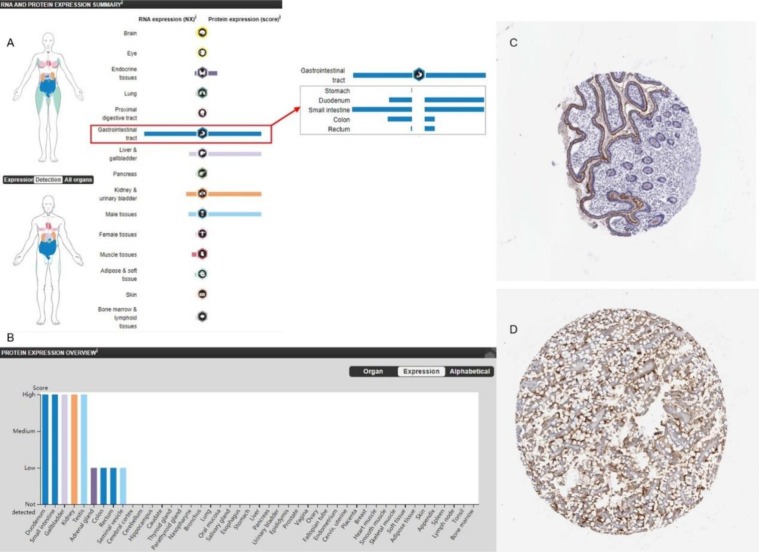
The coronavirus disease 2019 (COVID-19) was first reported in Wuhan, China and rapidly spread in other countries in December 2019. The infected patients presented with fever, respiratory symptoms, sometimes with digestive and other systemic manifestations, and some progressed with a severe acute respiratory syndrome or even death. Associated digestive symptoms were frequently observed in the patients, with an unknown significance and mechanism. ACE2, as the major known functional receptor of the 2019 novel coronavirus (2019-nCoV) attracted our attention. We collected the clinical data of the 2019-nCoV-infected patients from published studies and extracted the data about the incidence of gastrointestinal symptoms. Furthermore, we used online datasets to analyze ACE2 expression in different human organs, especially in the small intestine, to explore the relationship between ACE2 expression patterns and clinical symptoms. We found that diarrhea accounted for a notable proportion of COVID-19 patients, ranging from 8.0% to 12.9%. The results reveal that ACE2 mRNA and protein are highly expressed in the small intestinal enterocytes but not in the goblet cells or intestinal immune cells. High expression of ACE2 on the surface cells in the digestive tract may lead to gastrointestinal symptoms and inflammation susceptibility. Overall, digestive symptoms were common in the COVID-19 patients. ACE2 expression on surface cells of the small intestine may mediate the invasion and amplification of the virus and activation of gastrointestinal inflammation. It is a possible mechanism of digestive symptoms in the COVID-19 patients and explains the presence of the virus in patients' stool samples. The study also highlights the necessity of taking stool samples for suspected patients to help in early diagnosis and assessment of disease status.
2019 年冠状病毒病(COVID-19)最初在中国武汉报告,并于 2019 年 12 月迅速在其他国家传播。受感染的患者表现出发热、呼吸道症状,有时伴有消化和其他全身表现,一些患者病情进展为严重急性呼吸综合征,甚至死亡。在患者中经常观察到与感染相关的消化症状,但其意义和机制尚不清楚。ACE2 是 2019 年新型冠状病毒(2019-nCoV)的主要已知功能受体,引起了我们的关注。我们从已发表的研究中收集了 2019-nCoV 感染患者的临床数据,并提取了有关胃肠道症状发生率的数据。此外,我们使用在线数据集分析了不同人体器官中 ACE2 的表达,特别是在小肠中,以探讨 ACE2 表达模式与临床症状之间的关系。我们发现腹泻在 COVID-19 患者中占相当大的比例,范围为 8.0%至 12.9%。结果表明,ACE2 mRNA 和蛋白在小肠肠上皮细胞中高度表达,但在杯状细胞或肠道免疫细胞中不表达。消化道表面细胞中 ACE2 的高表达可能导致胃肠道症状和炎症易感性。总体而言,COVID-19 患者常见消化症状。ACE2 在小肠表面细胞上的表达可能介导了病毒的入侵和扩增,以及胃肠道炎症的激活。这可能是 COVID-19 患者出现消化症状的机制之一,也解释了患者粪便样本中存在病毒的原因。该研究还强调了对疑似患者采集粪便样本进行早期诊断和评估疾病状态的必要性。