Texas A&M University College of Medicine, College Station, TX, USA.
Liver Unit, Department of Medicine, University of Rome Tor Vergata, Rome, Italy.
J Cell Mol Med. 2020 Jun;24(11):5955-5965. doi: 10.1111/jcmm.15182. Epub 2020 Apr 21.
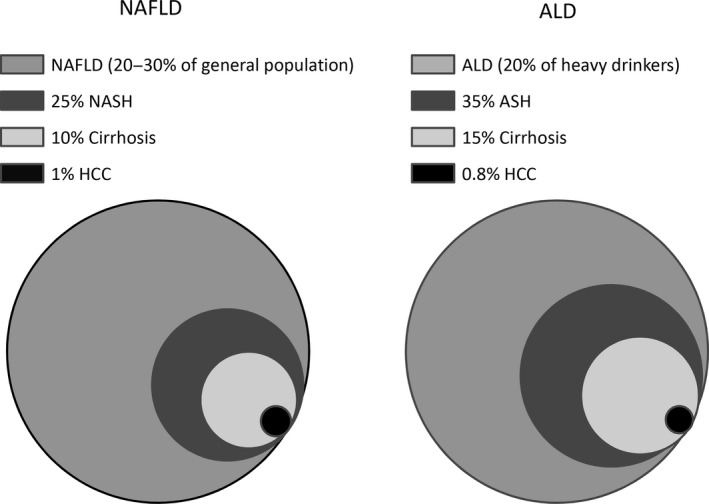
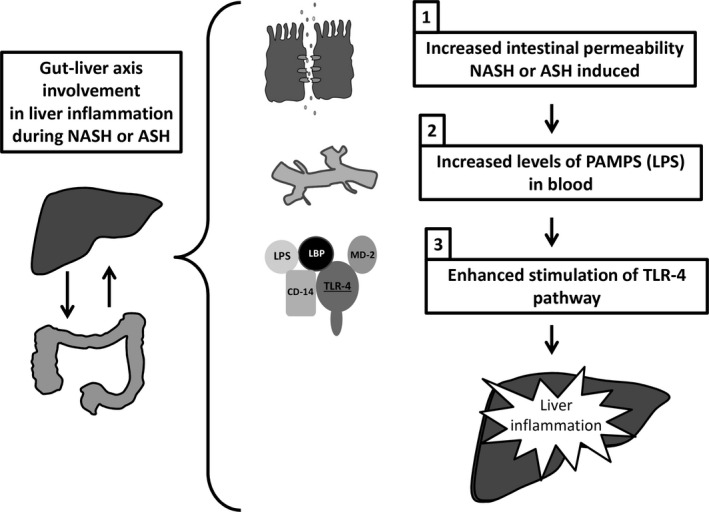
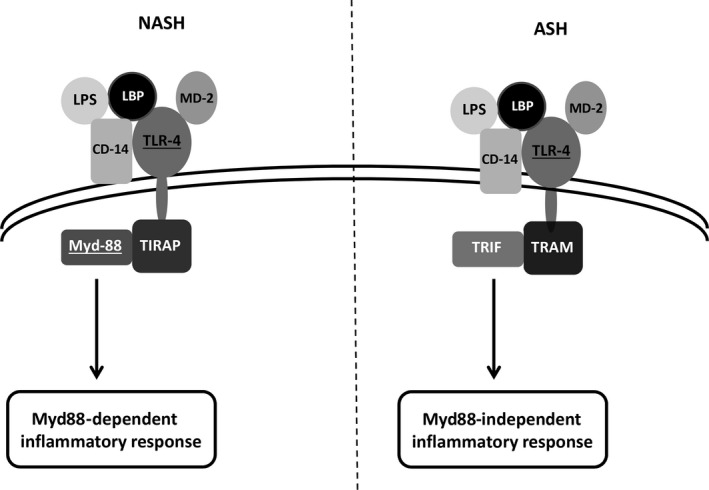
Non-alcoholic fatty liver disease (NAFLD) and alcohol-associated liver disease (ALD) represent a spectrum of injury, ranging from simple steatosis to steatohepatitis and cirrhosis. In humans, in fact, fatty changes in the liver, possibly leading to end-stage disease, were observed after chronic alcohol intake or in conditions of metabolic impairment. In this article, we examined the features and the pro-inflammatory pathways leading to non-alcoholic and alcoholic steatohepatitis. The involvement of several events (hits) and multiple inter-related pathways in the pathogenesis of these diseases suggest that a single therapeutic agent is unlikely to be an effective treatment strategy. Hence, a combination treatment towards multiple pro-inflammatory targets would eventually be required. Gut-liver crosstalk is involved not only in the impairment of lipid and glucose homoeostasis leading to steatogenesis, but also in the initiation of inflammation and fibrogenesis in both NAFLD and ALD. Modulation of the gut-liver axis has been suggested as a possible therapeutic approach since gut-derived components are likely to be involved in both the onset and the progression of liver damage. This review summarizes the translational mechanisms underlying pro-inflammatory signalling and gut-liver axis in non-alcoholic and alcoholic steatohepatitis. With a multitude of people being affected by liver diseases, identification of possible treatments and the elucidation of pathogenic mechanisms are elements of paramount importance.
非酒精性脂肪性肝病 (NAFLD) 和酒精性肝病 (ALD) 代表了一系列损伤,从单纯性脂肪变性到脂肪性肝炎和肝硬化不等。事实上,在人类中,观察到慢性饮酒或代谢紊乱后肝脏的脂肪变化,可能导致终末期疾病。在本文中,我们研究了导致非酒精性和酒精性脂肪性肝炎的特征和促炎途径。这些疾病的发病机制涉及多个事件(打击)和多个相互关联的途径,表明单一治疗药物不太可能是有效的治疗策略。因此,最终可能需要针对多个促炎靶点的联合治疗。肠-肝轴相互作用不仅参与导致脂肪生成的脂质和葡萄糖稳态的损害,而且还参与非酒精性和酒精性脂肪性肝炎中的炎症和纤维化的启动。调节肠-肝轴被认为是一种可能的治疗方法,因为肠道来源的成分可能参与肝损伤的发生和进展。本综述总结了非酒精性和酒精性脂肪性肝炎中促炎信号和肠-肝轴的转化机制。由于有大量的人受到肝脏疾病的影响,因此确定可能的治疗方法和阐明发病机制是至关重要的。