Department of Psychological Sciences, Purdue University, West Lafayette, IN, USA.
Department of Psychiatry, Stony Brook University, Stony Brook, NY, USA.
Psychol Med. 2021 Sep;51(12):2012-2022. doi: 10.1017/S0033291720000768. Epub 2020 Apr 22.
Performance monitoring entails rapid error detection to maintain task performance. Impaired performance monitoring is a candidate pathophysiological process in psychotic disorders, which may explain the broader deficit in executive function and its known associations with negative symptoms and poor functioning. The current study models cross-sectional pathways bridging neurophysiological measures of performance monitoring with executive function, symptoms, and functioning.
Data were from the 20-year assessment of the Suffolk County Mental Health Project. Individuals with psychotic disorders ( = 181) were originally recruited from inpatient psychiatric facilities. Data were also collected from a geographically and demographically matched group with no psychosis history ( = 242). Neural measures were the error-related negativity (ERN) and error positivity (Pe). Structural equation modeling tested mediation pathways.
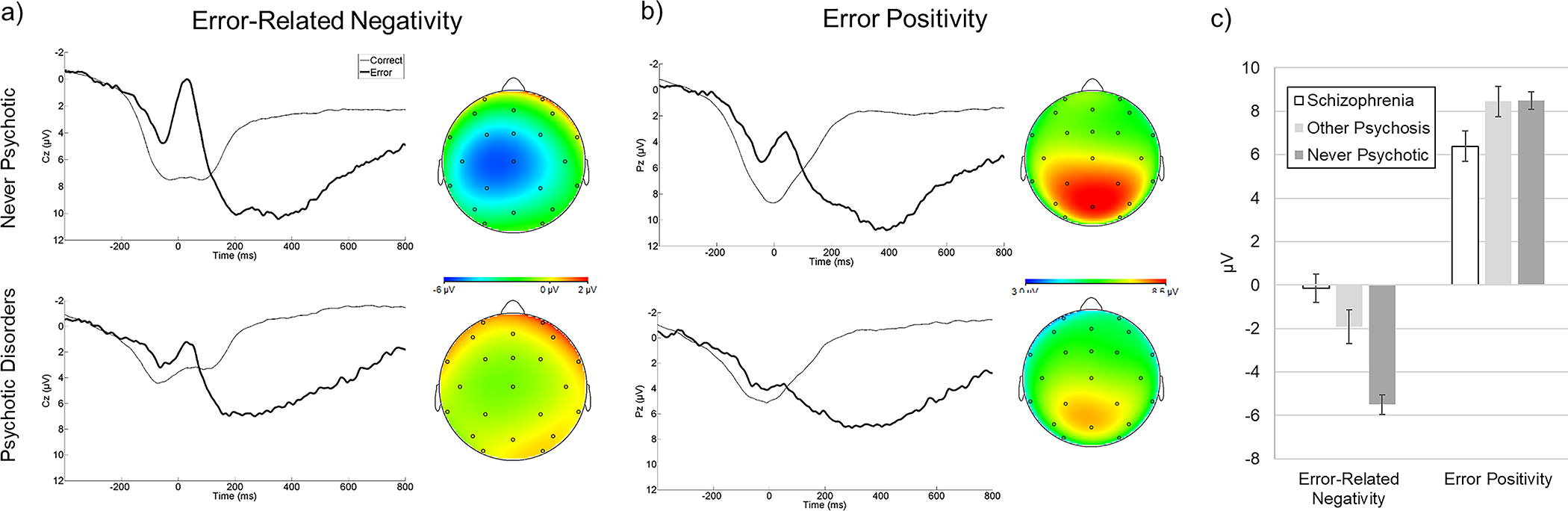
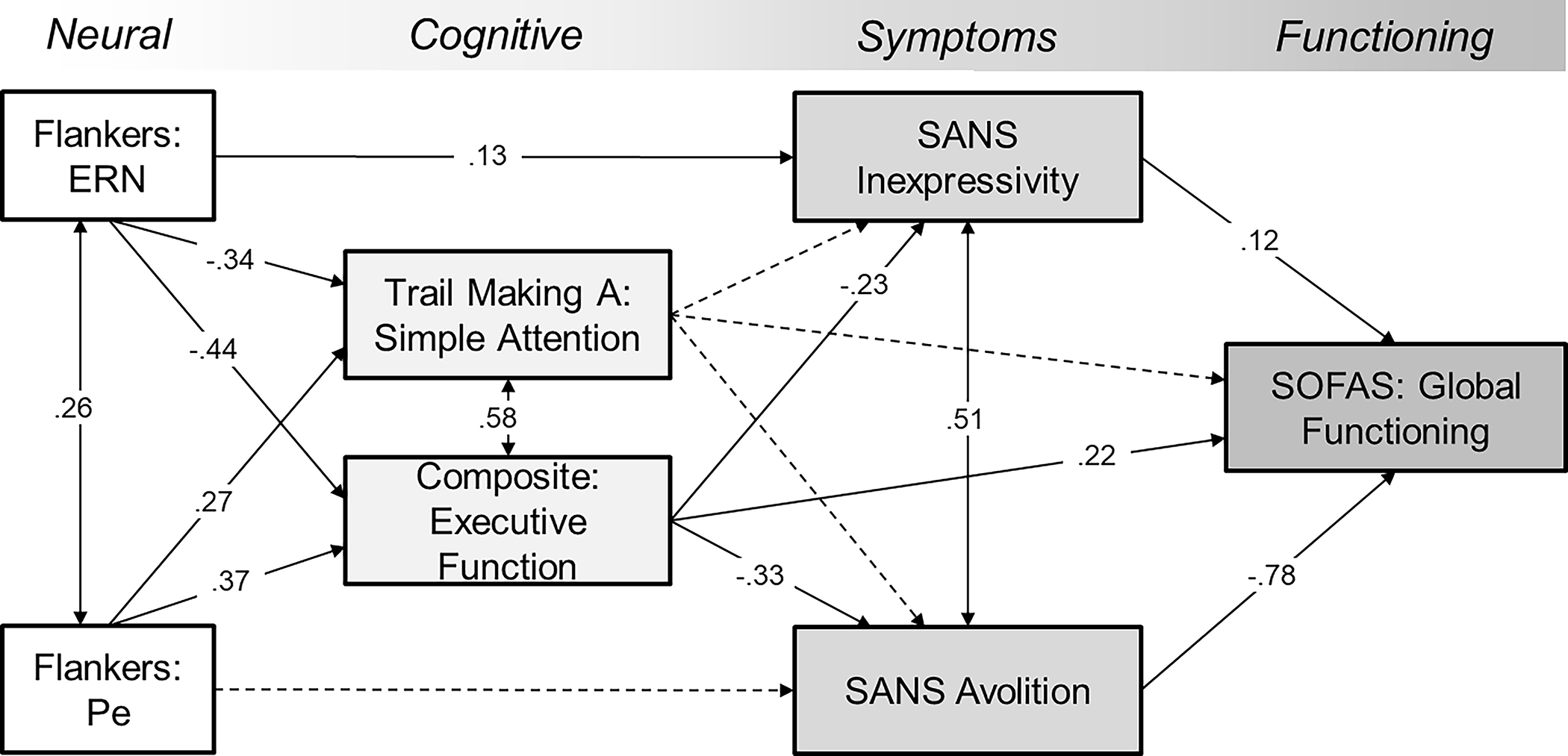
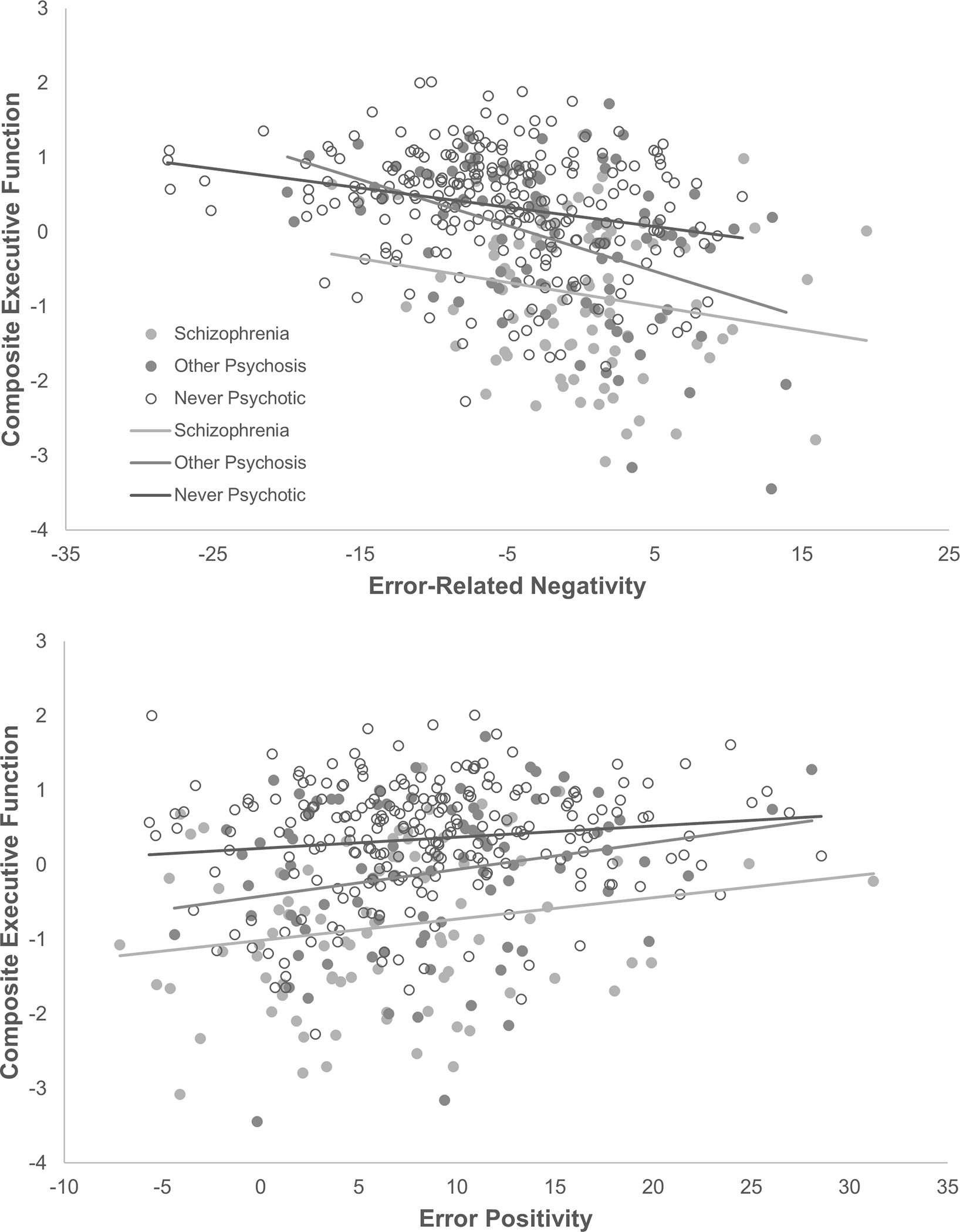
Blunted ERN and Pe in the clinical cohort related to impaired executive function ( = 0.26-0.35), negative symptom severity ( = 0.17-0.25), and poor real-world functioning ( = 0.17-0.19). Associations with executive function were consistent across groups. Multiple potential pathways were identified in the clinical cohort: reduced ERN to inexpressivity was mediated by executive function ( = 0.10); reduced Pe to global functioning was mediated by executive function and avolition ( = 0.10).
This supports a transdiagnostic model of psychotic disorders by which poor performance monitoring contributes to impaired executive function, which contributes to negative symptoms and poor real-world functioning. If supported by future longitudinal research, these pathways could inform the development of targeted interventions to address cognitive and functional deficits that are central to psychotic disorders.
绩效监测需要快速检测错误以维持任务绩效。在精神障碍中,绩效监测受损是候选的病理生理过程,这可以解释执行功能的更广泛缺陷及其与阴性症状和功能不良的已知关联。目前的研究模拟了连接绩效监测的神经生理学测量与执行功能、症状和功能的横向途径。
数据来自萨福克县心理健康项目 20 年评估。有精神障碍的个体(n = 181)最初是从住院精神病院招募的。还从没有精神病病史的地理和人口统计学匹配组(n = 242)收集了数据。神经测量指标为错误相关负波(ERN)和错误正波(Pe)。结构方程模型测试了中介途径。
临床队列中迟钝的 ERN 和 Pe 与执行功能受损(β = 0.26-0.35)、阴性症状严重程度(β = 0.17-0.25)和现实世界功能不良(β = 0.17-0.19)相关。与执行功能的关联在两个组中都是一致的。在临床队列中确定了多种潜在途径:执行功能中介了减少的 ERN 与表达不足(β = 0.10);执行功能和意志缺乏中介了减少的 Pe 与总体功能(β = 0.10)。
这支持了一种跨诊断模型的精神障碍,其中绩效监测不良导致执行功能受损,进而导致阴性症状和现实世界功能不良。如果得到未来纵向研究的支持,这些途径可以为解决精神障碍中核心的认知和功能缺陷的靶向干预提供信息。