Tennessee Valley Healthcare System, Veterans Affairs Medical Center, Nashville, TN, USA.
Vanderbilt University, Nashville, TN, USA.
Pain Res Manag. 2020 Mar 29;2020:5165682. doi: 10.1155/2020/5165682. eCollection 2020.
This research describes the prevalence and covariates associated with opioid-induced constipation (OIC) in an observational cohort study utilizing a national veteran cohort and integrated data from the Center for Medicare and Medicaid Services (CMS).
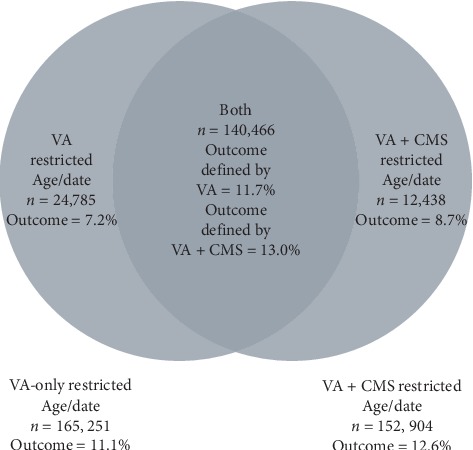
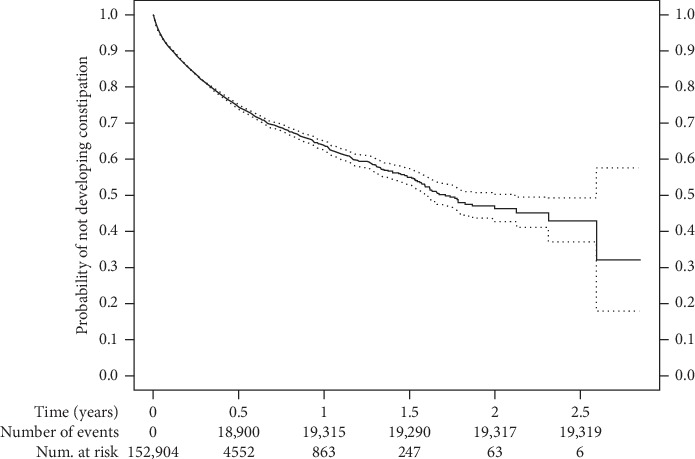
A cohort of 152,904 veterans with encounters between 1 January 2008 and 30 November 2010, an exposure to opioids of 30 days or more, and no exposure in the prior year was developed to establish existing conditions and medications at the start of the opioid exposure and determining outcomes through the end of exposure. OIC was identified through additions/changes in laxative prescriptions, all-cause constipation identification through diagnosis, or constipation related procedures in the presence of opioid exposure. The association of time to constipation with opioid use was analyzed using Cox proportional hazard regression adjusted for patient characteristics, concomitant medications, laboratory tests, and comorbidities.
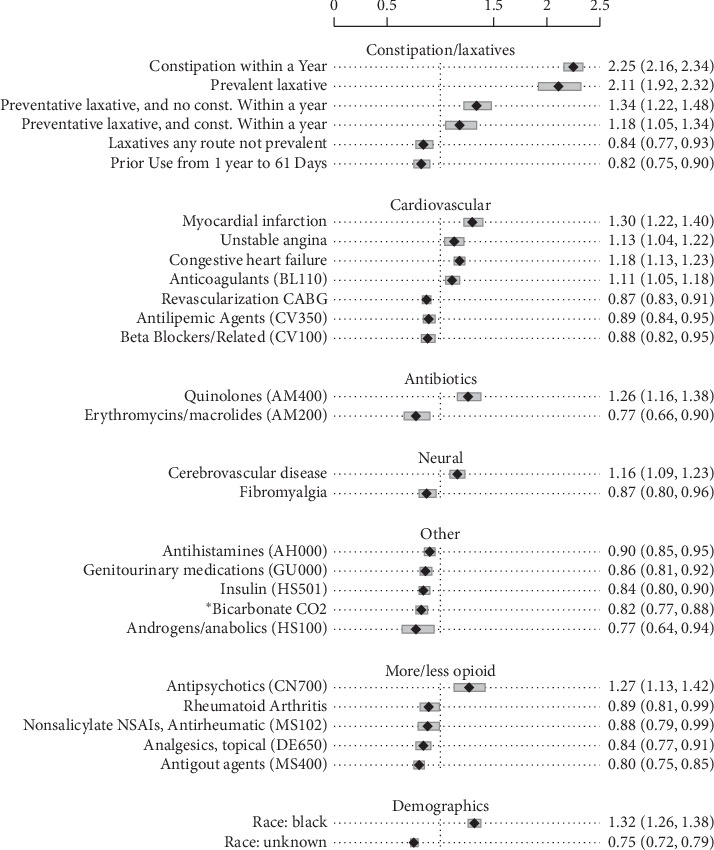
The prevalence of OIC was 12.6%. Twelve positively associated covariates were identified with the largest associations for prior constipation and prevalent laxative (any laxative that continued into the first day of opioid exposure). Among the 17 negatively associated covariates, the largest associations were for erythromycins, androgens/anabolics, and unknown race.
There were several novel covariates found that are seen in the all-cause chronic constipation literature but have not been reported for opioid-induced constipation. Some are modifiable covariates, particularly medication coadministration, which may assist clinicians and researchers in risk stratification efforts when initiating opioid medications. The integration of CMS data supports the robustness of the analysis and may be of interest in the elderly population warranting future examination.
本研究利用全国退伍军人队列和医疗保险和医疗补助服务中心(CMS)整合数据,在观察性队列研究中描述阿片类药物引起的便秘(OIC)的流行率和相关协变量。
建立了一个队列,其中包括 152904 名退伍军人,他们在 2008 年 1 月 1 日至 2010 年 11 月 30 日期间有就诊记录,暴露于阿片类药物 30 天或以上,且在前一年没有暴露于阿片类药物。队列旨在确定阿片类药物暴露开始时的现有疾病和药物,并通过暴露结束时确定结果。OIC 通过泻药处方的增加/更改、诊断的所有原因便秘或在存在阿片类药物暴露的情况下与便秘相关的程序来确定。使用 Cox 比例风险回归分析调整患者特征、伴随药物、实验室检查和合并症后,分析便秘与阿片类药物使用的时间关系。
OIC 的患病率为 12.6%。确定了 12 个阳性相关协变量,其中最大的协变量是先前的便秘和现有的泻药(在阿片类药物暴露的第一天仍继续使用的任何泻药)。在 17 个负相关协变量中,最大的关联是红霉素、雄激素/合成代谢类固醇和未知种族。
本研究发现了一些新的协变量,这些协变量在所有原因慢性便秘文献中都有报道,但尚未在阿片类药物引起的便秘中报道。一些是可改变的协变量,特别是药物联合使用,这可能有助于临床医生和研究人员在开始使用阿片类药物时进行风险分层。CMS 数据的整合支持分析的稳健性,并且可能对需要进一步研究的老年人群体感兴趣。