Wahyuningsih Sri Puji Astuti, Savira Nadyatul Ilma Indah, Anggraini Devinta Wahyu, Winarni Dwi, Suhargo Listijani, Kusuma Baskara Wiku Adi, Nindyasari Faradita, Setianingsih Nur, Mwendolwa Adamu Ayubu
Department of Biology, Faculty of Science and Technology, Airlangga University, Surabaya 60115, Indonesia.
Biology Education, Faculty of Teacher Training and Education, University of Jember, Jember, East Java 68121, Indonesia.
Scientifica (Cairo). 2020 Mar 25;2020:4237205. doi: 10.1155/2020/4237205. eCollection 2020.
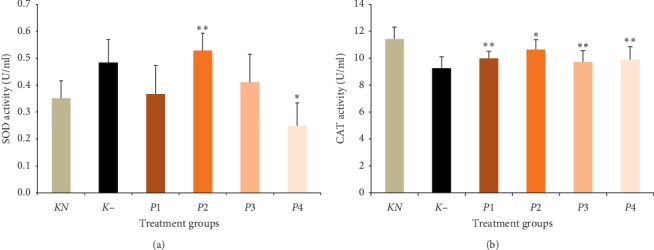
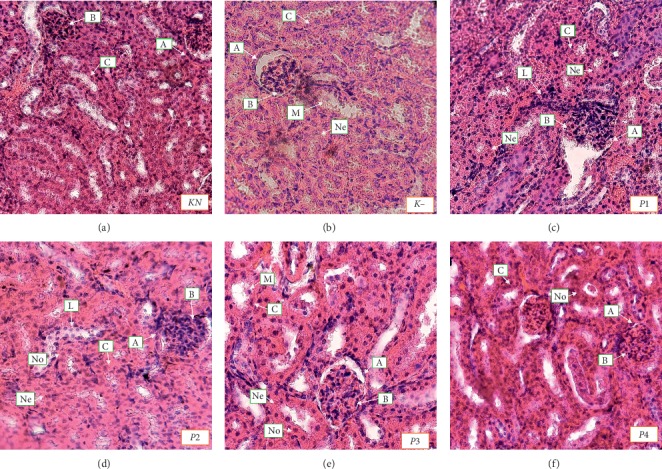
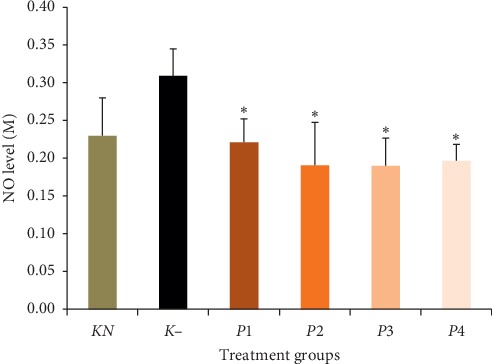
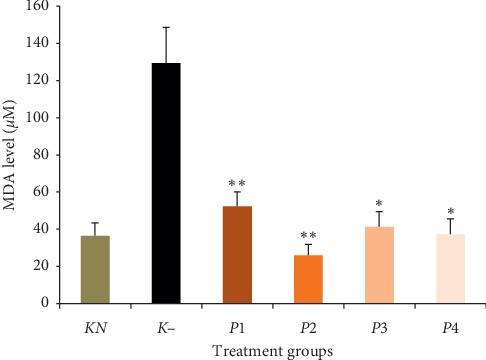
In this study, we determine the curative effects of okra pods ( L.) extract against lead acetate toxicity in mice kidney. -Hexane, ethyl acetate, and methanol solvent were used for extracting okra pods. The role of the extract as an antioxidant was tested by DPPH and FRAP methods. The methanol extract was used for experiments in animals. A total of 30 male BALB/c mice were randomly divided into six equal groups: normal control, negative control (lead-induced), and treatment groups (lead-induced for 28 days and administration of methanol extract at doses of 50, 100, 200, and 400 mg/kg BW for the 28 days). The following were analyzed in all groups: activity of the antioxidant enzymes, namely, superoxide dismutase (SOD) and catalase (CAT); oxidant level, namely, malondialdehyde (MDA) and nitric oxide (NO); and markers of kidney injury, namely, blood urea nitrogen (BUN) and creatinine (Cre). Kidney histopathology was also evaluated. This study showed that the methanol extract showed the highest antioxidant activity (IC is 35.21 g/mL, and FRAP is 57.58 M Feg). The CAT and SOD activities increased significantly in okra-treated groups ( < 0.05). The okra administration groups experienced a significant decrease in MDA, NO, BUN, and Cre levels ( < 0.05). Thickness of the epithelial proximal tubule, diameter of the proximal tubule, and percentage of necrotic cells in proximal tubule decreased, but the diameter ratio of glomerular Bowman's capsule in mice treated with okra was optimally improved and repaired like normal control ( < 0.05). The results of this study reveal that methanol extract has a very strong antioxidant effect and can reduce the influence of toxicity induced by lead acetate in mice kidney.
在本研究中,我们测定了秋葵荚提取物对小鼠肾脏醋酸铅毒性的治疗效果。使用正己烷、乙酸乙酯和甲醇溶剂提取秋葵荚。通过DPPH和FRAP方法测试提取物作为抗氧化剂的作用。甲醇提取物用于动物实验。总共30只雄性BALB/c小鼠被随机分为六个相等的组:正常对照组、阴性对照组(铅诱导组)和治疗组(铅诱导28天,并在28天内以50、100、200和400mg/kg体重的剂量给予甲醇提取物)。对所有组进行了以下分析:抗氧化酶超氧化物歧化酶(SOD)和过氧化氢酶(CAT)的活性;氧化水平,即丙二醛(MDA)和一氧化氮(NO);以及肾脏损伤标志物,即血尿素氮(BUN)和肌酐(Cre)。还评估了肾脏组织病理学。本研究表明,甲醇提取物表现出最高的抗氧化活性(IC为35.21μg/mL,FRAP为57.58μM Feg)。秋葵治疗组的CAT和SOD活性显著增加(P<0.05)。秋葵给药组的MDA、NO、BUN和Cre水平显著降低(P<0.05)。上皮近端小管的厚度、近端小管的直径和近端小管中坏死细胞的百分比降低,但秋葵处理小鼠的肾小球鲍曼囊直径比得到最佳改善并修复至正常对照水平(P<0.05)。本研究结果表明,甲醇提取物具有很强的抗氧化作用,可减轻醋酸铅对小鼠肾脏诱导的毒性影响。