Department of Medical Microbiology and Infection Prevention, University Medical Center Groningen, University of Groningen, Groningen, The Netherlands.
Immun Inflamm Dis. 2020 Sep;8(3):279-291. doi: 10.1002/iid3.303. Epub 2020 Apr 22.
Cotton rats are a suitable model for the study of influenza disease symptoms and responses to influenza vaccination. We have previously shown that two immunizations with 15 µg whole inactivated virus (WIV) influenza vaccine could completely protect animals from infection with the H1N1pdm09 virus.
To further explore the cotton rat model, we here investigated the protective potential of a single intramuscular immunization and of prime/boost intramuscular immunizations with a low amount of antigen.
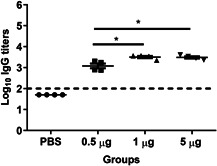
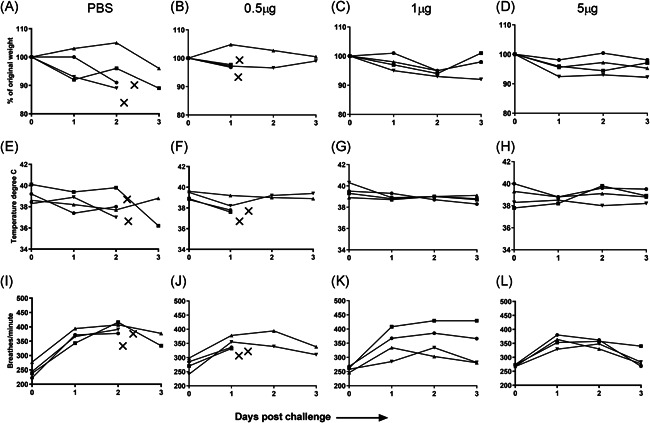
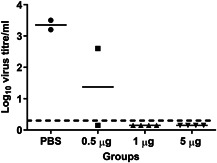
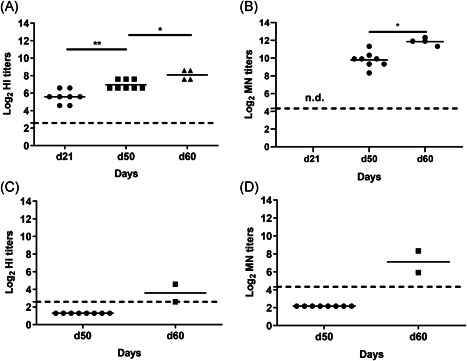
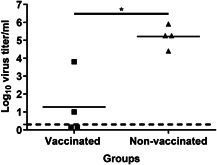
A single intramuscular immunization with doses more than or equal to 0.5 µg WIV reliably evoked antibody responses and doses more than or equal to 1 µg protected the animals from virus replication in the lungs and from severe weight loss. However, clinical symptoms like an increased respiration rate were still apparent. Administration of a booster dose significantly increased the humoral immune responses but did not or only moderately improved protection from clinical symptoms.
Our data suggest that complete and partial protection by influenza vaccines can be mimicked in cotton rats by using specific vaccination regimens.
棉鼠是研究流感疾病症状和对流感疫苗接种反应的合适模型。我们之前已经表明,两次用 15μg 全灭活病毒(WIV)流感疫苗免疫可以完全保护动物免受 H1N1pdm09 病毒的感染。
为了进一步探索棉鼠模型,我们在这里研究了单次肌肉内免疫和低剂量抗原的初免/加强肌肉内免疫的保护潜力。
单次肌肉内免疫剂量大于或等于 0.5μg WIV 可可靠地引起抗体反应,剂量大于或等于 1μg 可保护动物免受肺部病毒复制和严重体重减轻的影响。然而,仍明显出现了如呼吸频率增加等临床症状。给予加强剂量可显著增加体液免疫反应,但对临床症状的保护作用没有或只有适度改善。
我们的数据表明,通过使用特定的疫苗接种方案,棉鼠可以模拟流感疫苗的完全和部分保护作用。