Liu Xinxin, Wang Xin, Liu Nian, Zhu Ke, Zhang Song, Duan Xiaoru, Huang Yuqiong, Jin Zilin, Jaypaul Himanshu, Wu Yan, Chen Hongxiang
Department of Dermatology, Union Hospital, Tongji Medical College, Huazhong University of Science and Technology, Wuhan, Hebei 430022, P.R. China.
Department of Dermatology, Affiliated Hospital of Nantong University, Nantong, Jiangsu 226001, P.R. China.
Mol Med Rep. 2020 Apr;21(4):1941-1949. doi: 10.3892/mmr.2020.10989. Epub 2020 Feb 18.
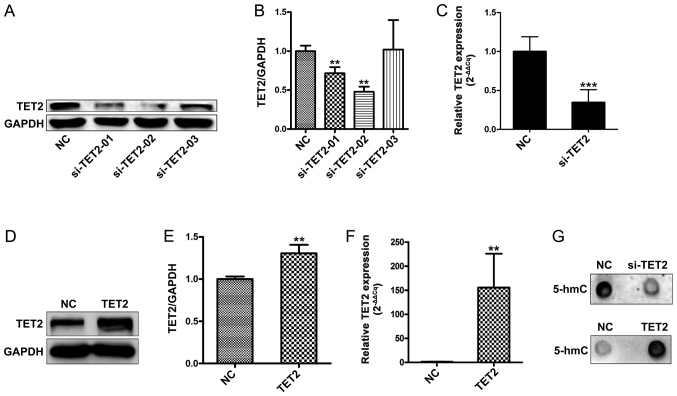
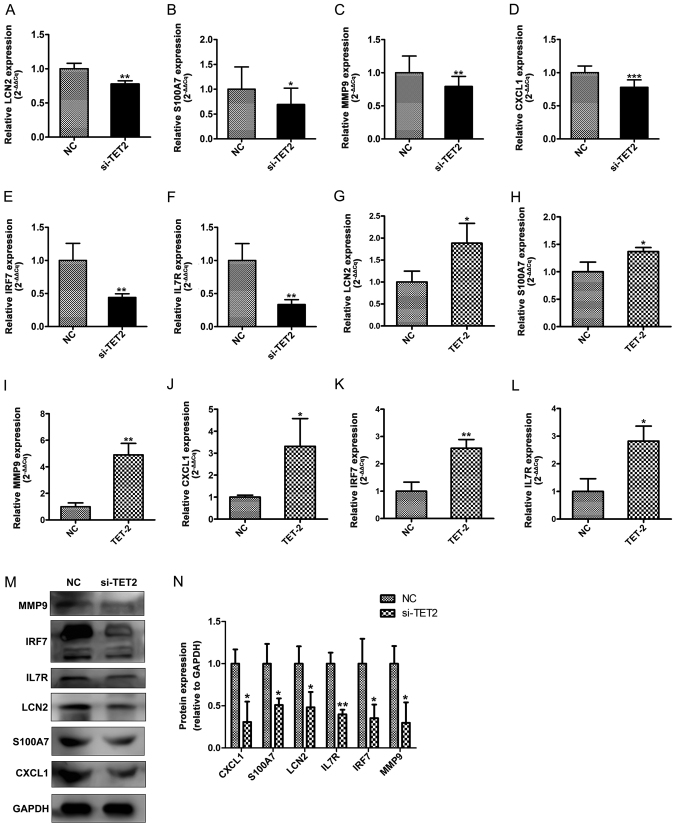
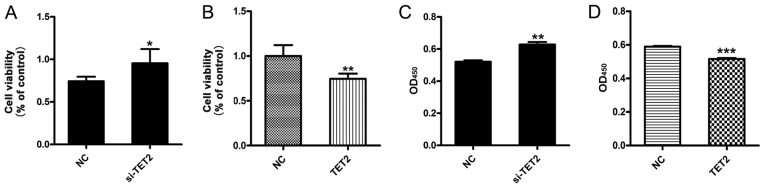
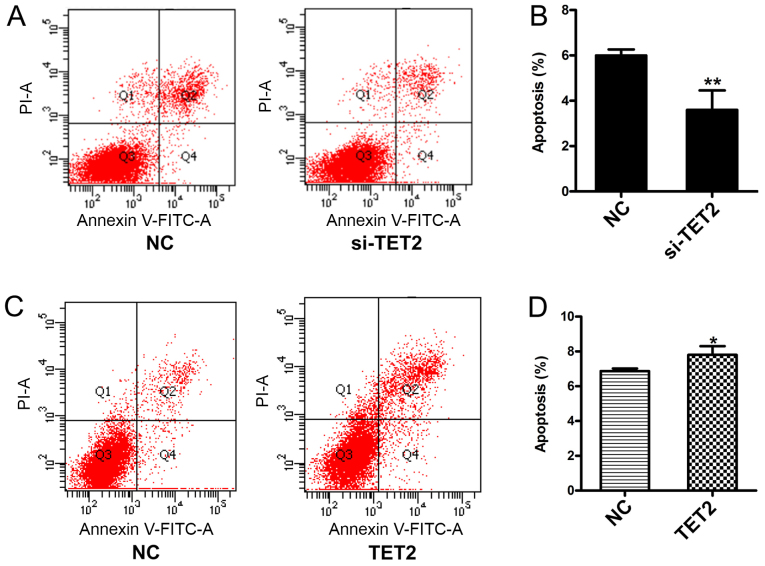
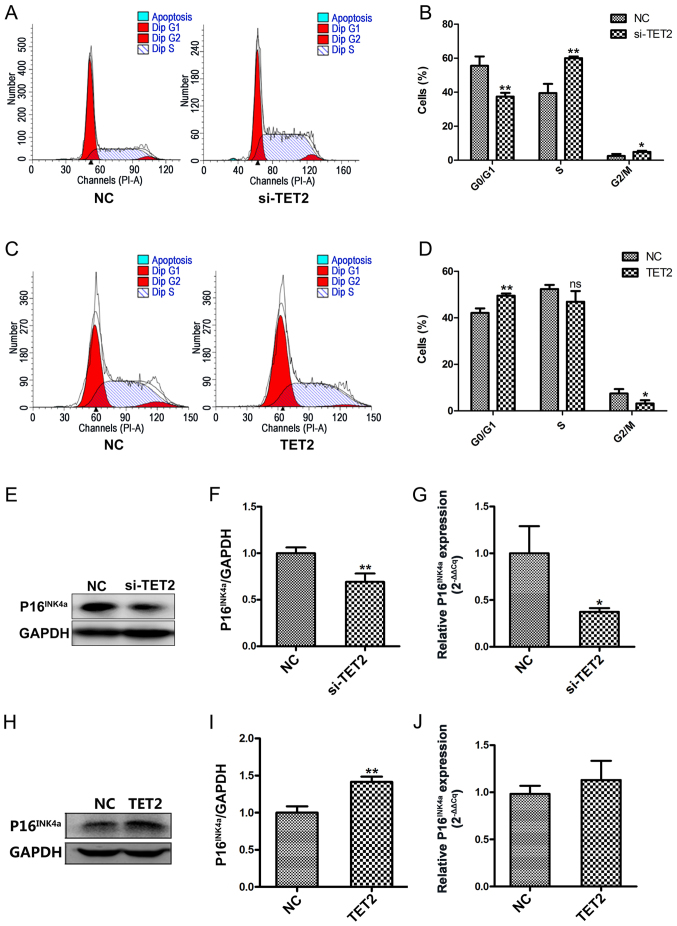
DNA methylation and hydroxymethylation are the most common epigenetic modifications associated with the cell cycle and the inflammatory response. The present study aimed to investigate the role of 5‑hydroxymethyl‑cytosine (5‑hmC) and ten‑eleven translocation‑2 (TET2) in keratinocytes. Following TET2 knockdown, dot blot analysis was performed to assess the levels of 5‑hmC in keratinocytes, using HaCaT cells. Subsequently, the viability and cell cycle of HaCaT cells were assessed by MTT, Cell Counting Kit‑8 assay and flow cytometric assays. Cyclin‑dependent kinase inhibitor 2A and proinflammatory cytokine protein and mRNA expression levels were also detected. The present results suggested that TET2 may play an important role in regulating cellular proliferation by mediating DNA hydroxymethylation in HaCaT cells. In addition, TET2 knockdown decreased the production of proinflammatory cytokines, including lipocalin 2, S100 calcium binding protein A7, matrix metallopeptidase 9, C‑X‑C motif chemokine ligand 1, interferon regulatory factor 7 and interleukin‑7 receptor. The present study suggested that TET2 regulated cell viability, apoptosis and the expression of inflammatory mediators in keratinocytes. Collectively, the results indicated that TET2 knockdown may relieve inflammatory responses in the skin.
DNA甲基化和羟甲基化是与细胞周期和炎症反应相关的最常见表观遗传修饰。本研究旨在探讨5-羟甲基胞嘧啶(5-hmC)和十一易位蛋白2(TET2)在角质形成细胞中的作用。在敲低TET2后,使用HaCaT细胞进行斑点印迹分析以评估角质形成细胞中5-hmC的水平。随后,通过MTT、细胞计数试剂盒-8检测和流式细胞术检测评估HaCaT细胞的活力和细胞周期。还检测了细胞周期蛋白依赖性激酶抑制剂2A以及促炎细胞因子的蛋白质和mRNA表达水平。本研究结果表明,TET2可能通过介导HaCaT细胞中的DNA羟甲基化在调节细胞增殖中发挥重要作用。此外,敲低TET2可降低包括脂质运载蛋白2、S100钙结合蛋白A7、基质金属肽酶9、C-X-C基序趋化因子配体1、干扰素调节因子7和白细胞介素-7受体在内的促炎细胞因子的产生。本研究表明,TET2调节角质形成细胞的细胞活力、凋亡和炎症介质的表达。总的来说,结果表明敲低TET2可能减轻皮肤中的炎症反应。