Ren Fuli, Zhou Min, Deng Fei, Wang Hualin, Ning Yun-Jia
State Key Laboratory of Virology, Wuhan Institute of Virology, Chinese Academy of Sciences, Wuhan, China.
University of Chinese Academy of Sciences, Beijing, China.
Front Microbiol. 2020 Apr 8;11:599. doi: 10.3389/fmicb.2020.00599. eCollection 2020.
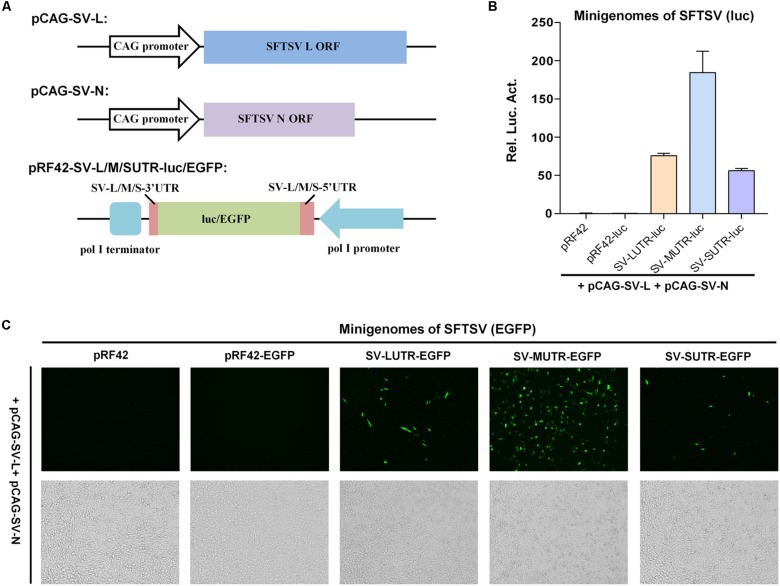
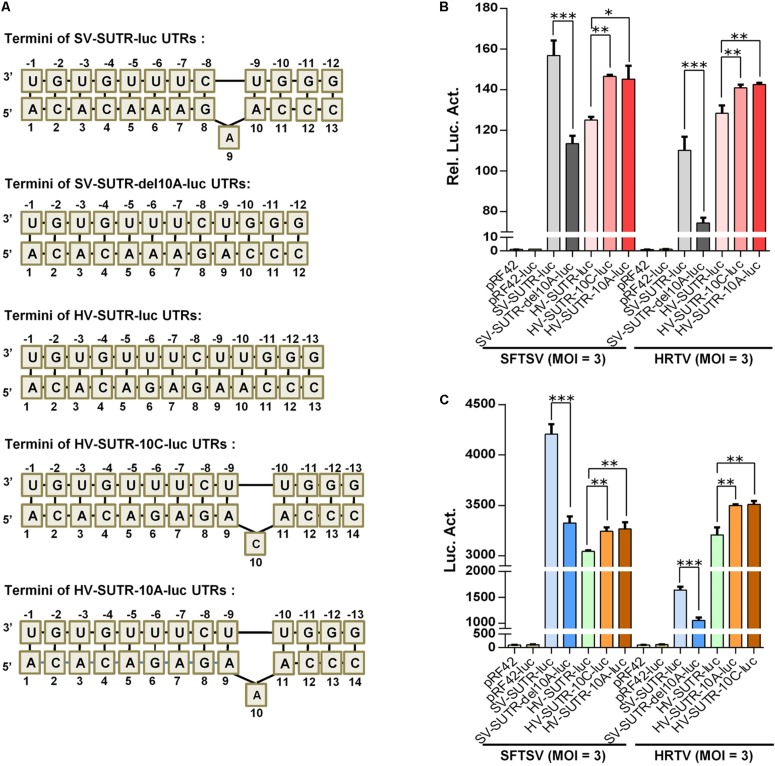
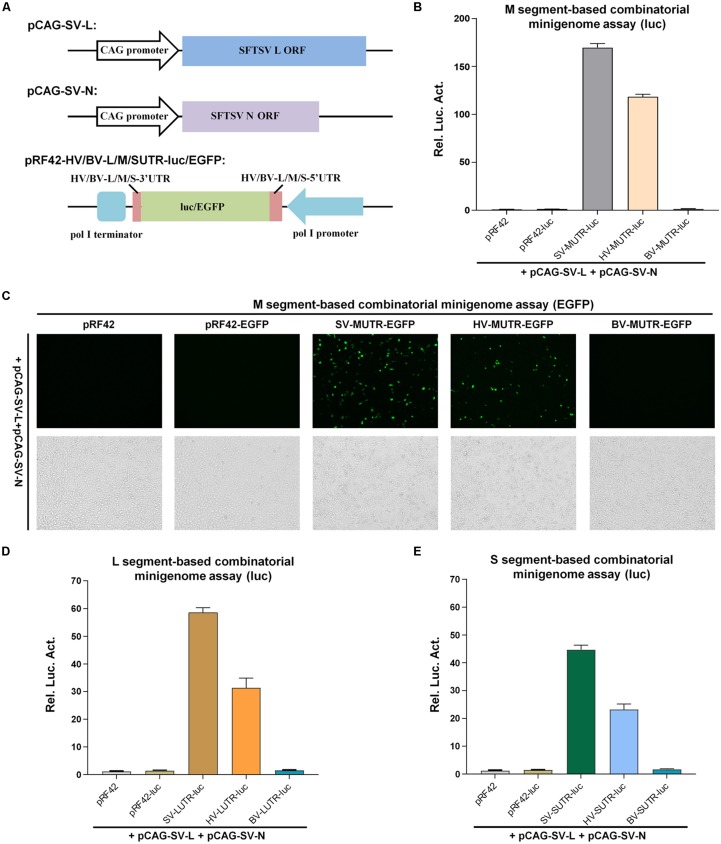
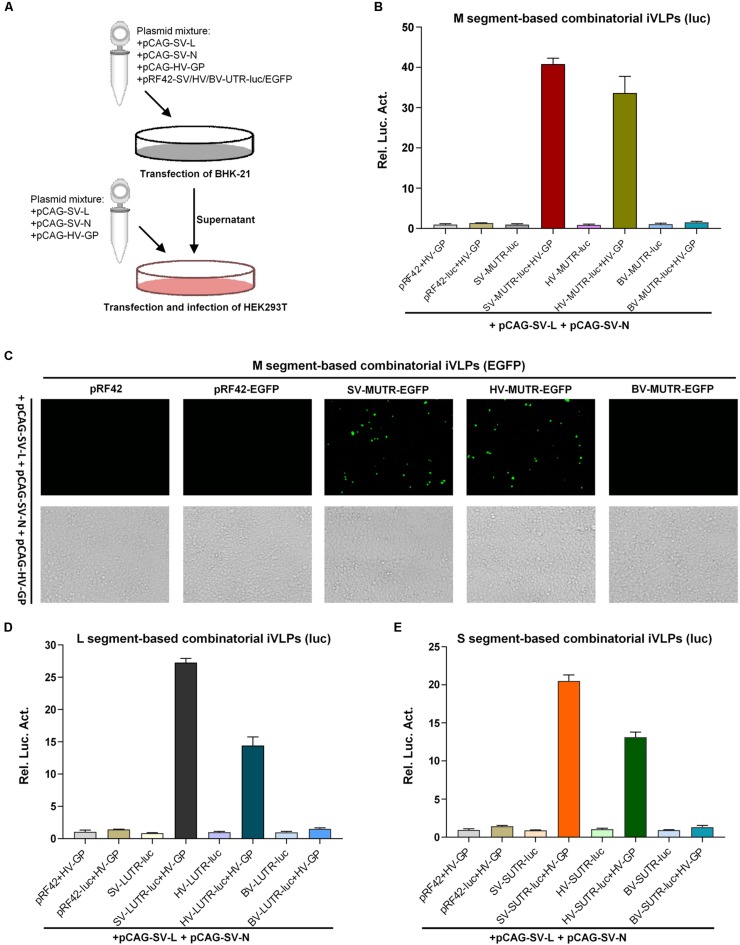
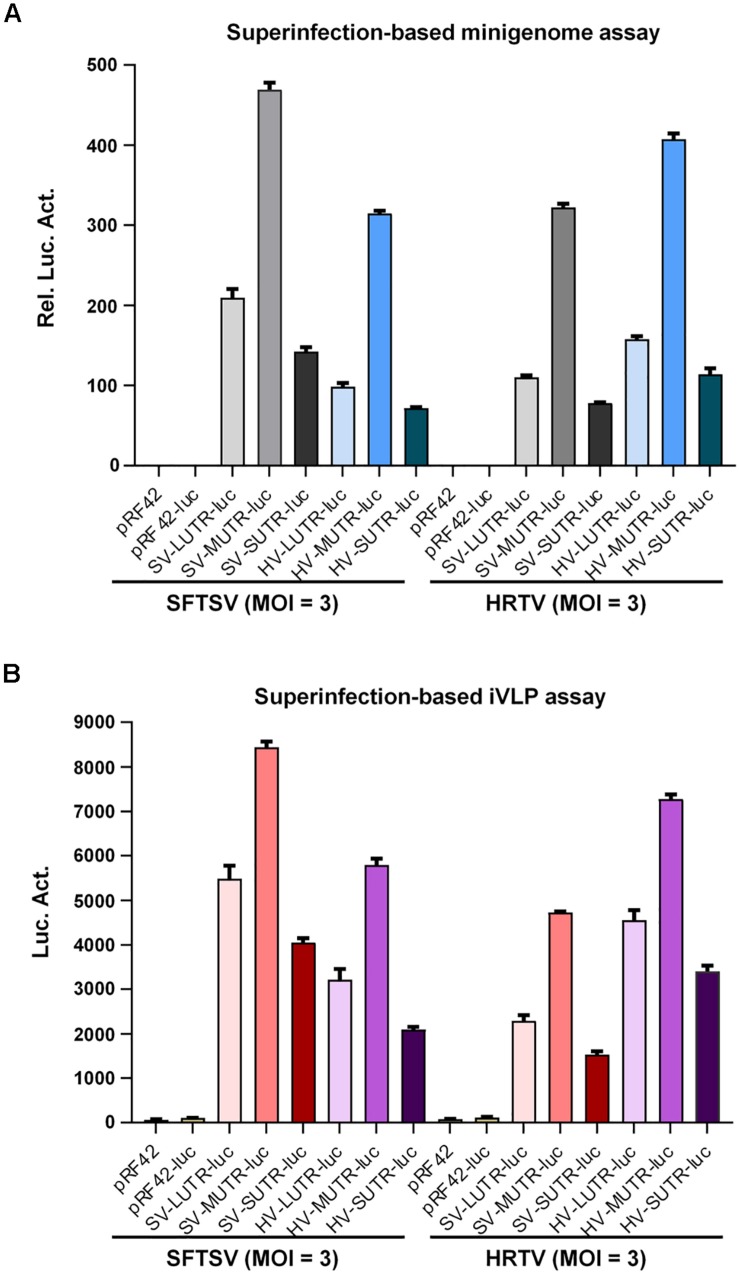
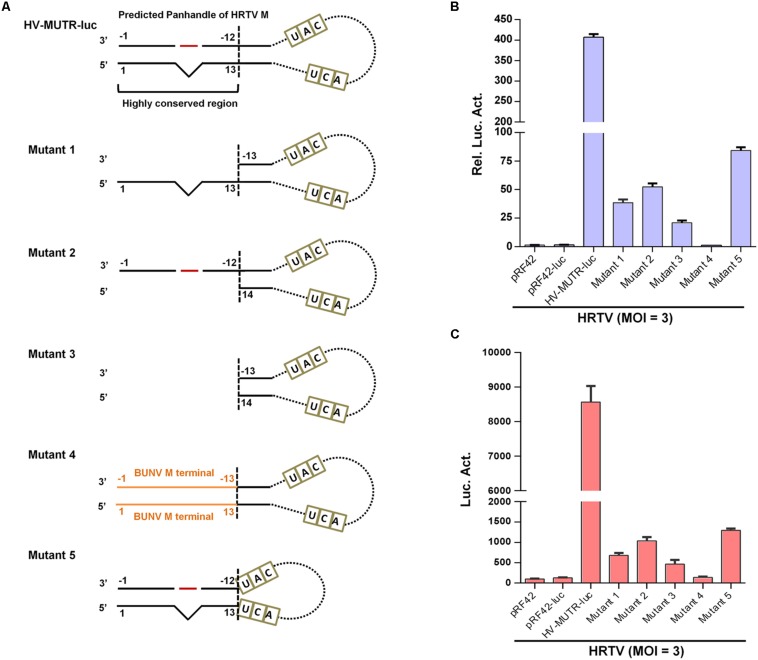
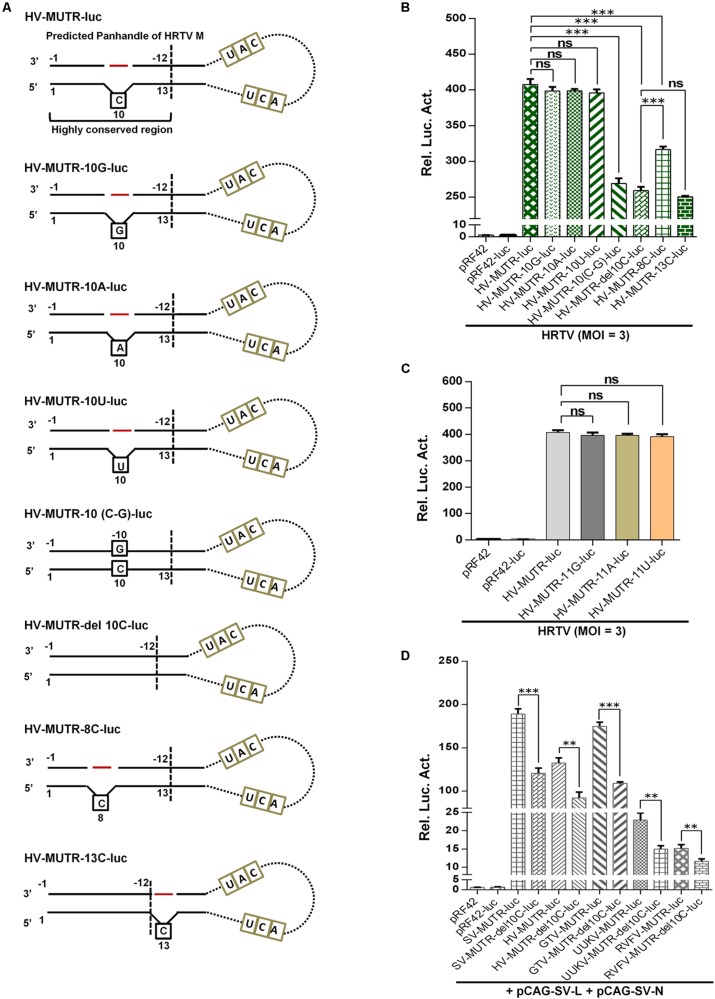
is a new genus ( family, order) that comprises a group of emerging tick-borne viruses with severe fever with thrombocytopenia syndrome virus (SFTSV) and Heartland virus (HRTV) as virulent representatives. As segmented RNA viruses, bunyaviruses may have genome reassortment potential, increasing the concern about new life-threatening bunyavirus emergence. Using a series of combinatory minigenome reporter assays based on transfection and superinfection, we showed that replication machinery proteins of designated banyangviruses can recognize genomic untranslated regions (UTRs) of other banyangviruses and assemble heterogenous minigenomes into functional ribonucleoproteins (RNPs). Moreover, both heterogenous and heterozygous RNPs were efficiently packaged by viral glycoproteins into infectious virus-like particles, manifesting remarkable reassortment potential of banyangviruses. Meanwhile, UTR promoter strength of the three banyangvirus segments appeared to be M > L > S. Secondary structure analysis revealed a conservative non-basepairing protruding nucleotide in the terminal UTR panhandles of M and L (but not S) segments of all banyangviruses and some related phleboviruses ( genus). Furthermore, not only a conserved panhandle region but also the protruding nucleotide proved important for UTR function. Removal of the protruding nucleotide abated M and L UTR activities and compatibilities with heterogenous viral proteins, and introduction of a protruding nucleotide into S panhandle, conversely, enhanced UTR promoter strength and compatibility, revealing the significance of the protruding nucleotide as a new signature of the genomic panhandle structure in both UTR activity and reassortment potential. The study demonstrates not only banyangvirus reassortment potential but also the notable role of the protruding nucleotide in UTR function and reassortment, providing clues to viral evolution and replication mechanisms and perhaps benefiting disease control and prevention in the future.
是一个新的属(科、目),它包含一组新出现的蜱传病毒,以严重发热伴血小板减少综合征病毒(SFTSV)和哈特兰病毒(HRTV)作为强毒代表。作为分节段RNA病毒,布尼亚病毒可能具有基因组重配潜力,这增加了对新出现的危及生命的布尼亚病毒的担忧。通过一系列基于转染和超感染的组合微型基因组报告基因检测,我们表明指定的班阳病毒的复制机制蛋白可以识别其他班阳病毒的基因组非翻译区(UTR),并将异源微型基因组组装成功能性核糖核蛋白(RNP)。此外,异源和杂合RNP都能被病毒糖蛋白有效地包装成感染性病毒样颗粒,这表明班阳病毒具有显著的重配潜力。同时,三个班阳病毒节段的UTR启动子强度似乎为M>L>S。二级结构分析显示,所有班阳病毒和一些相关静脉病毒(属)的M和L(而非S)节段的末端UTR柄部存在保守的非碱基配对突出核苷酸。此外,不仅保守的柄部区域,而且突出核苷酸对UTR功能也很重要。去除突出核苷酸会减弱M和L UTR的活性以及与异源病毒蛋白的兼容性,相反,将突出核苷酸引入S柄部则会增强UTR启动子强度和兼容性,这揭示了突出核苷酸作为基因组柄部结构在UTR活性和重配潜力方面新特征的重要性。该研究不仅证明了班阳病毒的重配潜力,还证明了突出核苷酸在UTR功能和重配中的显著作用,为病毒进化和复制机制提供了线索,可能在未来有利于疾病的控制和预防。