Jiangsu Institute of Clinical Immunology, The First Affiliated Hospital of Soochow University, 708 Renmin Road, Suzhou 215000, China.
Department of Hematology, The First Affiliated Hospital of Soochow University, 188 Shizi Street, Suzhou 215000, China.
J Immunol Res. 2020 Apr 6;2020:2328675. doi: 10.1155/2020/2328675. eCollection 2020.
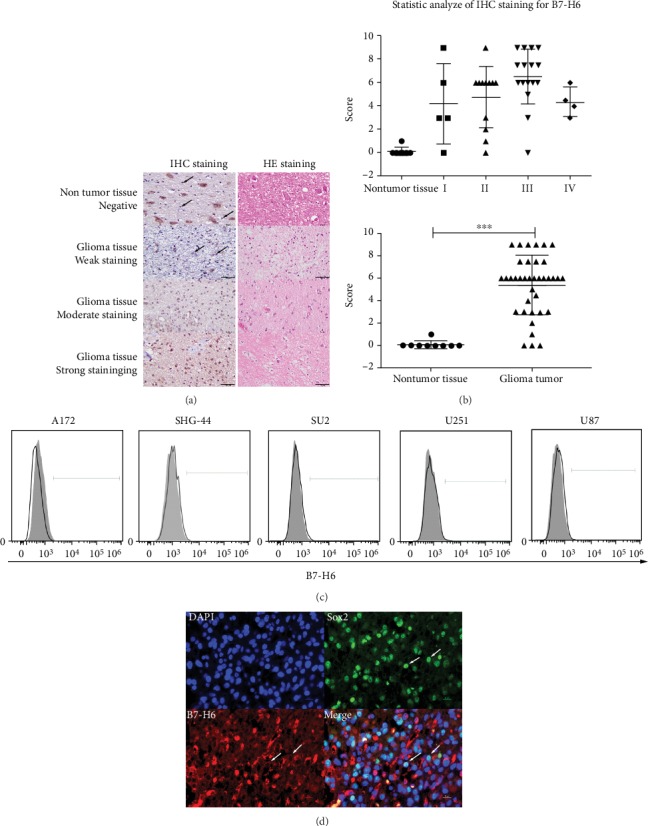
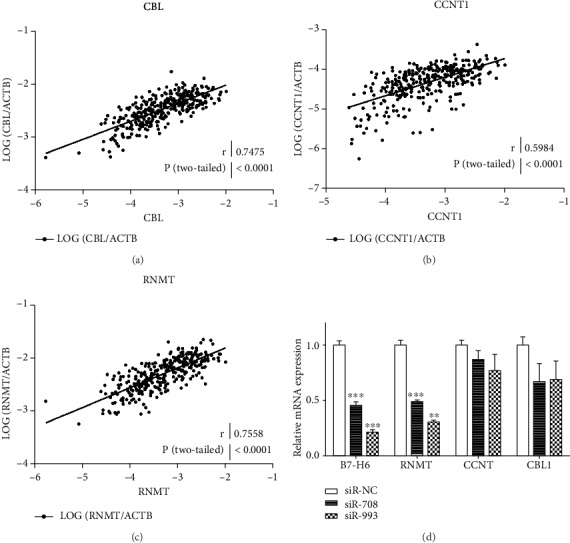
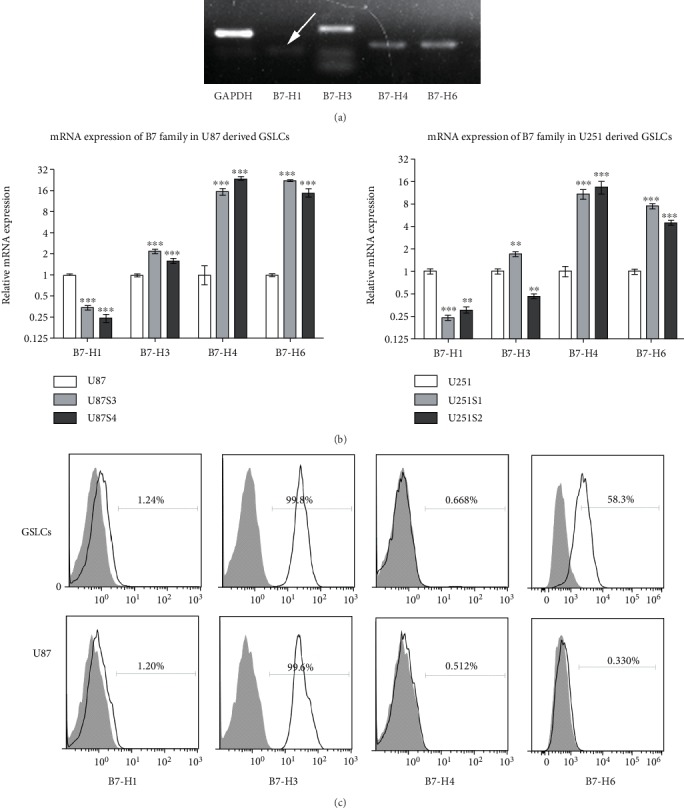
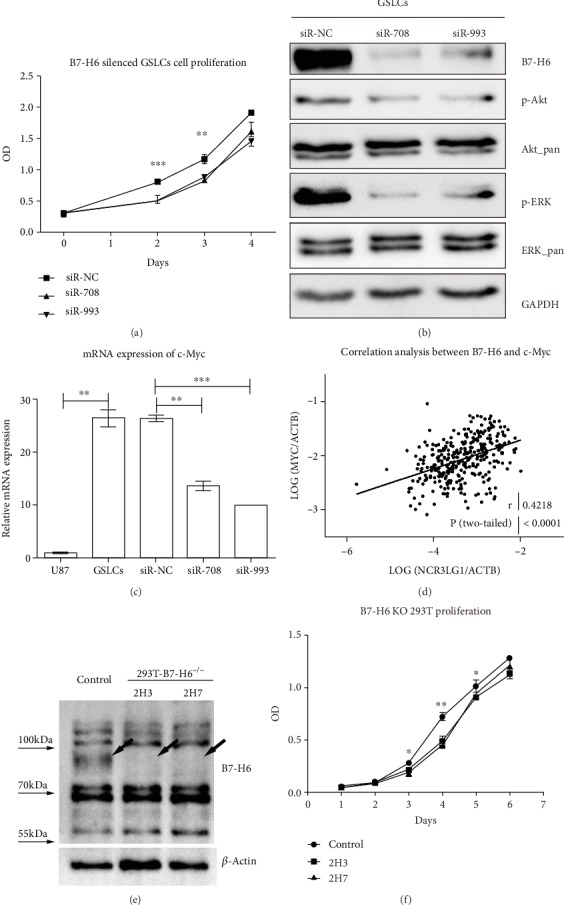
B7 homologue 6 (B7-H6), a newly identified member of the B7 costimulatory molecule family, is not only a crucial regulator of NK cell-mediated immune responses through binding to NKp30 but also has clinical implications due to its abnormal expression in human cancers. Here, we show that B7-H6 expression is abnormally upregulated in glioma tissue and that B7-H6 is coexpressed with stem cell marker Sox2. Intriguingly, B7-H6 was rarely detected on the surface of glioma cell lines but was abundantly expressed in glioma stem-like cells (GSLCs) that were derived from the glioma cell lines . Surprisingly, B7-H6 was the only one that was preferentially expressed in the GSLCs among the B7 family members. Functionally, knockdown of B7-H6 in GSLCs by siRNAs led to the inhibition of cell proliferation, with decrease in the expression of the oncogene Myc as well as inactivation of PI3K/Akt and ERK/MAPK signaling pathways. Moreover, we determined that three genes CBL (Casitas B-Lineage Lymphoma Proto-Oncogene), CCNT1 (Cyclin T1), and RNMT (RNA guanine-7 methyltransferase) were coexpressed with B7-H6 and c-myc in glioma tissue samples from the TCGA database and found, however that only RNMT expression was inhibited by the knockdown of B7-H6 expression in the GSLCs, suggesting the involvement of RNMT in the B7-H6/c-myc axis. Extending this to 293T cells, we observed that knocking out of B7-H6 with CRISPR-Cas9 system also suppressed cell proliferation. Thus, our findings suggest B7-H6 as a potential molecule for glioma stem cell targeted immunotherapy.
B7 同系物 6(B7-H6)是 B7 共刺激分子家族的新成员,不仅通过与 NKp30 结合成为 NK 细胞介导的免疫反应的关键调节因子,而且由于其在人类癌症中的异常表达而具有临床意义。在这里,我们表明 B7-H6 在神经胶质瘤组织中异常上调表达,并且 B7-H6 与干细胞标志物 Sox2 共表达。有趣的是,B7-H6 在神经胶质瘤细胞系的表面很少被检测到,但在源自神经胶质瘤细胞系的神经胶质瘤干细胞样细胞(GSLCs)中大量表达。令人惊讶的是,在 B7 家族成员中,只有 B7-H6 优先在 GSLCs 中表达。功能上,通过 siRNA 敲低 GSLCs 中的 B7-H6 导致细胞增殖受到抑制,癌基因 Myc 的表达减少,以及 PI3K/Akt 和 ERK/MAPK 信号通路失活。此外,我们确定了三个基因 CBL(Casitas B-Lineage Lymphoma Proto-Oncogene)、CCNT1(Cyclin T1)和 RNMT(RNA 鸟嘌呤-7 甲基转移酶)与 B7-H6 和 c-myc 在 TCGA 数据库的神经胶质瘤组织样本中共同表达,然而,只有 B7-H6 的表达被敲低抑制了在 GSLCs 中,提示 RNMT 参与了 B7-H6/c-myc 轴。将这一结果扩展到 293T 细胞,我们观察到用 CRISPR-Cas9 系统敲除 B7-H6 也抑制了细胞增殖。因此,我们的研究结果表明 B7-H6 是一种用于神经胶质瘤干细胞靶向免疫治疗的潜在分子。