Comparative Immunogenetics Laboratory, Department of Veterinary Pathobiology, College of Veterinary Medicine and Biomedical Sciences, Texas A&M University, College Station, TX 77843, USA.
Department of Microbial Pathogenesis and Immunology, College of Medicine, Texas A&M Health Science Center, Texas A&M University, College Station, TX 77843, USA;
Int J Mol Sci. 2020 Apr 19;21(8):2861. doi: 10.3390/ijms21082861.
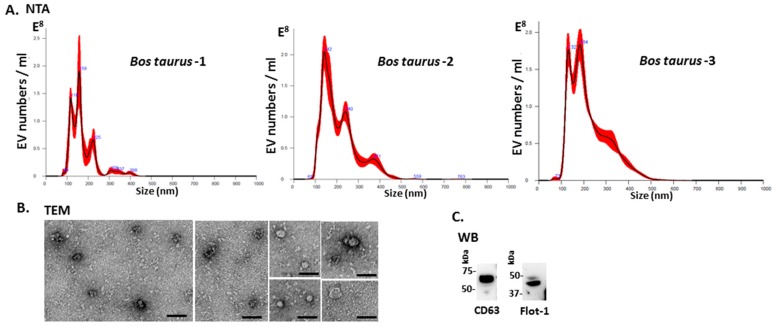
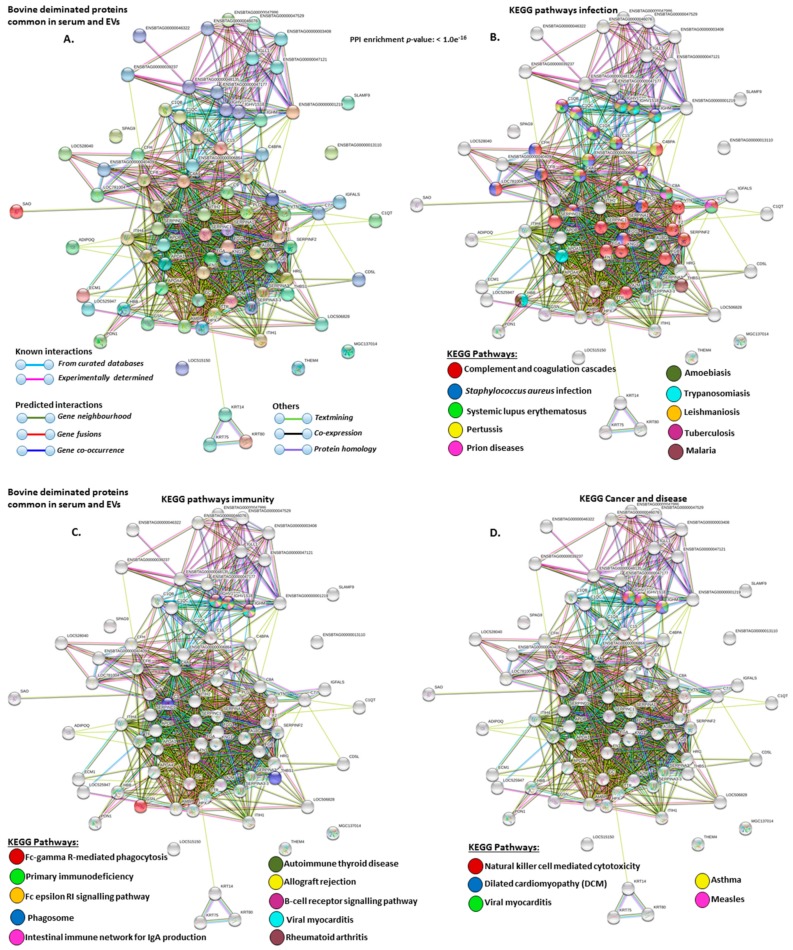
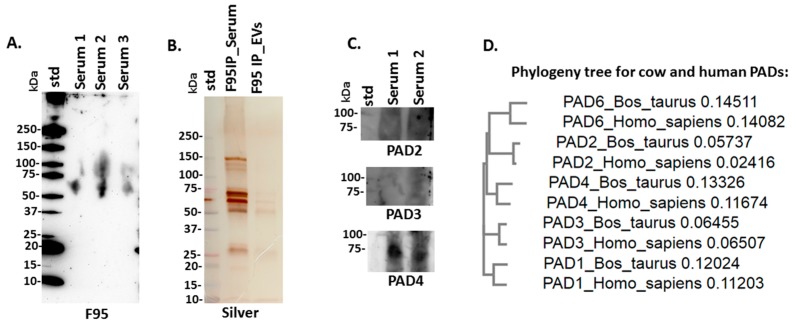
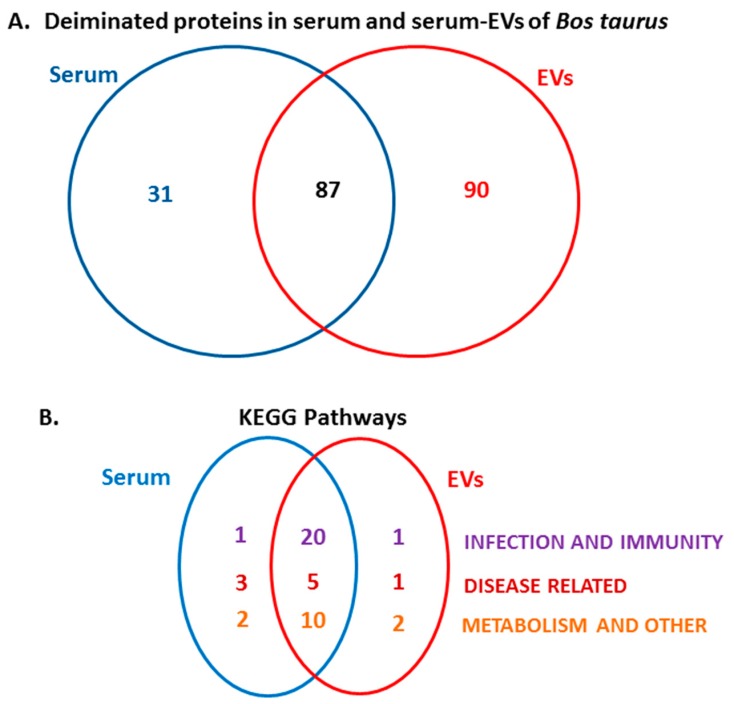
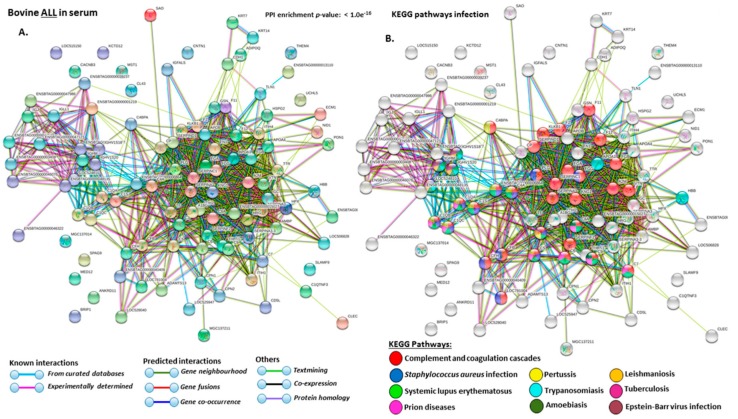
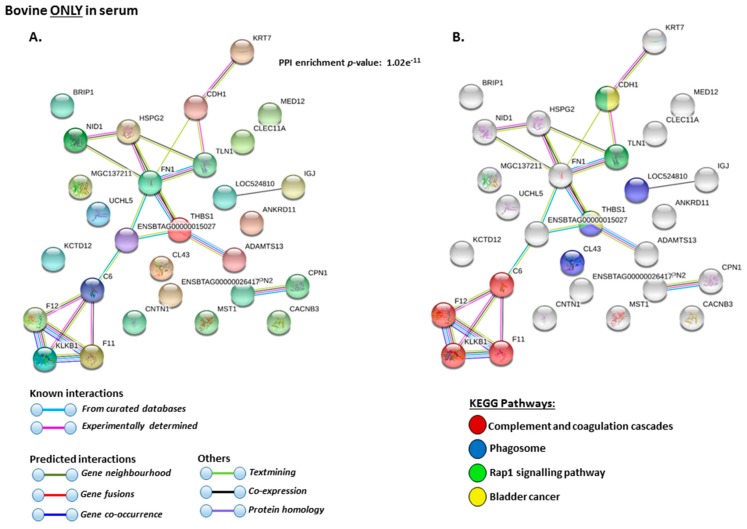
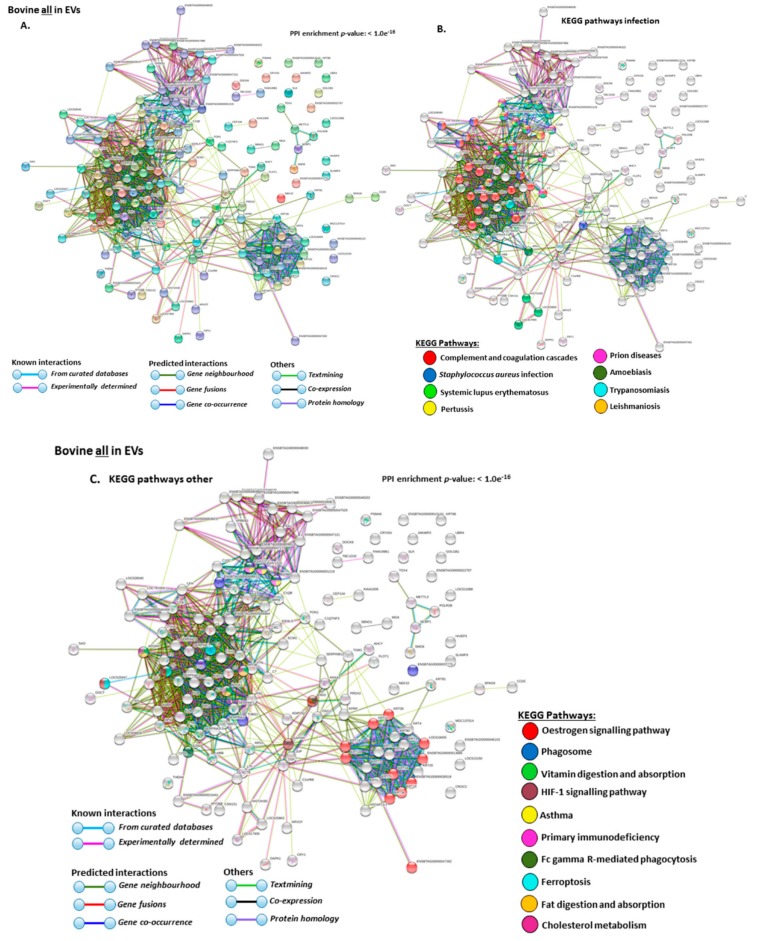
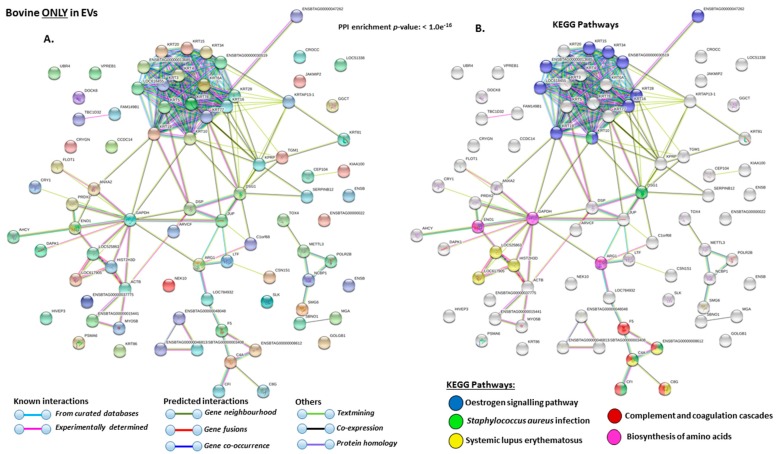
The bovine immune system is known for its unusual traits relating to immunoglobulin and antiviral responses. Peptidylarginine deiminases (PADs) are phylogenetically conserved enzymes that cause post-translational deimination, contributing to protein moonlighting in health and disease. PADs also regulate extracellular vesicle (EV) release, forming a critical part of cellular communication. As PAD-mediated mechanisms in bovine immunology and physiology remain to be investigated, this study profiled deimination signatures in serum and serum-EVs in . EVs were poly-dispersed in a 70-500 nm size range and showed differences in deiminated protein cargo, compared with whole sera. Key immune, metabolic and gene regulatory proteins were identified to be post-translationally deiminated with some overlapping hits in sera and EVs (e.g., immunoglobulins), while some were unique to either serum or serum-EVs (e.g., histones). Protein-protein interaction network analysis of deiminated proteins revealed KEGG pathways common for serum and serum-EVs, including complement and coagulation cascades, viral infection (enveloped viruses), viral myocarditis, bacterial and parasitic infections, autoimmune disease, immunodeficiency intestinal IgA production, B-cell receptor signalling, natural killer cell mediated cytotoxicity, platelet activation and hematopoiesis, alongside metabolic pathways including ferroptosis, vitamin digestion and absorption, cholesterol metabolism and mineral absorption. KEGG pathways specific to EVs related to HIF-1 signalling, oestrogen signalling and biosynthesis of amino acids. KEGG pathways specific for serum only, related to Epstein-Barr virus infection, transcription mis-regulation in cancer, bladder cancer, Rap1 signalling pathway, calcium signalling pathway and ECM-receptor interaction. This indicates differences in physiological and pathological pathways for deiminated proteins in serum-EVs, compared with serum. Our findings may shed light on pathways underlying a number of pathological and anti-pathogenic (viral, bacterial, parasitic) pathways, with putative translatable value to human pathologies, zoonotic diseases and development of therapies for infections, including anti-viral therapies.
牛的免疫系统以其在免疫球蛋白和抗病毒反应方面的独特特征而闻名。肽基精氨酸脱亚氨酶(PADs)是进化上保守的酶,可引起翻译后脱亚氨基作用,从而促进健康和疾病中的蛋白质多功能性。PADs 还调节细胞外囊泡(EV)的释放,形成细胞通讯的关键部分。由于牛免疫学和生理学中的 PAD 介导机制仍有待研究,本研究对. 血清和血清-EV 中的脱亚氨基特征进行了分析。EV 在 70-500nm 的大小范围内呈多分散性,与全血清相比,其脱亚氨基蛋白货物存在差异。关键的免疫、代谢和基因调节蛋白被鉴定为翻译后脱亚氨基,血清和 EV 中有一些重叠的命中(例如免疫球蛋白),而有些则仅存在于血清或血清-EV 中(例如组蛋白)。脱亚氨基蛋白的蛋白质-蛋白质相互作用网络分析显示,血清和血清-EV 中存在共同的 KEGG 途径,包括补体和凝血级联、病毒感染(包膜病毒)、病毒性心肌炎、细菌和寄生虫感染、自身免疫性疾病、免疫缺陷肠道 IgA 产生、B 细胞受体信号转导、自然杀伤细胞介导的细胞毒性、血小板激活和造血,以及包括铁死亡、维生素消化和吸收、胆固醇代谢和矿物质吸收在内的代谢途径。EV 特有的 KEGG 途径与 HIF-1 信号、雌激素信号和氨基酸生物合成有关。仅血清特有的 KEGG 途径与 Epstein-Barr 病毒感染、癌症转录失调、膀胱癌、Rap1 信号通路、钙信号通路和 ECM-受体相互作用有关。这表明与血清相比,血清-EV 中脱亚氨基蛋白的生理和病理途径存在差异。我们的发现可能为许多病理和抗病原体(病毒、细菌、寄生虫)途径的基础途径提供启示,具有潜在的转化价值,可应用于人类病理学、人畜共患病和感染治疗的发展,包括抗病毒治疗。