Pérez-Etayo Lara, González David, Vitas Ana Isabel
Department of Microbiology and Parasitology, University of Navarra, 31008 Pamplona, Spain.
Instituto de Investigación Sanitaria de Navarra (IDISNA), 31008 Pamplona, Spain.
Microorganisms. 2020 Apr 15;8(4):568. doi: 10.3390/microorganisms8040568.
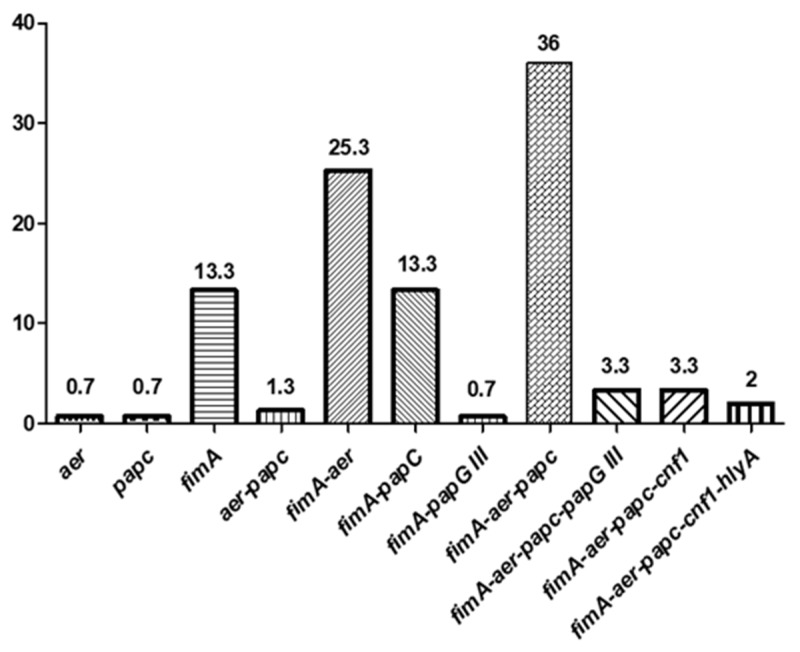
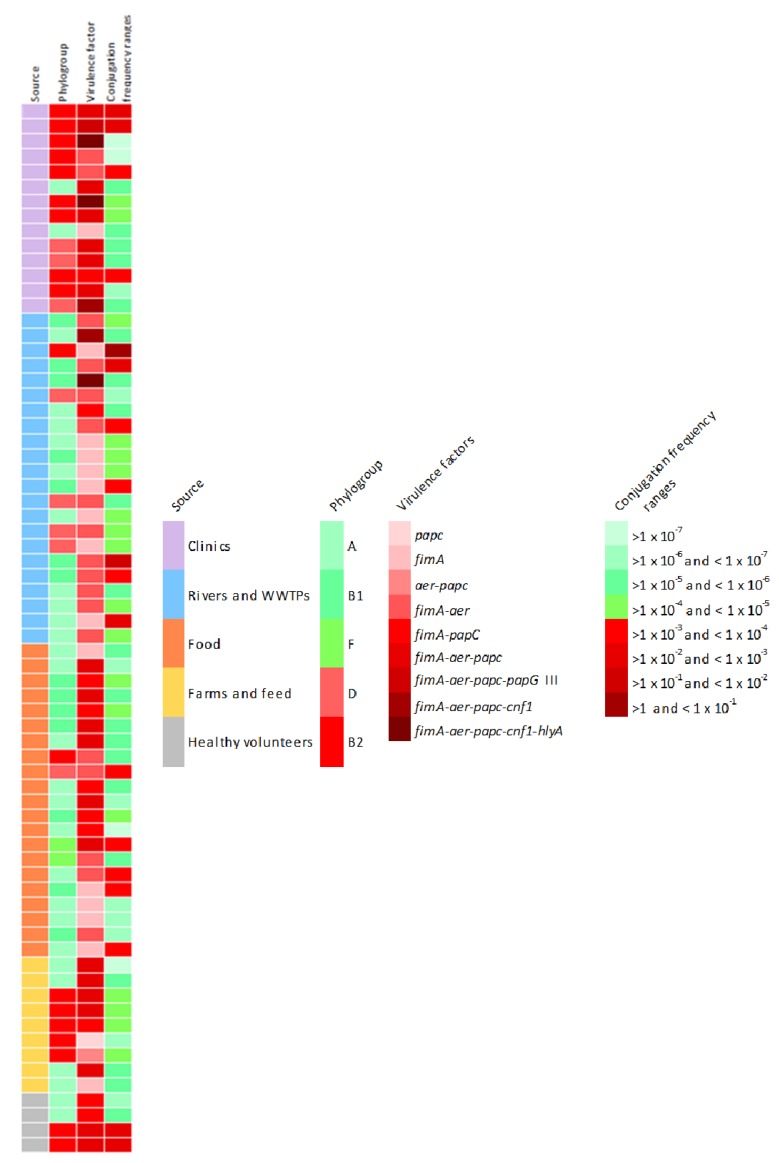
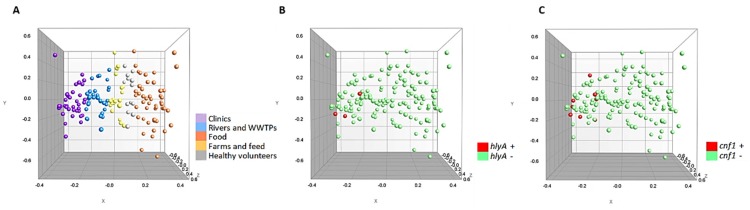
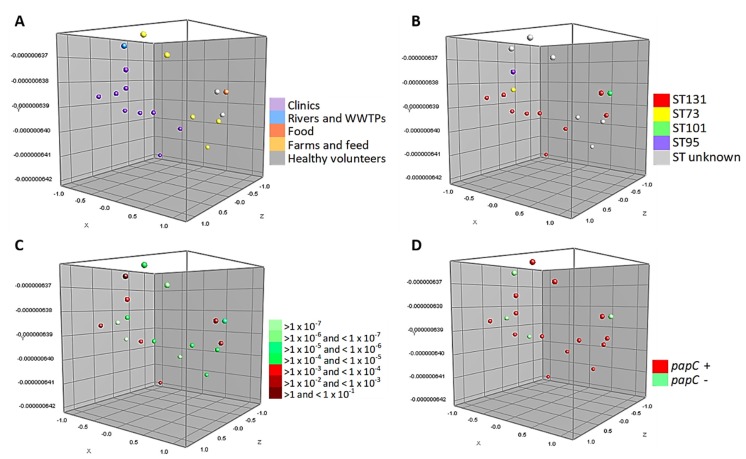
One of the main public health problems nowadays is the increase of antimicrobial resistance, both in the hospital environment and outside it (animal environment, food and aquatic ecosystems, among others). It is necessary to investigate the virulence-associated factors and the ability of horizontal gene transfer among bacteria for a better understanding of the pathogenicity and the mechanisms of dissemination of resistant bacteria. Therefore, the objective of this work was to detect several virulence factors genes (, , III, , and ) and to determine the conjugative capacity in a wide collection of extended-spectrum β-lactamases-producing isolated from different sources (human, food, farms, rivers, and wastewater treatment plants). Regarding virulence genes, , and were distributed throughout all the studied environments, III was mostly related to clinical strains and wastewater is a route of dissemination for and . Strains isolated from aquatic environments showed an average conjugation frequencies of 1.15 × 10 ± 5 × 10, being significantly higher than those observed in strains isolated from farms and food ( < 0.05), with frequencies of 1.53 × 10 ± 2.85 × 10 and 9.61 × 10 ± 1.96 × 10, respectively. The reported data suggest the importance that the aquatic environment (especially WWTPs) acquires for the exchange of genes and the dispersion of resistance. Therefore, specific surveillance programs of AMR indicators in wastewaters from animal or human origin are needed, in order to apply sanitation measures to reduce the burden of resistant bacteria arriving to risky environments as WWTPs.
当今主要的公共卫生问题之一是抗菌药物耐药性的增加,无论是在医院环境还是医院外环境(动物环境、食品和水生生态系统等)。有必要研究细菌的毒力相关因子和水平基因转移能力,以便更好地了解耐药菌的致病性和传播机制。因此,本研究的目的是检测几种毒力因子基因(、、Ⅲ、、和),并确定从不同来源(人类、食品、农场、河流和污水处理厂)分离出的大量产超广谱β-内酰胺酶菌株的接合能力。关于毒力基因,、和分布在所有研究环境中,Ⅲ主要与临床菌株相关,废水是和的传播途径。从水生环境分离出的菌株平均接合频率为1.15×10±5×10,显著高于从农场和食品中分离出的菌株(<0.05),后者的频率分别为1.53×10±2.85×10和9.61×10±1.96×10。报告的数据表明水生环境(特别是污水处理厂)在基因交换和耐药性传播方面的重要性。因此,需要针对动物或人类来源废水的抗菌药物耐药性指标制定具体监测计划,以便采取卫生措施减轻到达污水处理厂等危险环境的耐药菌负担。