Molecular Biology Research Center, Systems Biology and Poisonings Institute, Baqiyatallah University of Medical Sciences, Tehran, Iran.
Antimicrob Resist Infect Control. 2018 Oct 3;7:118. doi: 10.1186/s13756-018-0411-4. eCollection 2018.
The way of treating different types of infectious diseases is really important. Using genotyping method, we can determine the genetic relatedness between the organisms with different resistance profile from different sources. The aim of this study was to determine antibiotic resistance and genotyping of uropathogenic (UPEC) strains using pulsed field gel electrophoresis (PFGE).
() strains were recovered from the patients with urinary tract infections (UTI) whom admitted in several major hospitals in Tehran. Antibiotic susceptibility testing was done according to CLSI guideline. The present of some virulence factor have been detected using PCR assay. Genotyping of the strains was performed by PFGE and all PFGE profiles were subjected to data processing.
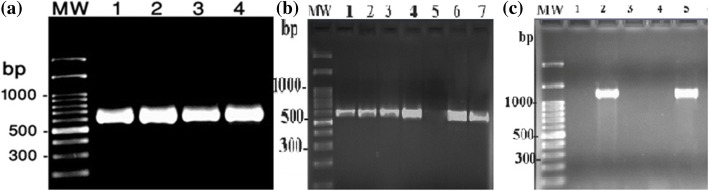
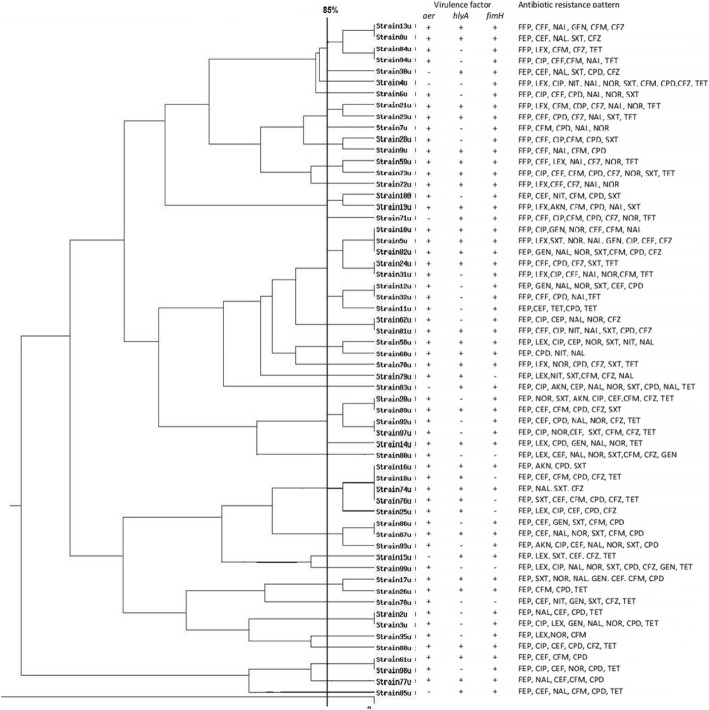
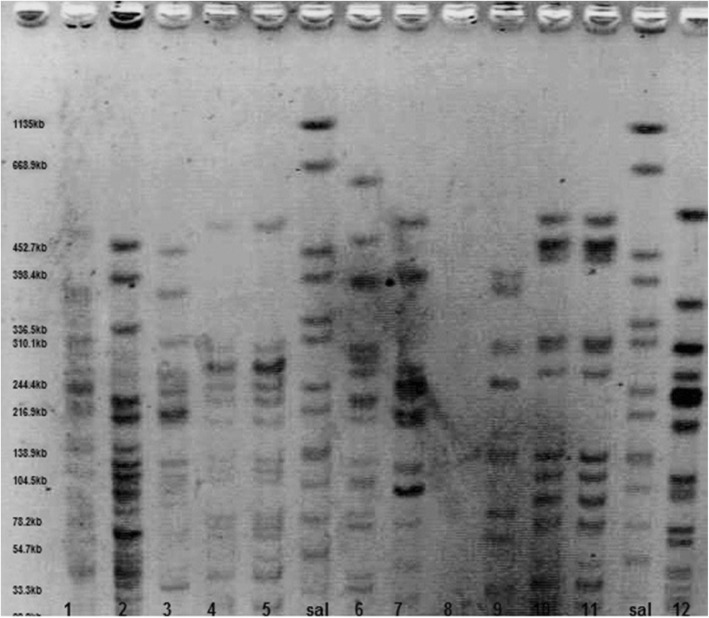
In total, 60 strains were subjected to the study. Most of isolates were resistant to cefepime (100%) and cephalothin (74%) and susceptible to imipenem (100%), vancomycin (100%) and doxycycline (100%). Among the UPEC isolates the prevalence of fimbriae type I (), hemolysin () and aerobactin () genes were 89%, 60% and 90%, respectively. The PFGE differentiated strains into 33 different genetic clusters. Majority (30%) of them including PFGE type 11 generated 15 bands, while PFGE type 2 was the lowest (2%) prevalent group with 9 bands.
The result showed that the antibiotic resistance is escalating rapidly. UPEC strains causing infections are more likely to harbor certain virulence genes. Our finding also showed strains isolated under the study were belonged to the diverse clones.
治疗不同类型传染病的方法非常重要。通过基因分型方法,我们可以确定来自不同来源的具有不同耐药谱的生物体之间的遗传相关性。本研究旨在使用脉冲场凝胶电泳(PFGE)确定尿路感染(UTI)患者的尿液分离株的抗生素耐药性和基因分型。
从德黑兰几家大医院收治的 UTI 患者中回收()菌株。根据 CLSI 指南进行抗生素药敏试验。使用 PCR 检测法检测一些毒力因子的存在。通过 PFGE 对菌株进行基因分型,对所有 PFGE 图谱进行数据处理。
共对 60 株菌株进行了研究。大多数分离株对头孢吡肟(100%)和头孢噻吩(74%)耐药,对亚胺培南(100%)、万古霉素(100%)和强力霉素(100%)敏感。在 UPEC 分离株中,菌毛型 I()、溶血素()和 Aerobactin()基因的流行率分别为 89%、60%和 90%。PFGE 将菌株分为 33 个不同的遗传簇。其中包括 PFGE 型 11 生成 15 个条带的菌株(30%)最多,而 PFGE 型 2 是最普遍的(2%)菌株,有 9 个条带。
结果表明,抗生素耐药性正在迅速上升。引起感染的 UPEC 菌株更有可能携带某些毒力基因。我们的研究结果还表明,在所研究的分离株中,菌株属于不同的克隆。