Translational Cell Therapy Center, Department of Medical Research, China Medical University Hospital, Taiwan, No. 2, Yude Road, North District, Taichung City, 40447, Taiwan.
Department of Nursing, Asia University, Taiwan, No. 500, Lioufeng Rd., Wufeng, Taichung City, 41354, Taiwan.
Cell Death Dis. 2020 Apr 23;11(4):265. doi: 10.1038/s41419-020-2432-1.
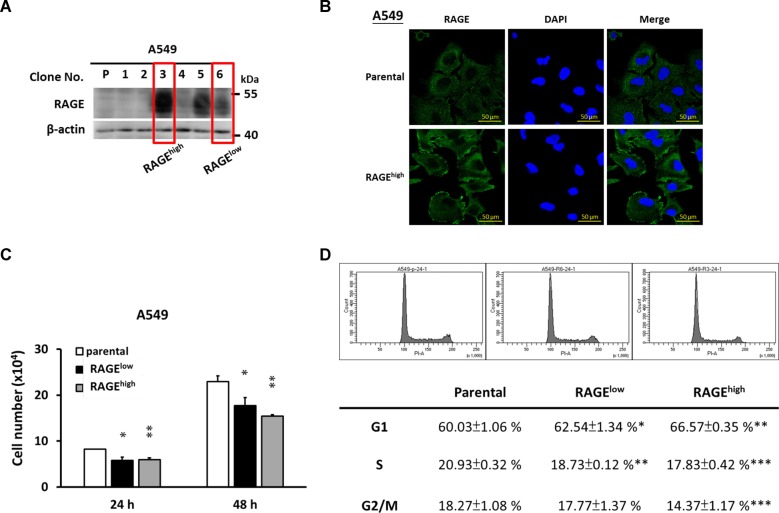
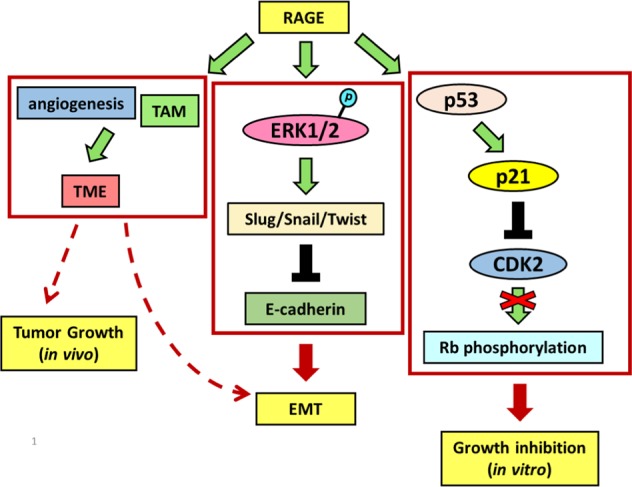
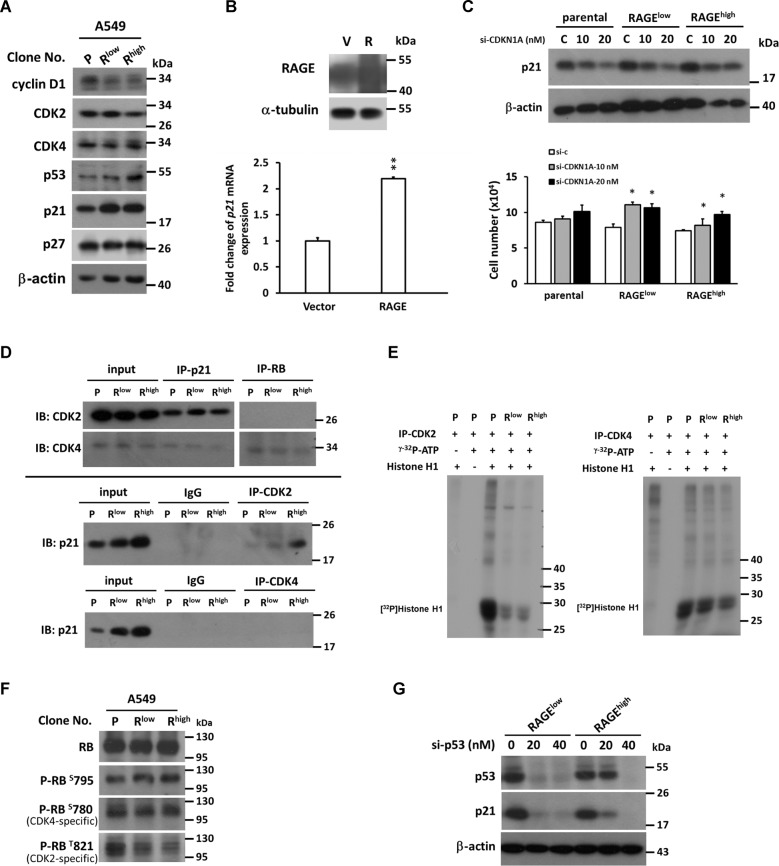
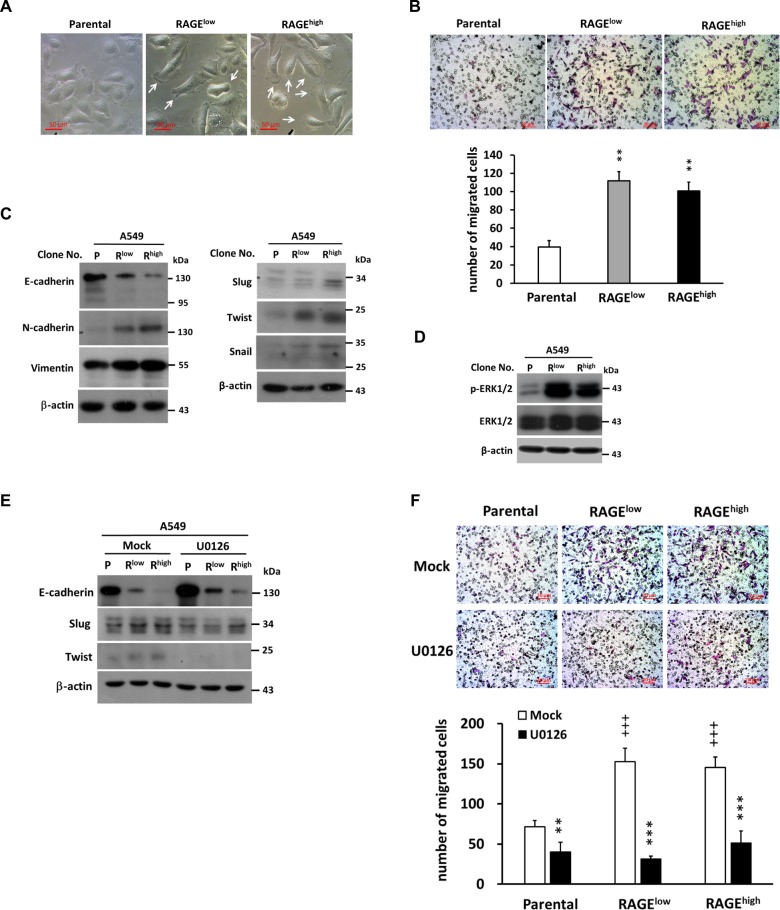
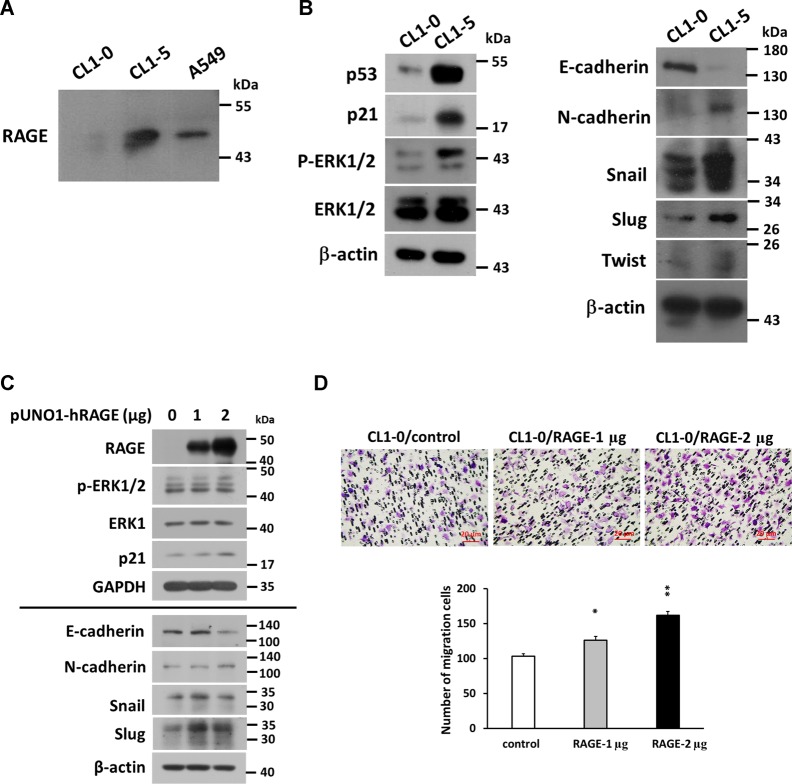
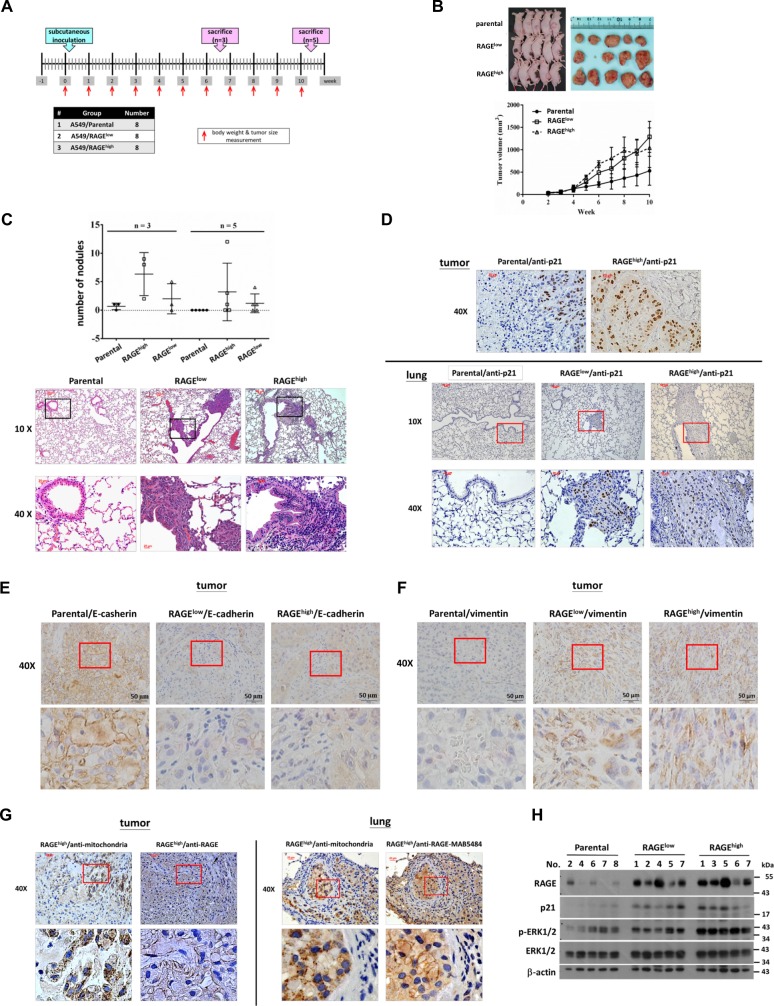
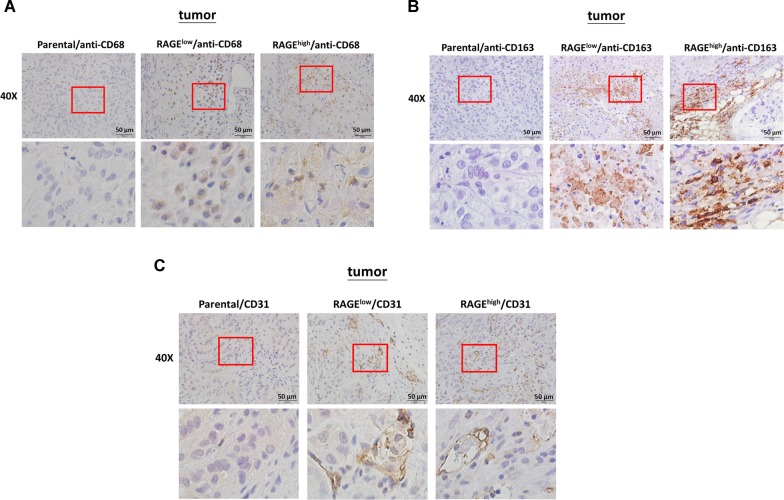
RAGE (receptor for advanced glycation end-product) is thought to be associated with metastasis and poor prognosis of various types of cancer. However, RAGE is constitutively expressed in the normal lung and down-regulated in cancerous lung, while the opposite evidence shows that RAGE-mediated signaling contributes to the tumorigenesis of lung cancer. Therefore, the role of RAGE in lung cancer progression is still unclear to be further investigated. In this study, RAGE-overexpressed stable clones of human lung cancer A549 cells and two local lung adenocarcinoma cell lines CL1-0 and CL1-5 were utilized to verify the effect of RAGE on lung cancer cells while the in vivo xenograft animal model was further performed to evaluate the role of RAGE in the progression of lung cancer. The growth of A549 cells was inhibited by RAGE overexpression. p53-dependent p21 expression contributed to RAGE-induced growth inhibition by suppressing CDK2 kinase activity and retinoblastoma protein (RB) phosphorylation in vitro. On the other hand, RAGE overexpression promoted migration, invasion, and mesenchymal features of lung adenocarcinoma cells through ERK signaling. Furthermore, an in vivo xenograft experiment indicated that RAGE promoted the metastasis of lung cancer cells with p21 up-regulation, ERK activation, and the changes of EMT markers. Regarding to the involvement of tumor-associated macrophage (TAM) in the microenvironment, we monitored the expressions of TAM markers including CD68 and CD163 as well as angiogenesis marker CD31 in xenograft slice. The data showed that RAGE might induce the accumulation of TAM in lung cancer cells and further accelerate the in vivo tumor growth. In summary, our study provides evidence indicating the distinct in vitro and in vivo effects of RAGE and related mechanisms on tumor growth and metastasis, which shed light on the oncogenic role of RAGE in lung cancer.
晚期糖基化终产物受体(RAGE)被认为与各种类型癌症的转移和预后不良有关。然而,RAGE 在正常肺组织中持续表达,而在癌变肺组织中下调,而相反的证据表明,RAGE 介导的信号转导有助于肺癌的发生。因此,RAGE 在肺癌进展中的作用仍不清楚,需要进一步研究。在这项研究中,我们利用 RAGE 过表达的人肺癌 A549 细胞稳定克隆以及两个局部肺腺癌细胞系 CL1-0 和 CL1-5,来验证 RAGE 对肺癌细胞的影响,同时还进行了体内异种移植动物模型实验,以评估 RAGE 在肺癌进展中的作用。RAGE 过表达抑制 A549 细胞的生长。体外实验表明,p53 依赖性 p21 表达通过抑制 CDK2 激酶活性和视网膜母细胞瘤蛋白(RB)磷酸化,有助于 RAGE 诱导的生长抑制。另一方面,RAGE 过表达通过 ERK 信号促进肺腺癌细胞的迁移、侵袭和间充质特征。此外,体内异种移植实验表明,RAGE 通过上调 p21、激活 ERK 和改变 EMT 标志物,促进肺癌细胞的转移。关于肿瘤相关巨噬细胞(TAM)在微环境中的参与,我们监测了异种移植切片中 TAM 标志物(包括 CD68 和 CD163)和血管生成标志物 CD31 的表达。数据表明,RAGE 可能诱导 TAM 在肺癌细胞中的积累,并进一步加速体内肿瘤生长。总之,我们的研究提供了证据,表明 RAGE 及其相关机制在肿瘤生长和转移方面具有明显的体外和体内作用,这为 RAGE 在肺癌中的致癌作用提供了依据。