Faculty of Veterinary Medicine, Department of Equine and Small Animal Medicine, University of Helsinki, Helsinki, Finland.
Faculty of Veterinary Medicine, Genomics and Animal Breeding Group, Department of Genetics, University of Córdoba, Cordova, Spain.
Vet Clin Pathol. 2020 Jun;49(2):258-269. doi: 10.1111/vcp.12852. Epub 2020 Apr 23.
To date, very few studies have compared the effects of different types of feeding practices on canine physiology, such as feeding exclusively dry, raw, or homemade foods.
We aimed to report the changes in hematologic, serum biochemical, plasma folate, B , and whole blood iron levels in dogs fed two different diets.
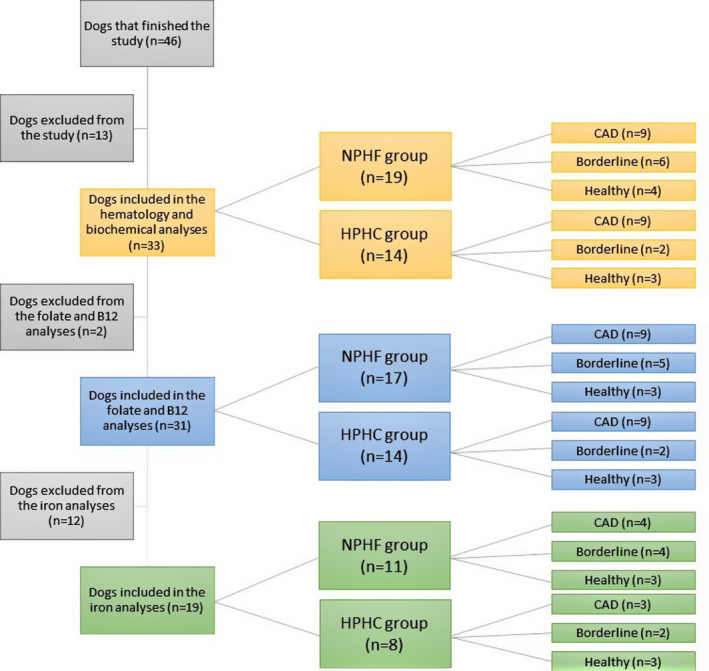
A pilot study was developed to compare the effects of a heat-processed high carbohydrate (HPHC) and nonprocessed high-fat (NPHF) diet. A total of 33 client-owned Staffordshire Bull Terriers were used; 18 had canine atopic dermatitis, seven were healthy, and eight were grouped as "borderline" dogs since they did not fulfill at least six of Favrot's criteria. The comparisons were made between the diet groups at the end visit of the diet intervention, as well as within the diet groups during the study.
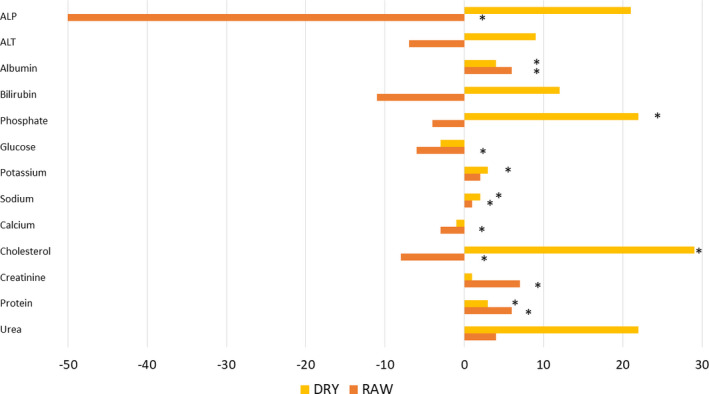
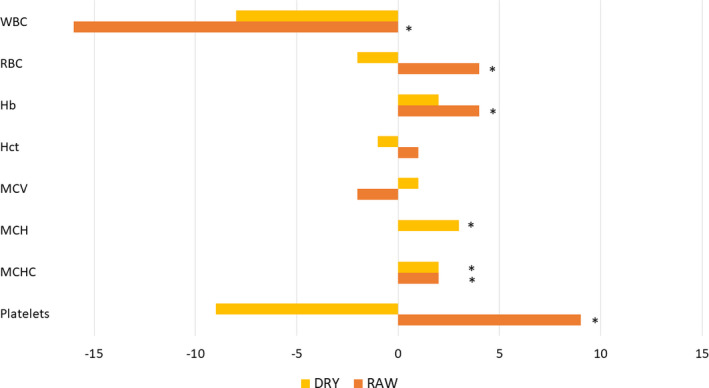
Significant differences between and within the diet groups were observed, although the majority of outcomes remained within the RIs. The median time of diet intervention was 140 days. Red blood cell counts, mean cell hemoglobin concentrations, and platelet counts were significantly higher, and mean cell hemoglobin, mean cell volume, alkaline phosphatase, inorganic phosphorus, and cholesterol were significantly lower in the dogs fed the NPHF diet compared with those fed the HPHC diet after the diet trial was completed. In addition, folate, B , and iron decreased significantly in the NPHF diet group.
This pilot study indicated that diet had an impact on blood values, although most remained within RIs, pointing out the need for further studies.
迄今为止,很少有研究比较不同类型的喂养方式对犬生理的影响,例如只喂食干粮、生食或自制食物。
我们旨在报告两种不同饮食喂养的犬的血液学、血清生化、血浆叶酸、B 族维生素和全血铁水平的变化。
开展了一项试点研究,以比较经过热处理的高碳水化合物(HPHC)和未经处理的高脂肪(NPHF)饮食的影响。共有 33 只客户拥有的斯塔福郡斗牛犬被使用;18 只患有犬特应性皮炎,7 只是健康的,8 只是“边缘”犬,因为它们没有满足至少 6 项 Favrot 标准。在饮食干预结束时以及在研究期间,对饮食组进行了比较。
尽管大多数结果仍在参考范围内,但在饮食组之间和饮食组内部观察到了显著差异。饮食干预的中位数时间为 140 天。与 HPHC 饮食组相比,NPHF 饮食组的红细胞计数、平均细胞血红蛋白浓度和血小板计数显著升高,平均细胞血红蛋白、平均细胞体积、碱性磷酸酶、无机磷和胆固醇显著降低。此外,NPHF 饮食组的叶酸、B 族维生素和铁显著降低。
这项试点研究表明,饮食对血液值有影响,尽管大多数仍在参考范围内,这表明需要进一步研究。