Research Centre, CHU Ste-Justine, Montreal, Quebec, H3T 1C5, Canada.
Department of Nutrition, Université de Montréal, Montreal, Quebec, H3T 1A8, Canada.
Nutrients. 2020 Apr 22;12(4):1175. doi: 10.3390/nu12041175.
Metabolic Syndrome (MetS), a major worldwide concern for the public health system, refers to a cluster of key metabolic components, and represents a risk factor for diabetes and cardiovascular diseases. As oxidative stress (OxS) and inflammation are the major triggers of insulin sensitivity (IS), a cardinal MetS feature, the principal aim of the present work is to determine whether glycomacropeptide (GMP), a milk-derived bioactive peptide, exerts beneficial effects on their expression.
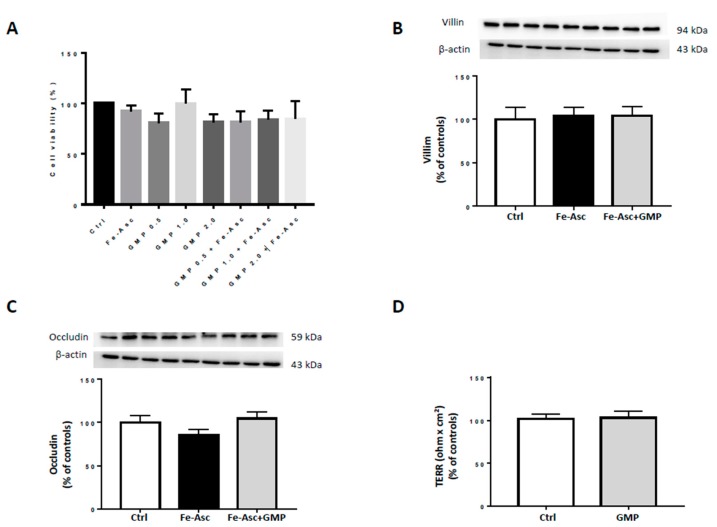
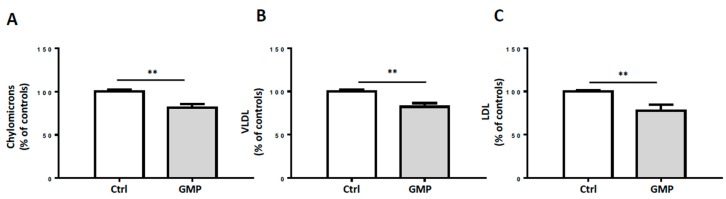
Fully differentiated intestinal Caco-2/15 cells are used to evaluate the preventive action of 2 mg/mL GMP against OxS and inflammation induced by the mixture iron-ascorbate (Fe/Asc) (200 μM:2 mM). The potency of GMP of decreasing the production of lipoproteins, including chylomicrons (CM), very-low-density lipoproteins (VLDL) and low-density lipoproteins (LDL) is also assessed.
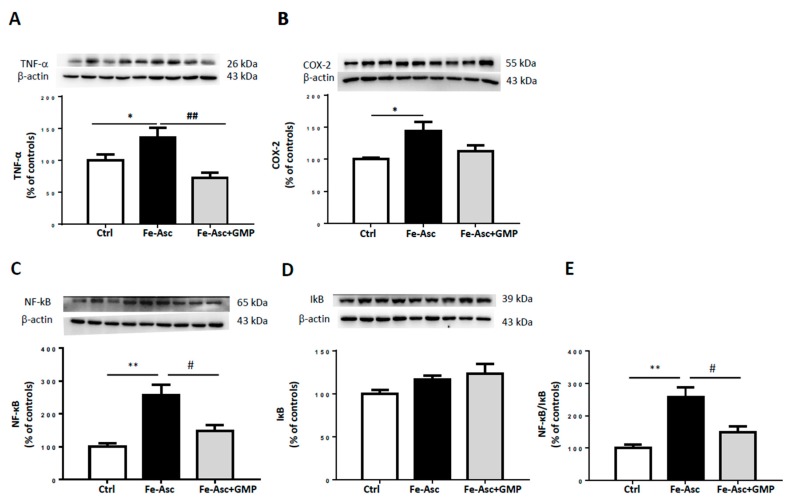
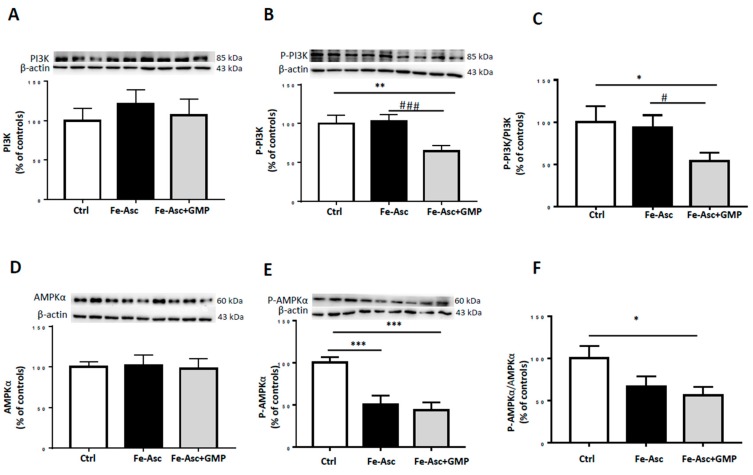
The administration of GMP significantly reduces malondialdehyde, a biomarker of lipid peroxidation, and raises superoxide dismutase 2 and glutathione peroxidase via the induction of the nuclear factor erythroid 2-related factor 2, a transcription factor, which orchestrates cellular antioxidant defenses. Similarly, GMP markedly lowers the inflammatory agents tumor necrosis factor-α and cyclooxygenase-2 via abrogation of the nuclear transcription factor-kB. Moreover, GMP-treated cells show a down-regulation of Fe/Asc-induced mitogen activated protein kinase pathway, suggesting greater IS. Finally, GMP decreases the production of CM, VLDL, and LDL.
Our results highlight the effectiveness of GMP in attenuating OxS, inflammation and lipoprotein biogenesis, as well as improving IS, the key components of MetS. Further investigation is needed to elucidate the mechanisms mediating the preventive action of GMP.
代谢综合征(MetS)是全球公共卫生系统关注的主要问题,它是一组关键代谢成分的集合,代表了糖尿病和心血管疾病的风险因素。由于氧化应激(OxS)和炎症是胰岛素敏感性(IS)的主要触发因素,而 IS 是 MetS 的主要特征之一,因此本研究的主要目的是确定是否来源于牛奶的生物活性肽糖巨肽(GMP)对其表达具有有益作用。
使用完全分化的肠 Caco-2/15 细胞来评估 2mg/mL GMP 对由铁-抗坏血酸(Fe/Asc)混合物(200μM:2mM)诱导的 OxS 和炎症的预防作用。还评估了 GMP 降低脂蛋白(包括乳糜微粒(CM)、极低密度脂蛋白(VLDL)和低密度脂蛋白(LDL))产生的能力。
GMP 的给药显著降低了丙二醛(脂质过氧化的生物标志物)的产生,并通过核因子红细胞 2 相关因子 2(一种协调细胞抗氧化防御的转录因子)的诱导提高了超氧化物歧化酶 2 和谷胱甘肽过氧化物酶的水平。同样,GMP 通过阻断核转录因子-kB 显著降低了炎症因子肿瘤坏死因子-α和环氧化酶-2。此外,GMP 处理的细胞表现出 Fe/Asc 诱导的丝裂原活化蛋白激酶途径的下调,表明 IS 更高。最后,GMP 降低了 CM、VLDL 和 LDL 的产生。
我们的结果强调了 GMP 减轻 OxS、炎症和脂蛋白生物合成以及改善 IS 的有效性,IS 是 MetS 的关键组成部分。需要进一步研究来阐明介导 GMP 预防作用的机制。