Vrije Universiteit Amsterdam, Department of Earth Sciences, Amsterdam, Netherlands.
Delft University of Technology, Faculty of Applied Sciences, Delft, Netherlands.
Am J Phys Anthropol. 2020 Aug;172(4):586-604. doi: 10.1002/ajpa.24059. Epub 2020 Apr 25.
Isotopic analyses using human dental enamel provide information on the mobility and diet of individuals in forensic and archeological studies. Thus far, no study has systematically examined intraindividual coupled strontium (Sr), oxygen (O), and carbon (C) isotope variation in human enamel or the effect that caries have on the isotopic integrity of the enamel. The inadequate quantification of isotopic variation affects interpretations and may constrain sample selection of elements affected by caries. This study aims to quantify the intraindividual isotopic variation and provides recommendations for enamel sampling methods.
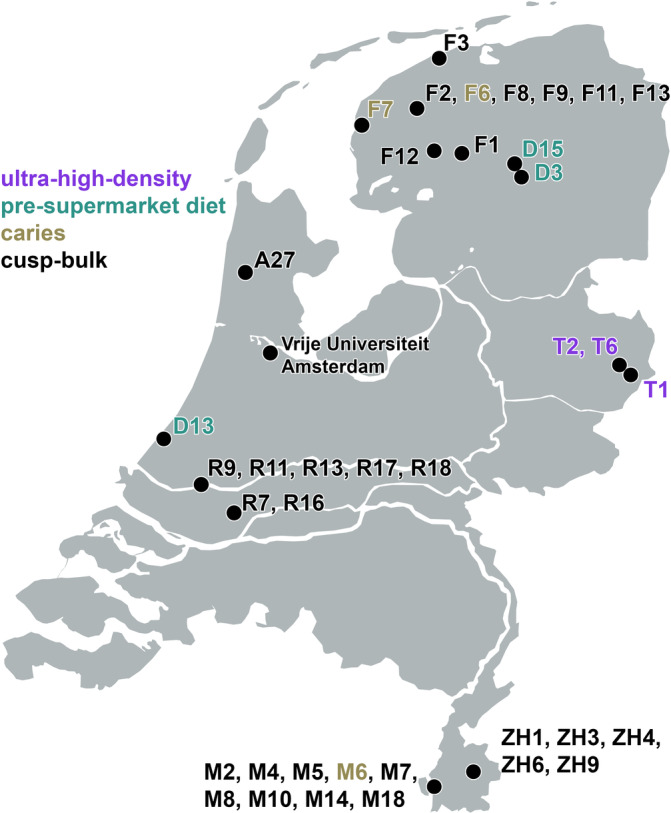
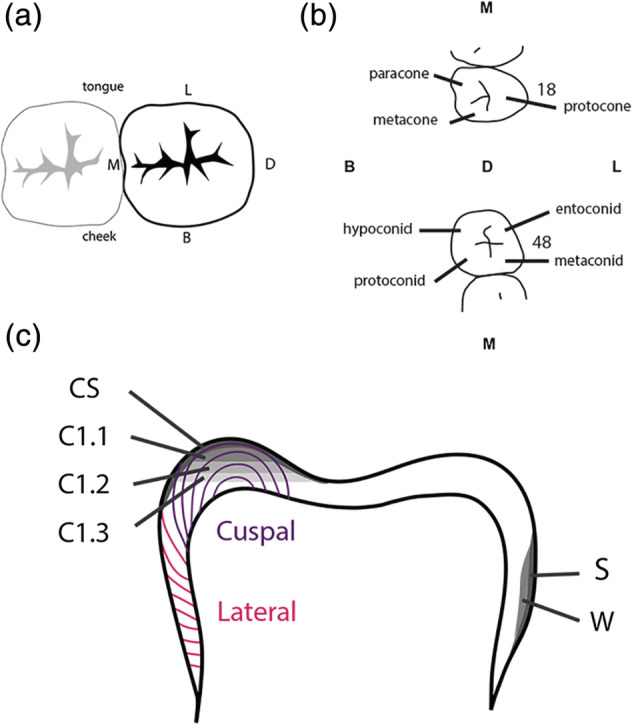
This study presents the first systematic results on intraindividual variation in Sr-O-C isotope composition and Sr concentration in modern human dental enamel of third molars (affected and unaffected by caries). A multiloci sampling approach (n = 6-20) was used to analyze surface and inner enamel, employing thermal ionization mass spectrometry (TIMS) and isotope ratio mass spectrometry (IRMS). Third molars were analyzed from 47 individuals from the Netherlands, Iceland, the United States, the Caribbean, Colombia, Somalia, and South Africa.
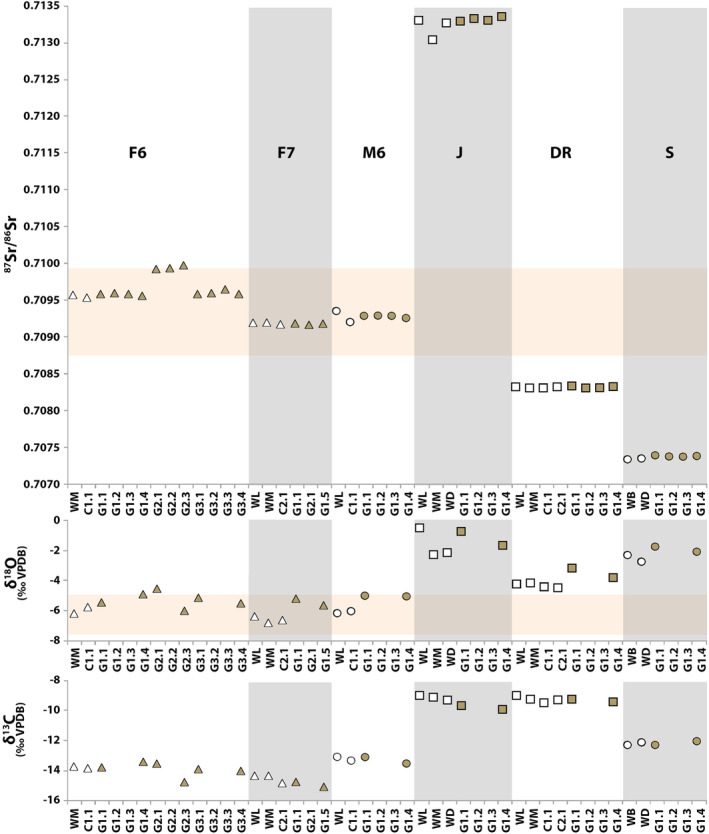
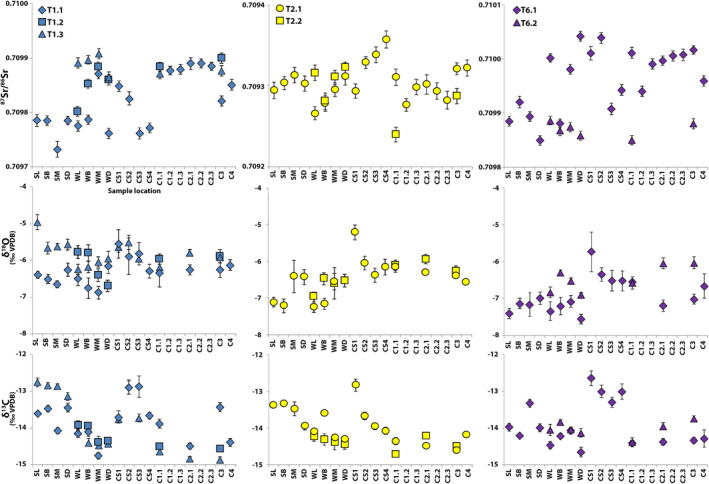
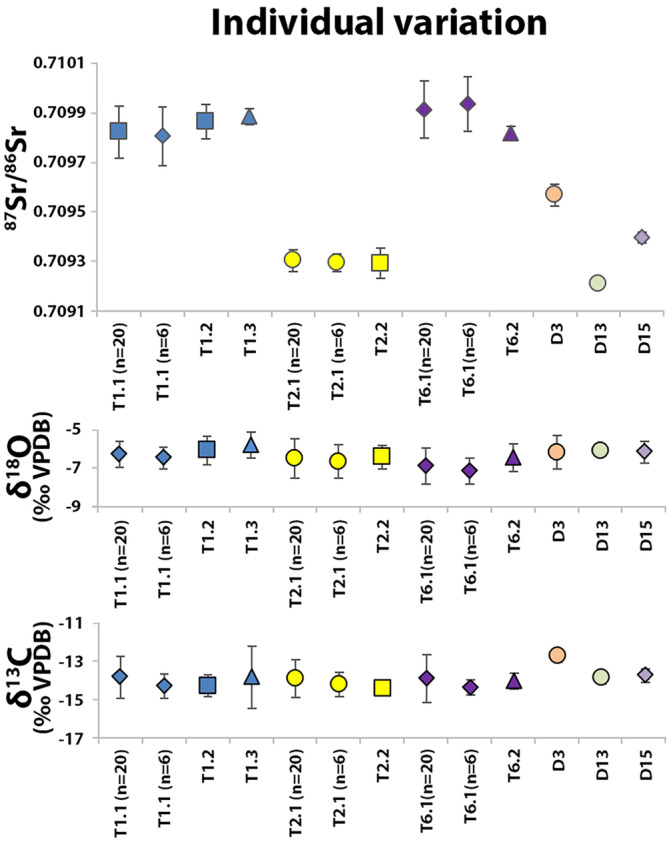
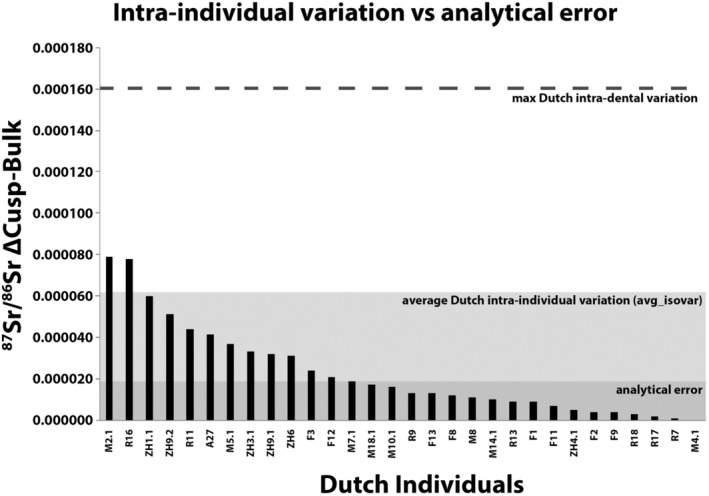
Intradental isotopic variation in modern Dutch dental elements was recorded for Sr, O, and C and exceeded the variation introduced by the analytical error. Single loci and bulk sampling approaches of third molars established that a single analysis is only representative of the bulk Sr isotope composition in 60% of the elements analyzed. Dental elements affected by caries showed twice the variation seen in unaffected dental elements. Caries did not consistently incorporate the isotopic composition of the geographical environment in which they developed.
The isotopic variability recorded in unaffected inner enamel indicates that variations greater than 0.000200 for Sr/ Sr and larger than 2‰ for δ O and δ C are required to demonstrate changes in modern Dutch human diet or geographic location.
利用人类牙釉质的同位素分析为法医学和考古学研究中的个体流动性和饮食提供信息。迄今为止,尚无研究系统地研究过人类牙釉质中个体内锶(Sr)、氧(O)和碳(C)同位素的耦合变化,以及龋齿对牙釉质同位素完整性的影响。同位素变化的定量不足会影响解释,并可能限制受龋齿影响的元素的样本选择。本研究旨在量化个体内的同位素变化,并为牙釉质采样方法提供建议。
本研究首次提供了现代人类第三磨牙(受龋齿和不受龋齿影响)牙釉质中 Sr-O-C 同位素组成和 Sr 浓度的个体内变异的系统结果。采用多定位采样方法(n = 6-20),使用热电离质谱(TIMS)和同位素比质谱(IRMS)分析表面和内牙釉质。对来自荷兰、冰岛、美国、加勒比海、哥伦比亚、索马里和南非的 47 个人的第三磨牙进行了分析。
记录了现代荷兰牙釉质元素中的牙内同位素变异,Sr、O 和 C 的变异超过了分析误差引入的变异。对第三磨牙的单定位和整体采样方法的研究表明,只有 60%分析的元素中,单一分析仅代表 Sr 同位素组成的整体。受龋齿影响的牙釉质元素的变异是未受影响的牙釉质元素的两倍。龋齿并不总是将其所处的地理环境的同位素组成纳入其中。
未受影响的内牙釉质记录的同位素变异性表明,需要 0.000200 以上的 Sr/Sr 和 2‰以上的 δO 和 δC 变化才能证明现代荷兰人类饮食或地理位置的变化。