WPI Nano Life Science Institute, Kanazawa University, Kakuma-cho, Kanazawa, Japan.
Department of Biological Sciences, Osaka University, Machikaneyama-cho, Toyonaka, Japan.
Biophys J. 2020 May 19;118(10):2549-2560. doi: 10.1016/j.bpj.2020.03.028. Epub 2020 Apr 11.
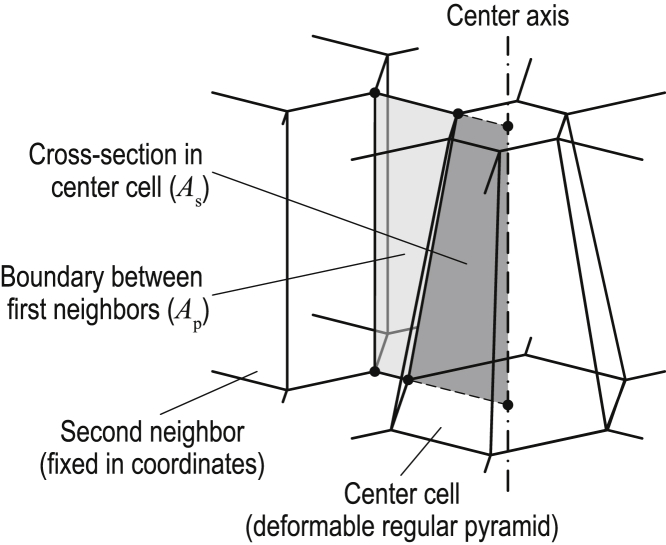
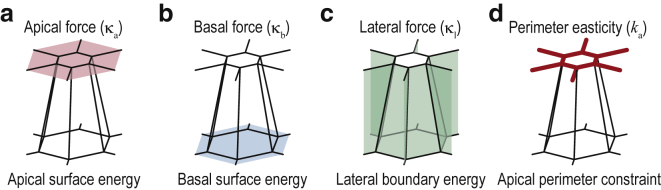
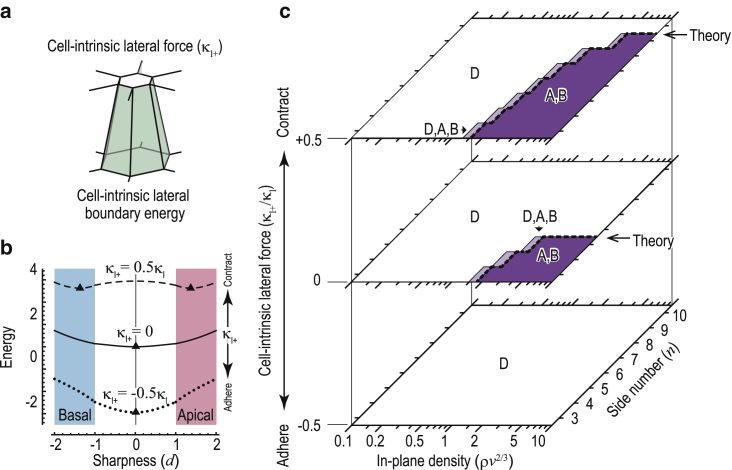
In cell extrusion, a cell embedded in an epithelial monolayer loses its apical or basal surface and is subsequently squeezed out of the monolayer by neighboring cells. Cell extrusions occur during apoptosis, epithelial-mesenchymal transition, or precancerous cell invasion. They play important roles in embryogenesis, homeostasis, carcinogenesis, and many other biological processes. Although many of the molecular factors involved in cell extrusion are known, little is known about the mechanical basis of cell extrusion. We used a three-dimensional (3D) vertex model to investigate the mechanical stability of cells arranged in a monolayer with 3D foam geometry. We found that when the cells composing the monolayer have homogeneous mechanical properties, cells are extruded from the monolayer when the symmetry of the 3D geometry is broken because of an increase in cell density or a decrease in the number of topological neighbors around single cells. Those results suggest that mechanical instability inherent in the 3D foam geometry of epithelial monolayers is sufficient to drive epithelial cell extrusion. In the situation in which cells in the monolayer actively generate contractile or adhesive forces under the control of intrinsic genetic programs, the forces act to break the symmetry of the monolayer, leading to cell extrusion that is directed to the apical or basal side of the monolayer by the balance of contractile and adhesive forces on the apical and basal sides. Although our analyses are based on a simple mechanical model, our results are in accordance with observations of epithelial monolayers in vivo and consistently explain cell extrusions under a wide range of physiological and pathophysiological conditions. Our results illustrate the importance of a mechanical understanding of cell extrusion and provide a basis by which to link molecular regulation to physical processes.
在细胞外推过程中,嵌入上皮单层的细胞会失去其顶端或基底表面,随后被相邻细胞挤出单层。细胞外推发生在细胞凋亡、上皮-间充质转化或癌前细胞浸润期间。它们在胚胎发生、动态平衡、致癌作用和许多其他生物学过程中发挥重要作用。尽管已经知道许多参与细胞外推的分子因素,但对于细胞外推的力学基础知之甚少。我们使用三维(3D)顶点模型来研究具有 3D 泡沫几何形状的单层中排列的细胞的力学稳定性。我们发现,当组成单层的细胞具有均匀的力学特性时,由于细胞密度增加或单个细胞周围的拓扑邻居数量减少而打破 3D 几何形状的对称性时,细胞会从单层中挤出。这些结果表明,上皮单层的 3D 泡沫几何形状固有的力学不稳定性足以驱动上皮细胞外推。在单层中的细胞在内在遗传程序的控制下主动产生收缩或粘附力的情况下,这些力作用于打破单层的对称性,导致细胞外推,其方向由顶端和基底侧上的收缩力和粘附力之间的平衡决定到单层的顶端或基底侧。尽管我们的分析基于简单的力学模型,但我们的结果与体内观察到的上皮单层一致,并一致解释了在广泛的生理和病理生理条件下的细胞外推。我们的结果说明了对细胞外推的力学理解的重要性,并为将分子调控与物理过程联系起来提供了基础。