Department of Urology, Guizhou Provincial People's Hospital, Medical College of Guizhou University, Guiyang, Guizhou, China.
Department of Urology, Zhujiang Hospital, Southern Medical University, Guangzhou, Guangdong, China.
Biomed Res Int. 2020 Apr 6;2020:2753414. doi: 10.1155/2020/2753414. eCollection 2020.
To evaluate the effects of human bone marrow mesenchymal stem cells (hBMSCs) and osteoblasts (hFOB1.19) on PC3 prostate cancer cells.
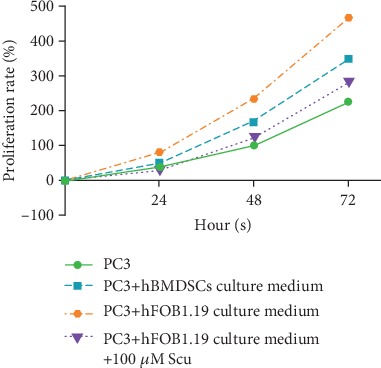
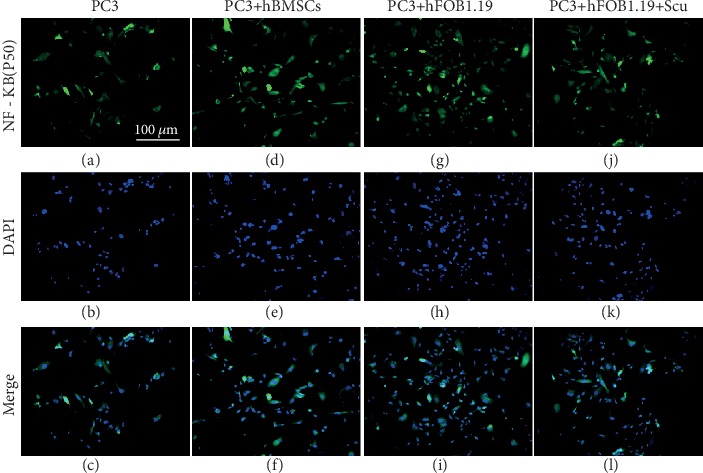
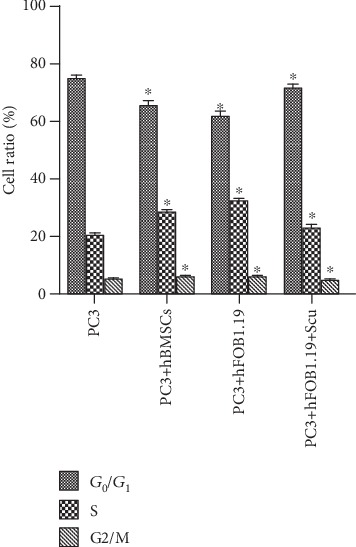
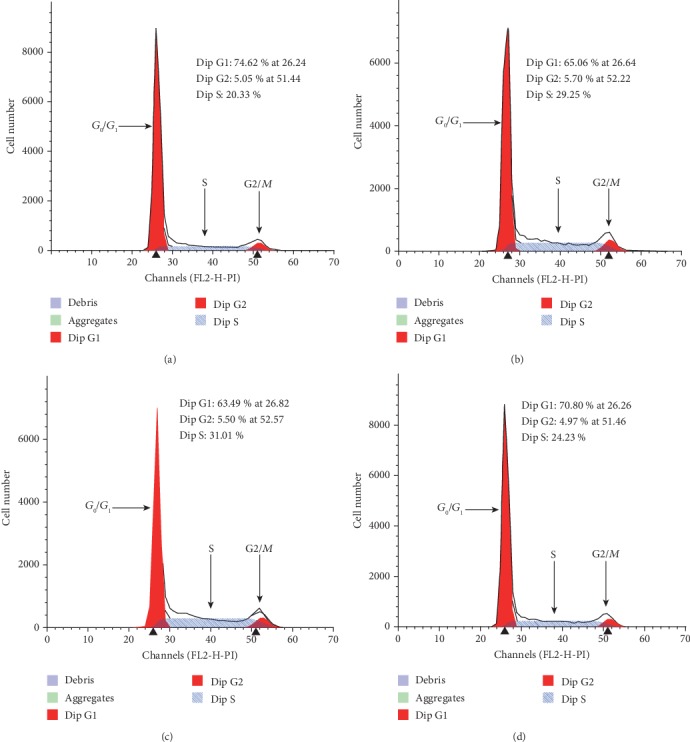
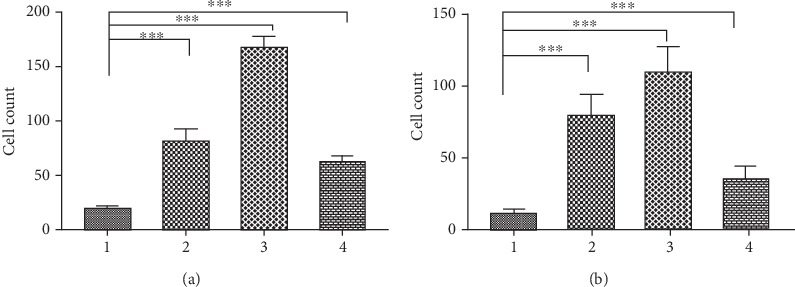
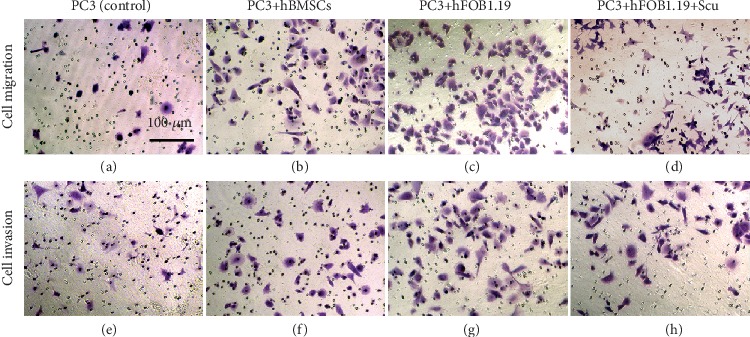
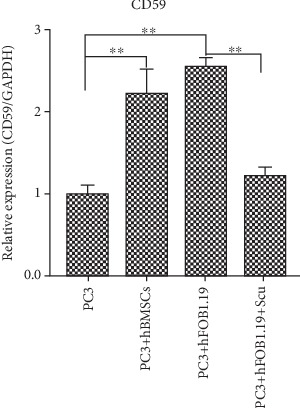
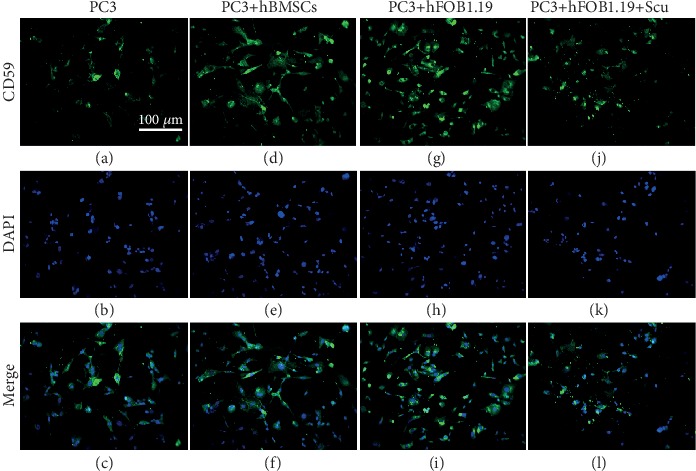
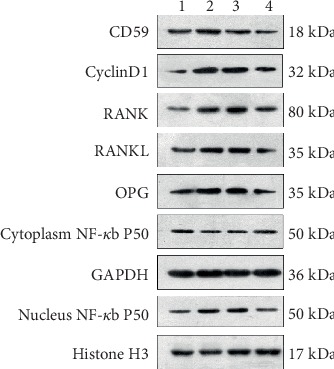
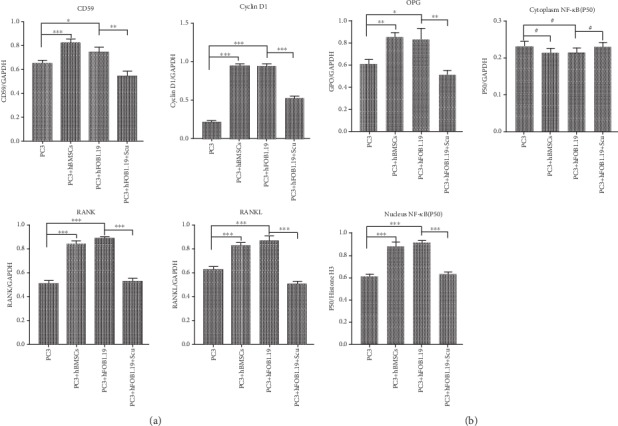
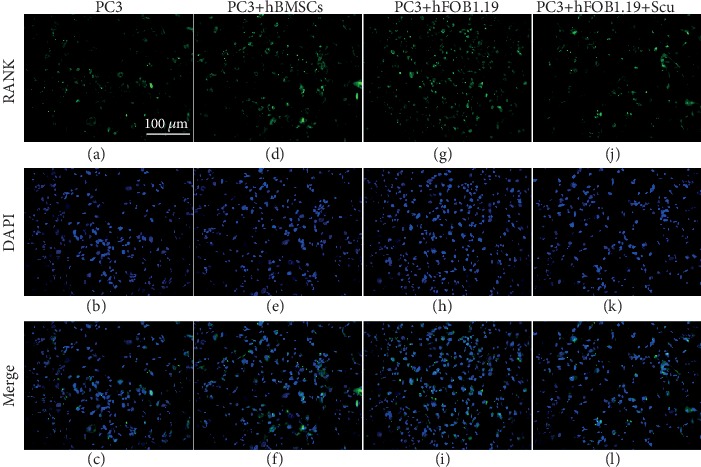
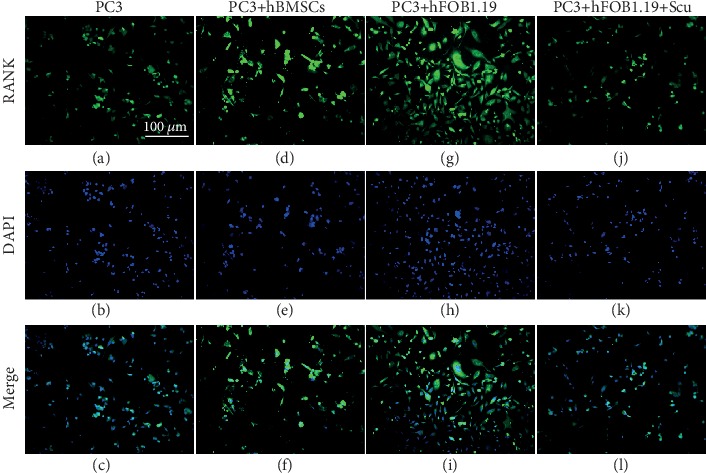
To simulate the interaction between the bone/bone marrow microenvironments and prostate cancer cells, we established cocultures of PC3 cells with hBMSC or hFOB1.19 cells and evaluated their effects on the proliferation, cell cycle distribution, cell migration, and invasion of PC3 cells. Quantitative reverse transcription polymerase chain reaction was used to detect mRNA expression in PC3 cells. The expression of receptor activator of nuclear factor- (NF-) B (RANK), RANK ligand (RANKL), osteoprotegerin (OPG), CD59, NF-B (p50 subunit), and cyclin D1 in PC3 cells was analyzed by immunofluorescence and western blotting.
hBMSCs and hFOB1.19 cells enhanced the proliferation, migration, and invasion of PC3 cells; increased the proportion of PC3 cells in the S and G/M phases of the cell cycle; and upregulated RANK, RANKL, OPG, CD59, cyclin D1, and NF-B (p50 subunit) expression by PC3 cells. The RANKL inhibitor, scutellarin, inhibited these effects in PC3-hFOB1.19 cocultures.
hBMSCs and hFOB1.19 cells modulate the phenotype of PC3 prostate cancer cells and the expression of CD59 by activating the RANK/RANKL/OPG signaling pathway.
评估人骨髓间充质干细胞(hBMSCs)和成骨细胞(hFOB1.19)对 PC3 前列腺癌细胞的影响。
为了模拟骨/骨髓微环境与前列腺癌细胞之间的相互作用,我们建立了 PC3 细胞与 hBMSC 或 hFOB1.19 细胞共培养的模型,并评估了它们对 PC3 细胞增殖、细胞周期分布、细胞迁移和侵袭的影响。采用实时定量聚合酶链反应检测 PC3 细胞中 mRNA 的表达。采用免疫荧光和蛋白质印迹法分析 PC3 细胞中核因子-κB(NF-κB)(p50 亚基)、核因子受体激活剂(RANK)、RANK 配体(RANKL)、骨保护素(OPG)、CD59、细胞周期蛋白 D1 的表达。
hBMSCs 和 hFOB1.19 细胞增强了 PC3 细胞的增殖、迁移和侵袭能力;增加了 PC3 细胞在细胞周期 S 和 G/M 期的比例;并上调了 PC3 细胞中 RANK、RANKL、OPG、CD59、细胞周期蛋白 D1 和 NF-κB(p50 亚基)的表达。RANKL 抑制剂 scutellarin 抑制了 PC3-hFOB1.19 共培养物中的这些作用。
hBMSCs 和 hFOB1.19 细胞通过激活 RANK/RANKL/OPG 信号通路调节 PC3 前列腺癌细胞的表型和 CD59 的表达。