Concha Cristobal, Doerner Peter
Institute for Molecular Plant Science, School of Biological Sciences, University of Edinburgh, Edinburgh, UK.
J Exp Bot. 2020 Jun 26;71(13):3902-3921. doi: 10.1093/jxb/eraa198.
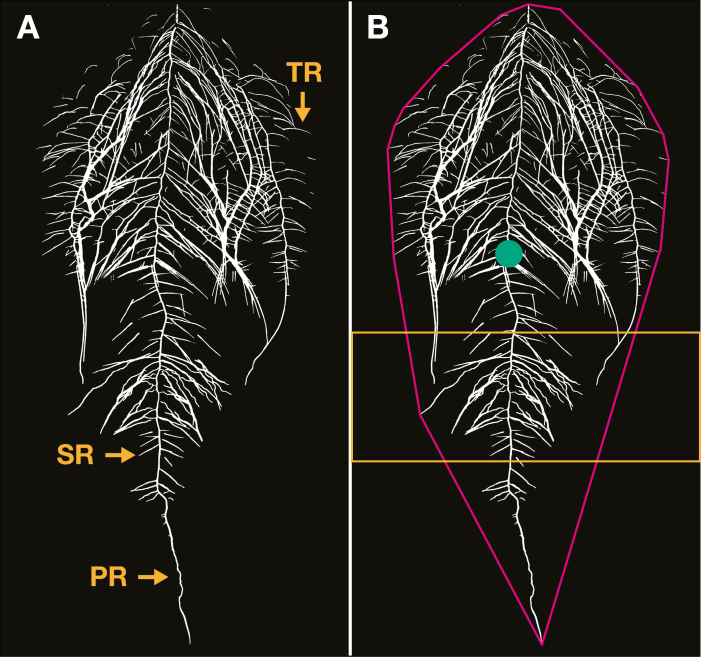
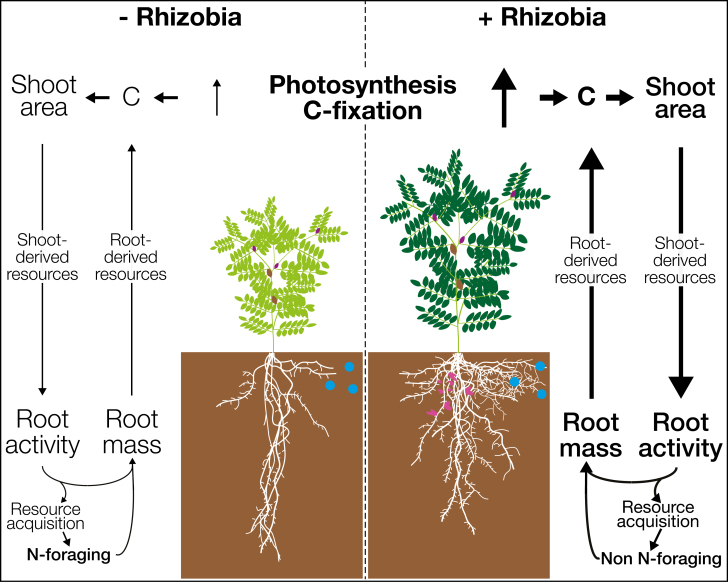
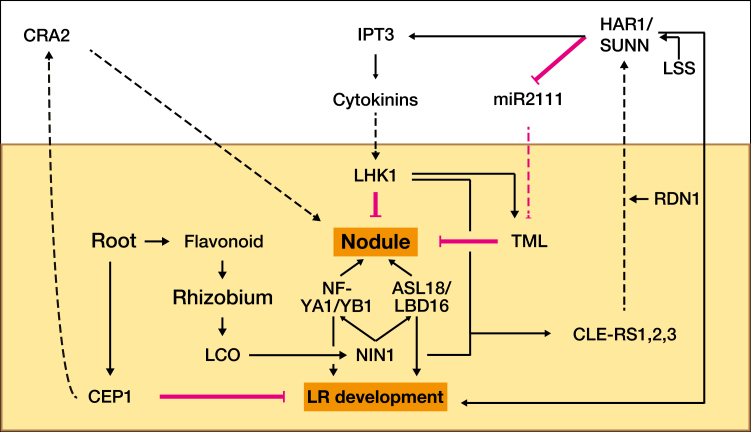
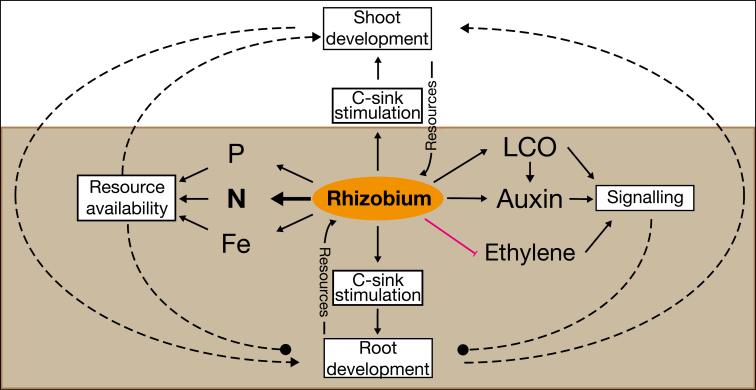
Legumes form symbioses with rhizobia to fix N2 in root nodules to supplement their nitrogen (N) requirements. Many studies have shown how symbioses affect the shoot, but far less is understood about how they modify root development and root system architecture (RSA). RSA is the distribution of roots in space and over time. RSA reflects host resource allocation into below-ground organs and patterns of host resource foraging underpinning its resource acquisition capacity. Recent studies have revealed a more comprehensive relationship between hosts and symbionts: the latter can affect host resource acquisition for phosphate and iron, and the symbiont's production of plant growth regulators can enhance host resource flux and abundance. We review the current understanding of the effects of rhizobia-legume symbioses on legume root systems. We focus on resource acquisition and allocation within the host to conceptualize the effect of symbioses on RSA, and highlight opportunities for new directions of research.
豆科植物与根瘤菌形成共生关系,在根瘤中固定氮气以补充其氮需求。许多研究表明了共生关系如何影响地上部分,但对于它们如何改变根系发育和根系结构(RSA)却了解得少得多。RSA是根系在空间和时间上的分布。RSA反映了宿主资源向地下器官的分配以及宿主资源觅食模式,这支撑着其资源获取能力。最近的研究揭示了宿主与共生体之间更全面的关系:后者可以影响宿主对磷和铁的资源获取,并且共生体产生的植物生长调节剂可以增强宿主资源通量和丰度。我们综述了目前对根瘤菌 - 豆科植物共生关系对豆科植物根系影响的理解。我们专注于宿主内的资源获取和分配,以概念化共生关系对RSA的影响,并突出新研究方向的机会。