Kuo Joe Chin-Hun, Goudge Marc C, Metzloff Ann E, Huang Ling-Ting, Colville Marshall J, Park Sangwoo, Zipfel Warren R, Paszek Matthew J
Robert Frederick Smith School of Chemical and Biomolecular Engineering, Cornell University, Ithaca, New York 14853, United States.
Nancy E. and Peter C. Meinig School of Biomedical Engineering, Cornell University, Ithaca, New York 14853, United States.
ACS Sens. 2020 Jun 26;5(6):1555-1566. doi: 10.1021/acssensors.9b02080. Epub 2020 May 15.
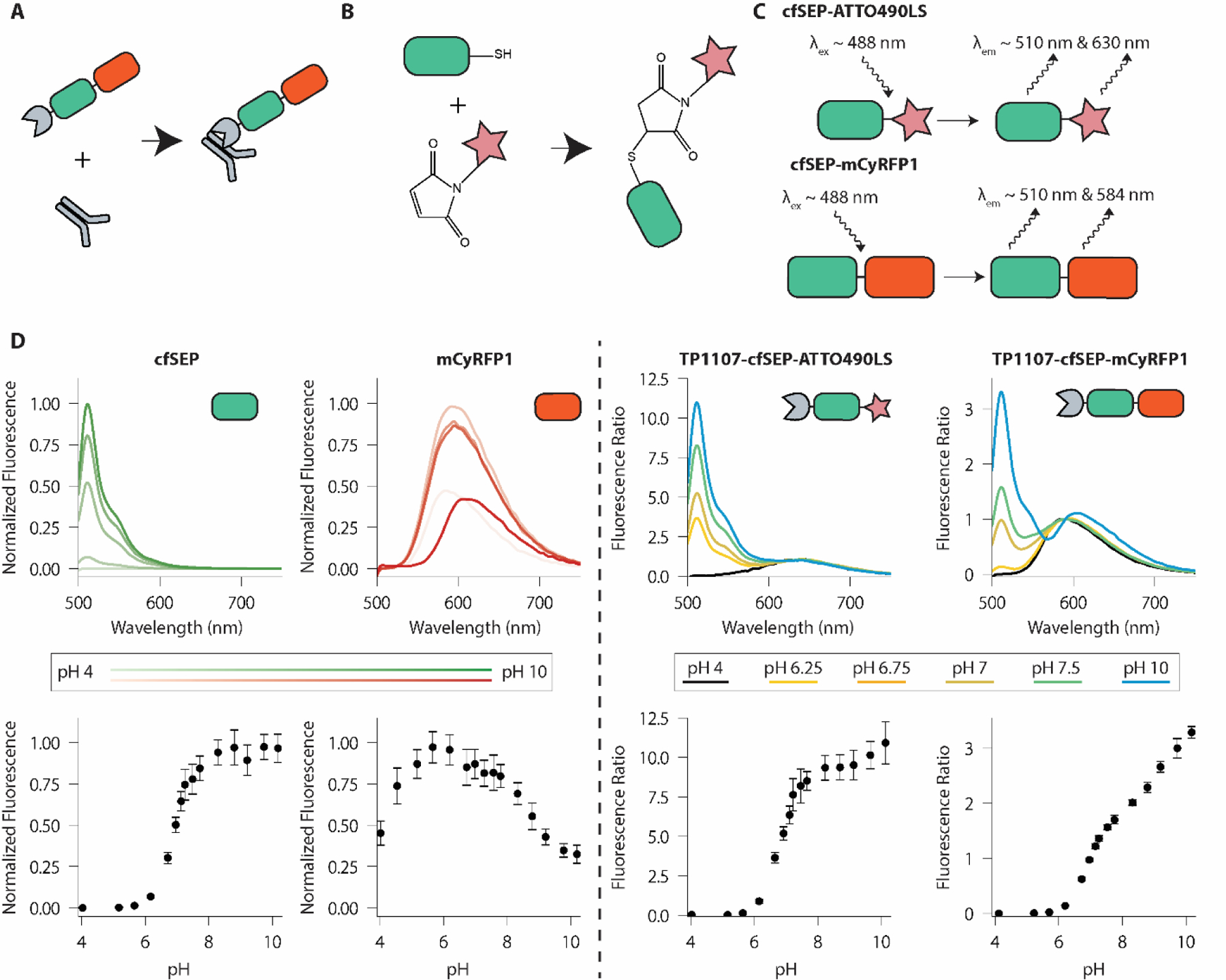
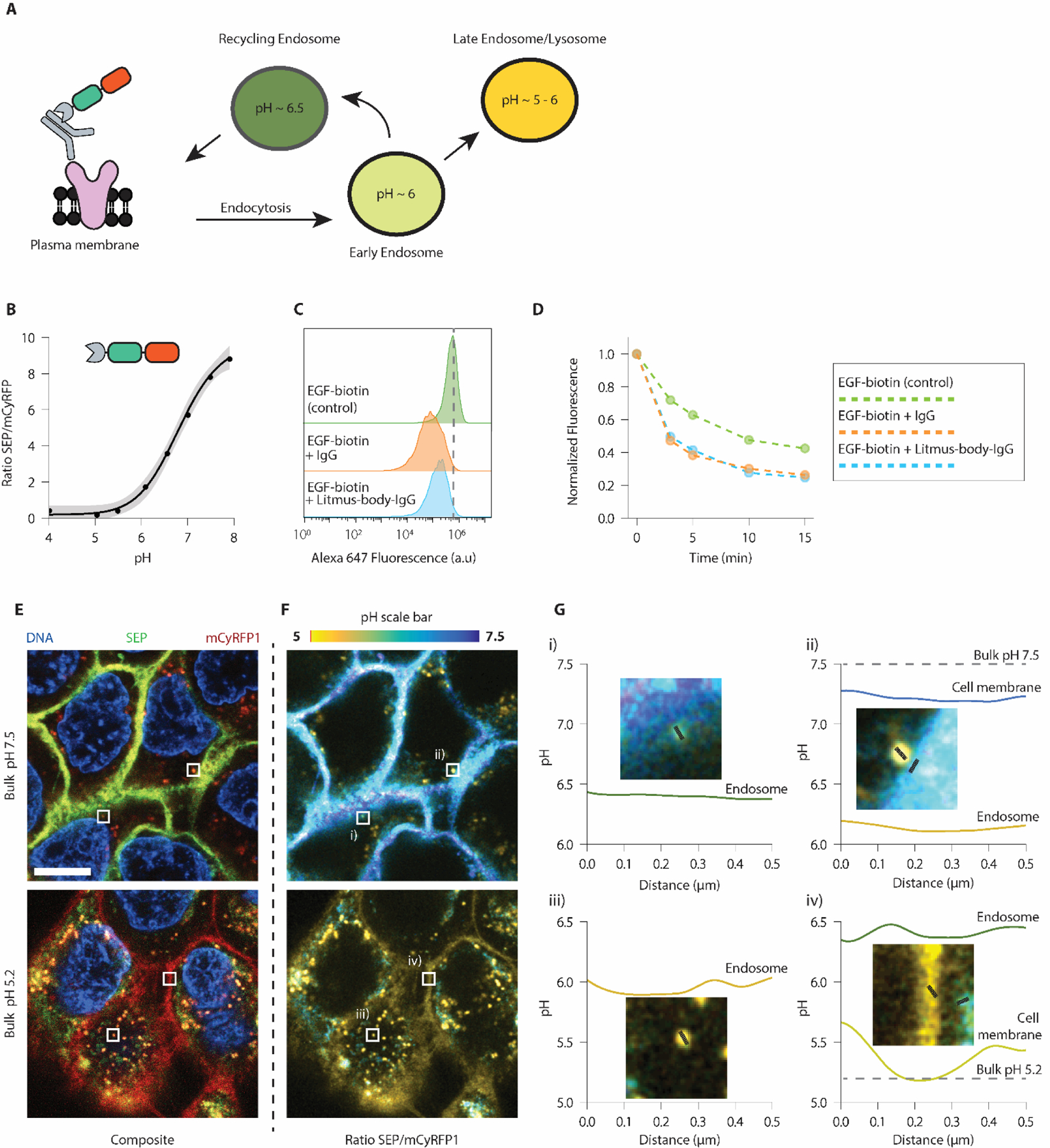
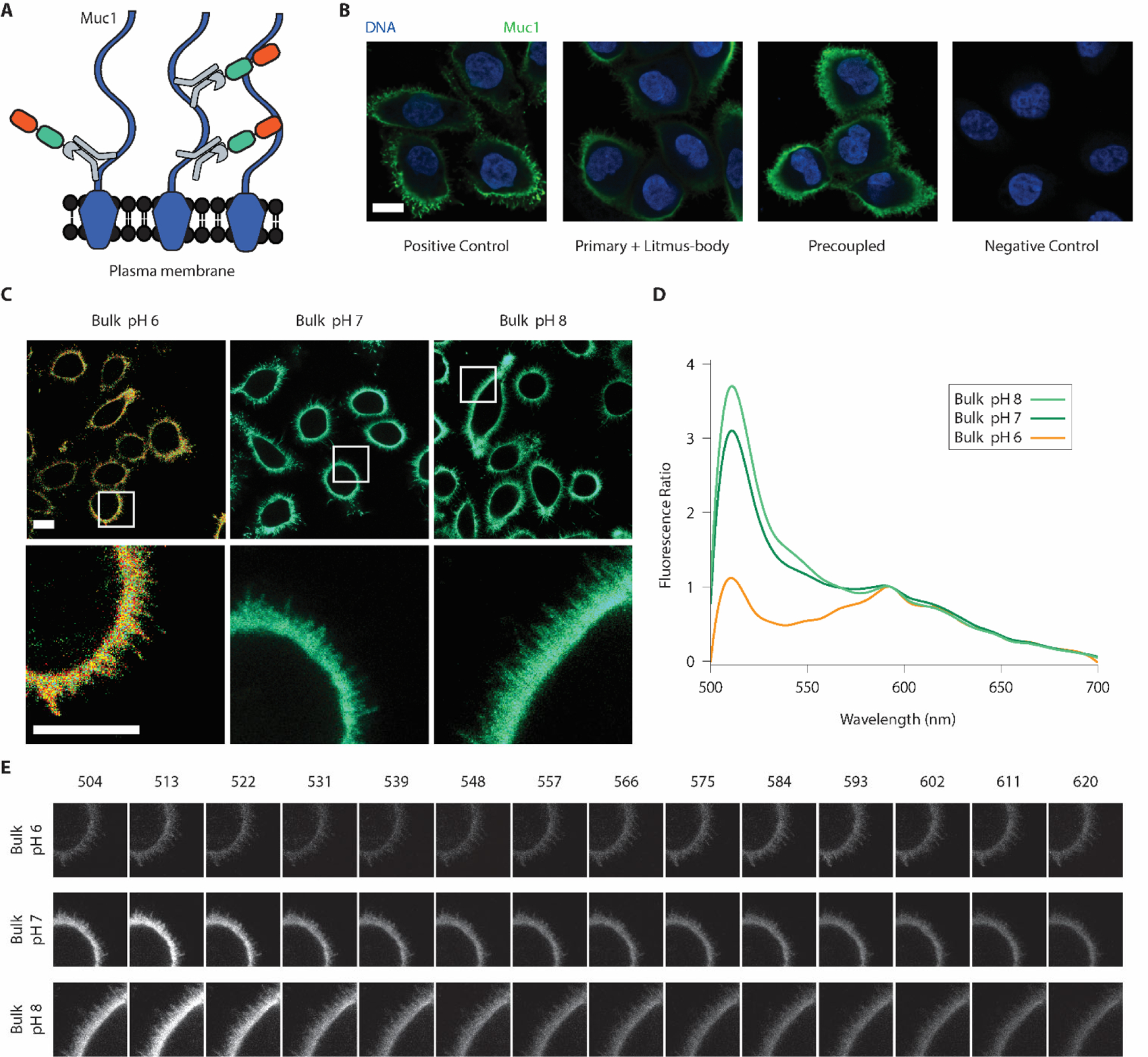
Precise pH measurements in the immediate environment of receptors is essential for elucidating the mechanisms through which local pH changes associated with diseased phenotypes manifest into aberrant receptor function. However, current pH sensors lack the ability to localize and target specific receptor molecules required to make these measurements. Herein we present the Litmus-body, our recombinant protein-based pH sensor, which through fusion to an anti-IgG nanobody is capable of piggybacking on IgG antibodies for molecular targeting to specific proteins on the cell surface. By normalizing a pH-dependent green fluorescent protein to a long Stokes shift red fluorophore or fluorescent protein, we readily report pH independent of sensor concentration using a single 488 nm excitation. Our Litmus-body showed excellent responsiveness in solution, with a greater than 50-fold change across the regime of physiological pH. The sensor was further validated for use on live cells and shown to be specific to the protein of interest. In complex with our Litmus-body, cetuximab therapeutic antibody retained its functionality in binding and inhibiting ligand interaction of its target epidermal growth factor receptor (EGFR), triggering receptor-mediated endocytosis that allowed tracking of local pH from the cell surface through the endocytic pathway.
在受体的紧邻环境中进行精确的pH测量对于阐明与疾病表型相关的局部pH变化表现为异常受体功能的机制至关重要。然而,目前的pH传感器缺乏定位和靶向进行这些测量所需的特定受体分子的能力。在此,我们展示了Litmus-body,我们基于重组蛋白的pH传感器,它通过与抗IgG纳米抗体融合,能够搭载在IgG抗体上,用于分子靶向细胞表面的特定蛋白质。通过将pH依赖性绿色荧光蛋白与长斯托克斯位移红色荧光团或荧光蛋白进行归一化,我们使用单一的488 nm激发就可以轻松报告与传感器浓度无关的pH值。我们的Litmus-body在溶液中表现出出色的响应性,在生理pH范围内变化超过50倍。该传感器在活细胞上的使用得到了进一步验证,并显示对感兴趣的蛋白质具有特异性。与我们的Litmus-body复合后,西妥昔单抗治疗性抗体在结合和抑制其靶标表皮生长因子受体(EGFR)的配体相互作用方面保留了其功能,触发受体介导的内吞作用,从而允许从细胞表面通过内吞途径追踪局部pH值。