Laboratorio de Patología Molecular, Instituto de Bioquímica y Microbiología, Universidad Austral de Chile, Valdivia 511-0566, Chile.
Cells. 2020 Apr 23;9(4):1051. doi: 10.3390/cells9041051.
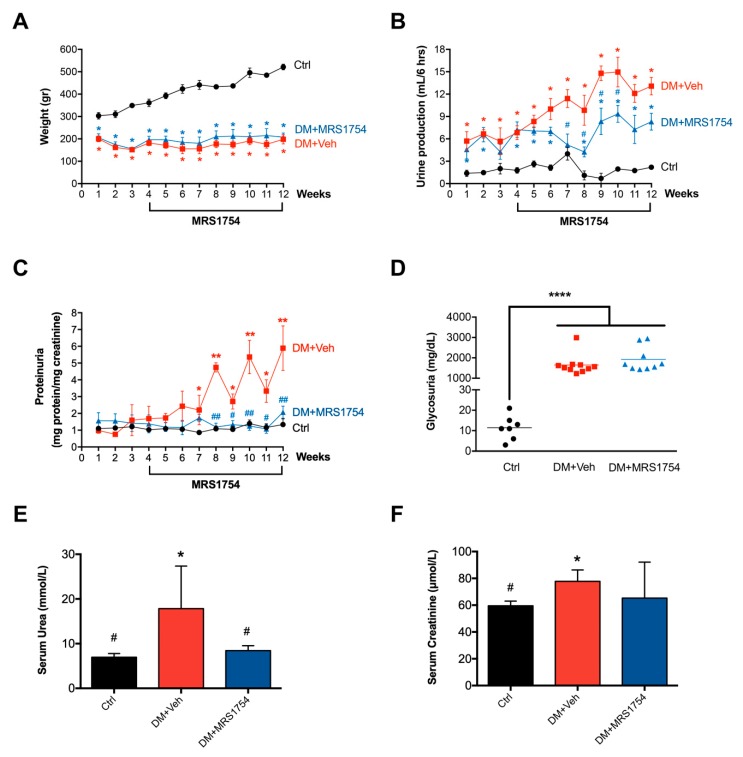
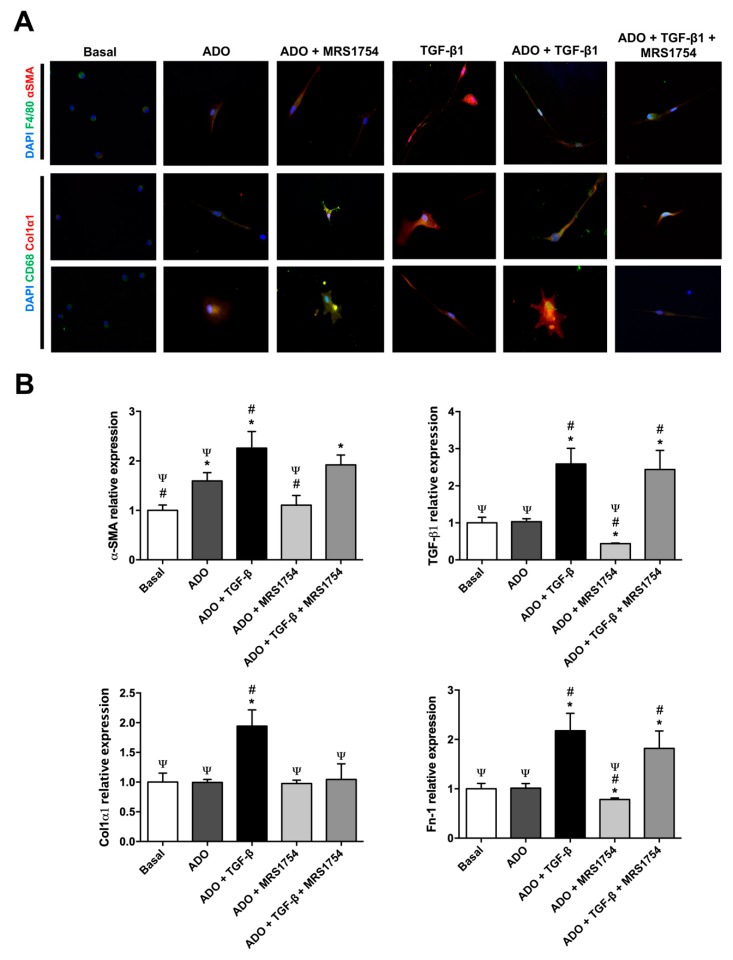
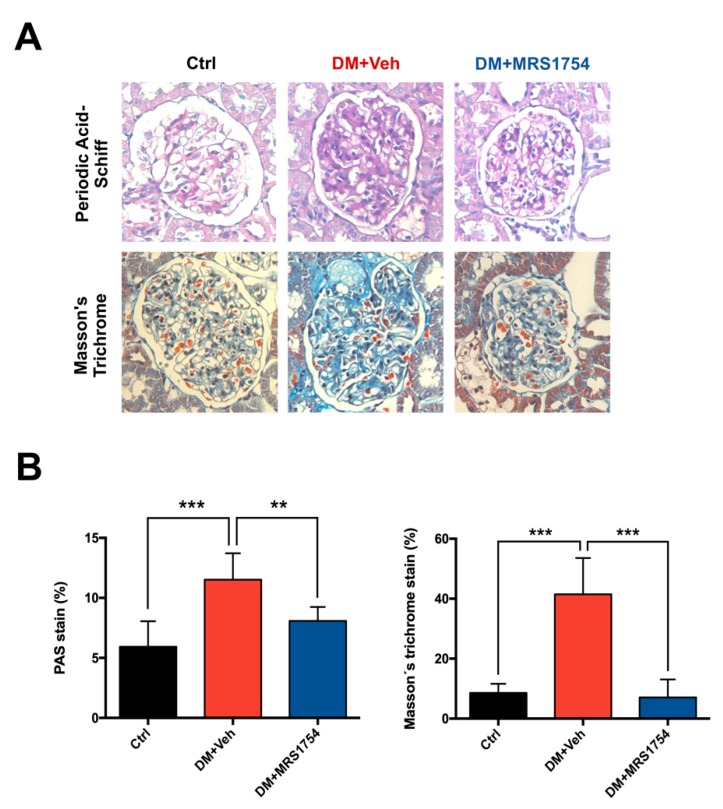
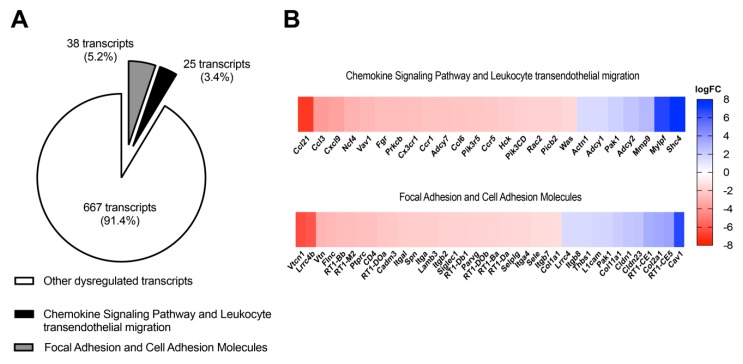
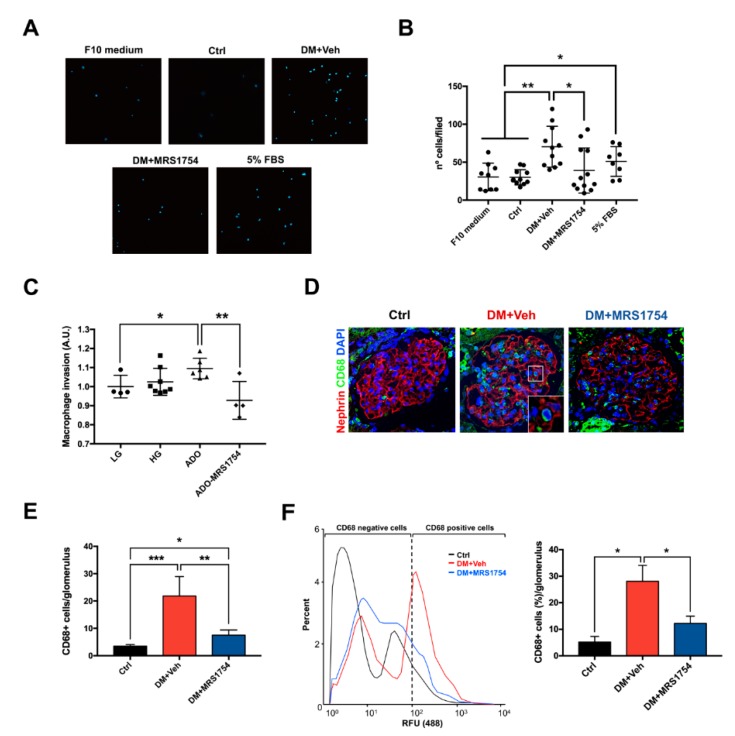
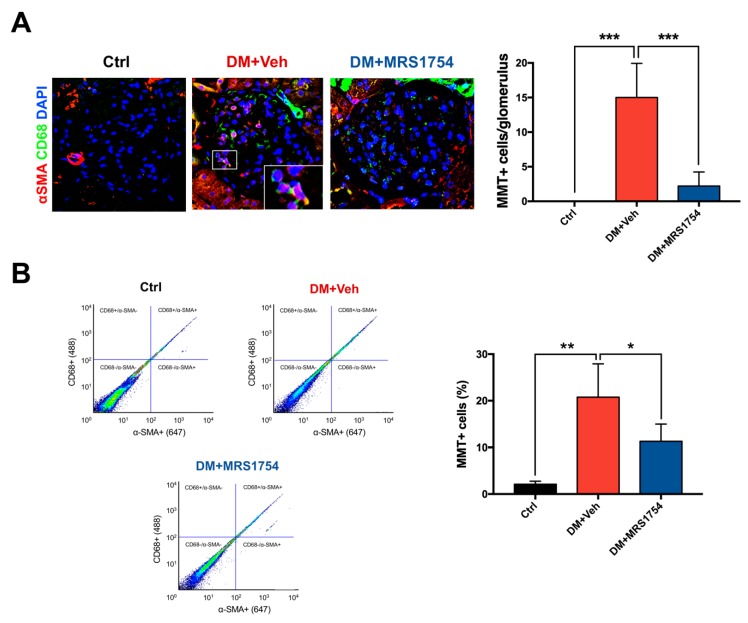
Diabetic nephropathy (DN) is considered the main cause of kidney disease in which myofibroblasts lead to renal fibrosis. Macrophages were recently identified as the major source of myofibroblasts in a process known as macrophage-myofibroblast transition (MMT). Adenosine levels increase during DN and in vivo administration of MRS1754, an antagonist of the A adenosine receptor (AAR), attenuated glomerular fibrosis (glomerulosclerosis). We aimed to investigate the association between AAR and MMT in glomerulosclerosis during DN. Kidneys/glomeruli of non-diabetic, diabetic, and MRS1754-treated diabetic (DM+MRS1754) rats were processed for histopathologic, transcriptomic, flow cytometry, and cellular in vitro analyses. Macrophages were used for in vitro cell migration/transmigration assays and MMT studies. In vivo MRS1754 treatment attenuated the clinical and histopathological signs of glomerulosclerosis in DN rats. Transcriptomic analysis demonstrated a decrease in chemokine-chemoattractants/cell-adhesion genes of monocytes/macrophages in DM+MRS1754 glomeruli. The number of intraglomerular infiltrated macrophages and MMT cells increased in diabetic rats. This was reverted by MRS1754 treatment. In vitro cell migration/transmigration decreased in macrophages treated with MRS1754. Human macrophages cultured with adenosine and/or TGF-β induced MMT, a process which was reduced by MRS1754. We concluded that pharmacologic blockade of AAR attenuated some clinical signs of renal dysfunction and glomerulosclerosis, and decreased intraglomerular macrophage infiltration and MMT in DN rats.
糖尿病肾病 (DN) 被认为是导致肾脏疾病的主要原因,其中肌成纤维细胞导致肾纤维化。最近发现,巨噬细胞是已知的肌成纤维细胞的主要来源,这个过程被称为巨噬细胞-肌成纤维细胞转化(MMT)。在糖尿病肾病期间,腺苷水平升高,体内给予 A 腺苷受体(AAR)拮抗剂 MRS1754 可减轻肾小球纤维化(肾小球硬化)。我们旨在研究在糖尿病肾病期间肾小球硬化过程中 AAR 与 MMT 之间的关联。非糖尿病、糖尿病和 MRS1754 治疗的糖尿病(DM+MRS1754)大鼠的肾脏/肾小球进行了组织病理学、转录组学、流式细胞术和细胞体外分析。巨噬细胞用于体外细胞迁移/转染实验和 MMT 研究。体内 MRS1754 治疗可减轻糖尿病肾病大鼠肾小球硬化的临床和组织病理学表现。转录组分析表明,DM+MRS1754 肾小球中趋化因子-趋化因子/细胞黏附基因的单核细胞/巨噬细胞减少。糖尿病大鼠肾小球内浸润的巨噬细胞和 MMT 细胞数量增加。MRS1754 治疗可逆转这种情况。用 MRS1754 处理的巨噬细胞体外迁移/转染减少。用腺苷和/或 TGF-β 培养的人巨噬细胞诱导 MMT,MRS1754 可减少这一过程。我们得出结论,AAR 的药理阻断可减轻糖尿病肾病大鼠肾功能不全和肾小球硬化的一些临床症状,并减少肾小球内巨噬细胞浸润和 MMT。