Gastrointestinal Endoscopy Research Group, La Fe Health Research Institute, Valencia, Spain.
Gastrointestinal Endoscopy Unit, Digestive Diseases Department, La Fe Polytechnic University Hospital, Valencia, Spain.
Gut Liver. 2021 Jan 15;15(1):31-43. doi: 10.5009/gnl19402.
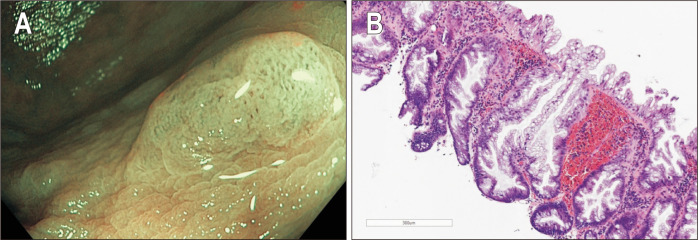
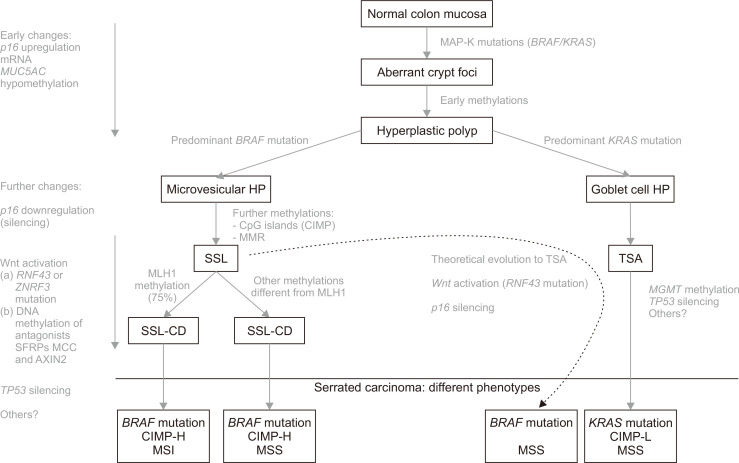
Serrated lesions are the precursor lesions of a new model of colorectal carcinogenesis. From a molecular standpoint, the serrated pathway is thought to be responsible for up to 30% of all colorectal cancer cases. The three major processes of this molecular mechanism are alterations in the mitogen-activated protein kinase pathway, production of the CpG island methylation phenotype, and generation of microsatellite instability. Other contributing processes are activation of WNT, alterations in the regulation of tumor suppressor genes, and alterations in microRNAs or in MUC5AC hypomethylation. Although alterations in the serrated pathway also contribute, their precise roles remain obscure because of the various methodologies and definitions used by different research groups. This knowledge gap affects clinical assessment of precursor lesions for their carcinogenic risk. The present review describes the current literature reporting the molecular mechanisms underlying each type of serrated lesion and each phenotype of serrated pathway colorectal cancer, identifying those areas that merit additional research. We also propose a unified serrated carcinogenesis pathway combining molecular alterations and types of serrated lesions, which ends in different serrated pathway colorectal cancer phenotypes depending on the route followed. Finally, we describe some key issues that need to be addressed in order to incorporate the newest technologies in serrated pathway research and to improve overall knowledge for developing specific prevention strategies and new therapeutic targets.
锯齿状病变是结直肠癌发生的一种新模型的癌前病变。从分子角度来看,锯齿状途径被认为是导致高达 30%的结直肠癌病例的原因。该分子机制的三个主要过程是丝裂原活化蛋白激酶途径的改变、CpG 岛甲基化表型的产生以及微卫星不稳定性的产生。其他促成过程包括 WNT 的激活、肿瘤抑制基因调节的改变以及 microRNAs 或 MUC5AC 低甲基化的改变。尽管锯齿状途径的改变也有贡献,但由于不同研究小组使用的各种方法和定义,其确切作用仍不清楚。这一知识空白影响了对癌前病变致癌风险的临床评估。本综述描述了目前关于锯齿状病变和锯齿状途径结直肠癌每种表型的分子机制的文献,确定了那些需要进一步研究的领域。我们还提出了一个统一的锯齿状癌变途径,结合了分子改变和锯齿状病变的类型,根据所遵循的途径,最终导致不同的锯齿状途径结直肠癌表型。最后,我们描述了一些需要解决的关键问题,以便将最新的锯齿状途径研究技术纳入其中,并提高整体知识水平,以制定特定的预防策略和新的治疗靶点。