School of Medicine, College of Medicine, Taipei Medical University, Taipei 11031, Taiwan.
Department of Medicine, Keelung Chang Gung Memorial Hospital, Keelung 20401, Taiwan.
Int J Mol Sci. 2020 Apr 24;21(8):3010. doi: 10.3390/ijms21083010.
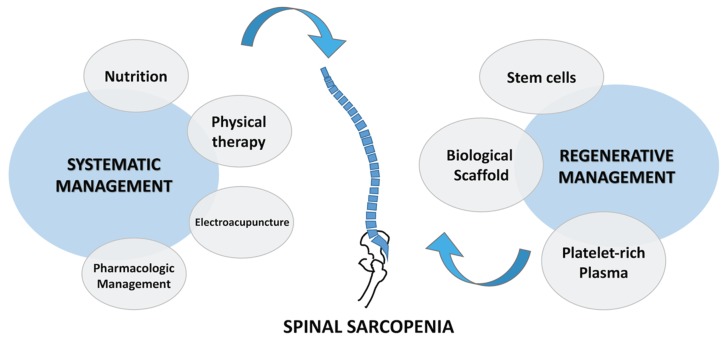
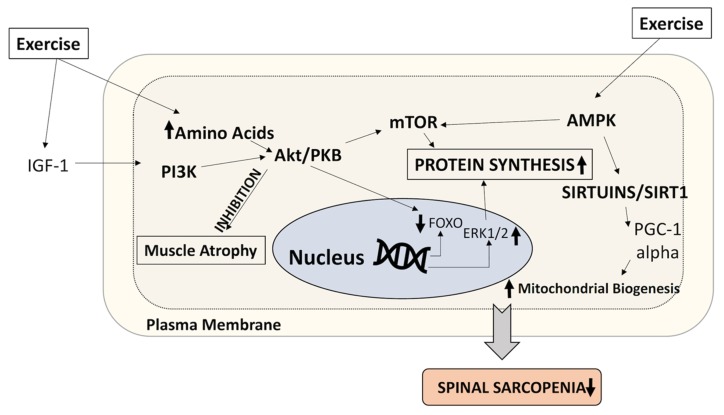
Spinal sarcopenia is a complex and multifactorial disorder associated with a loss of strength, increased frailty, and increased risks of fractures and falls. In addition, spinal sarcopenia has been associated with lumbar spine disorders and osteoporosis, which renders making decisions on treatment modalities difficult. Patients with spinal sarcopenia typically exhibit lower cumulative survival, a higher risk of in-hospital complications, prolonged hospital stays, higher postoperative costs, and higher rates of blood transfusion after thoracolumbar spine surgery. Several studies have focused on the relationships between spinal sarcopenia, appendicular muscle mass, and bone-related problems-such as osteoporotic fractures and low bone mineral density-and malnutrition and vitamin D deficiency. Although several techniques are available for measuring sarcopenia, each of them has its advantages and shortcomings. For treating spinal sarcopenia, nutrition, physical therapy, and medication have been proven to be effective; regenerative therapeutic options seem to be promising owing to their repair and regeneration potential. Therefore, in this narrative review, we summarize the characteristics, detection methodologies, and treatment options for spinal sarcopenia, as well as its role in spinal disorders.
脊柱肌肉减少症是一种复杂的多因素疾病,与力量下降、脆弱性增加、骨折和跌倒风险增加有关。此外,脊柱肌肉减少症与腰椎疾病和骨质疏松症有关,这使得治疗方式的决策变得困难。脊柱肌肉减少症患者的累积生存率通常较低,住院并发症风险较高,住院时间延长,术后成本较高,胸腰椎手术后输血率较高。一些研究集中在脊柱肌肉减少症、四肢肌肉质量与骨相关问题(如骨质疏松性骨折和低骨密度)以及营养不良和维生素 D 缺乏之间的关系上。虽然有几种技术可用于测量肌肉减少症,但每种技术都有其优点和缺点。对于治疗脊柱肌肉减少症,营养、物理治疗和药物已被证明是有效的;再生治疗选择似乎很有前途,因为它们具有修复和再生的潜力。因此,在这篇叙述性综述中,我们总结了脊柱肌肉减少症的特征、检测方法和治疗选择,以及它在脊柱疾病中的作用。