Gurunathan Sangiliyandi, Jeyaraj Muniyandi, Kang Min-Hee, Kim Jin-Hoi
Department of Stem Cell and Regenerative Biotechnology, Konkuk University, Seoul 05029, Korea.
Antioxidants (Basel). 2020 Apr 24;9(4):357. doi: 10.3390/antiox9040357.
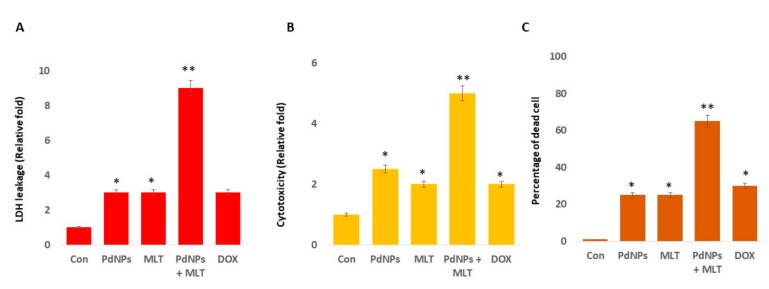
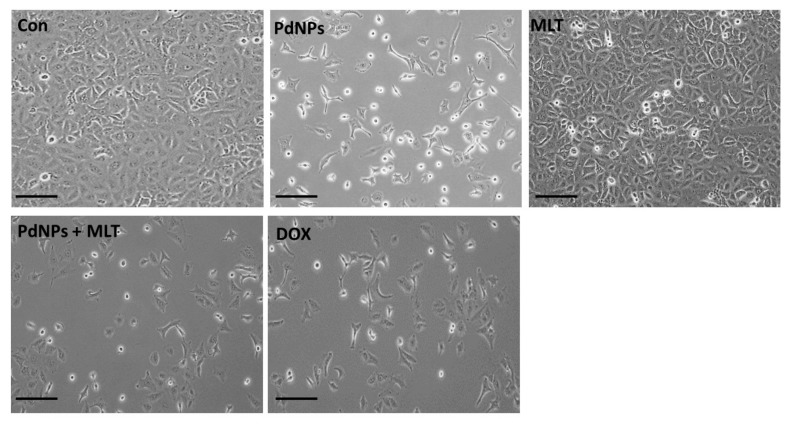
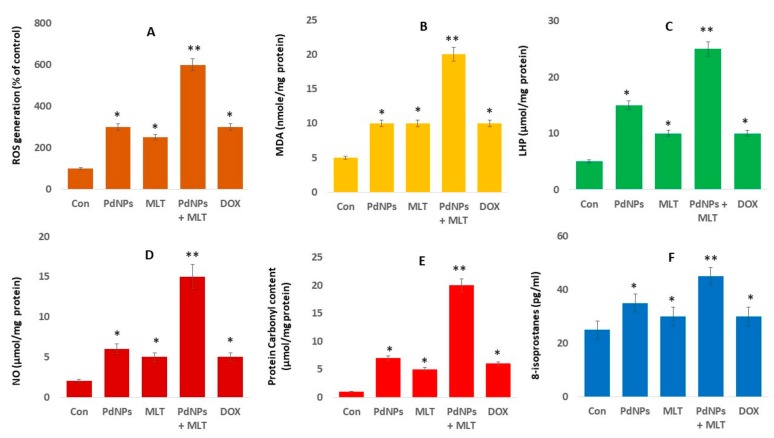
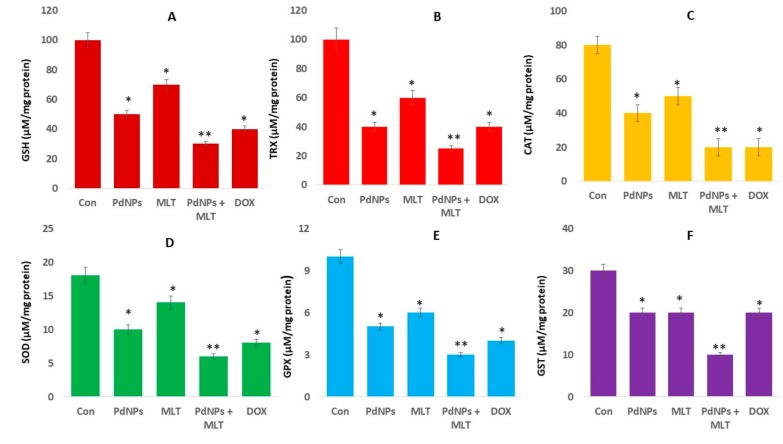
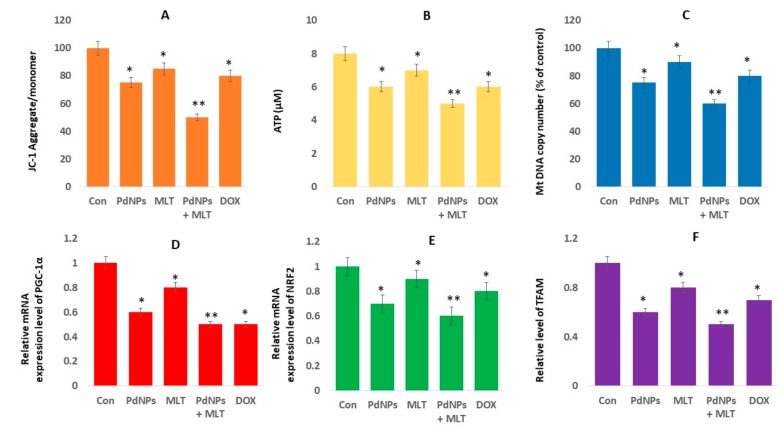
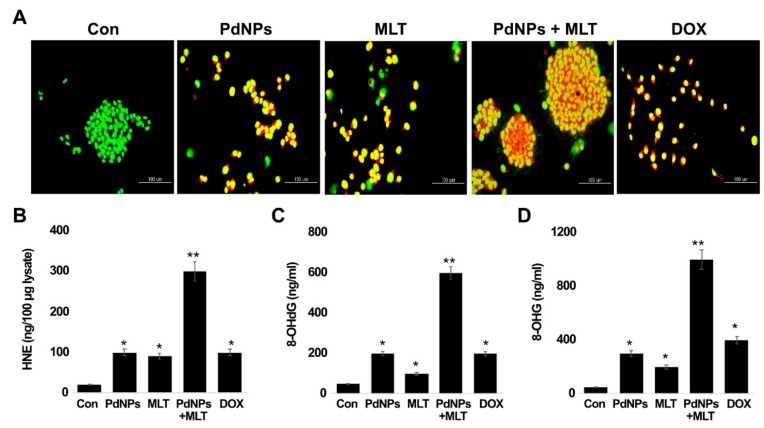
Palladium nanoparticles (PdNPs) are increasingly being used in medical and biological applications due to their unique physical and chemical properties. Recent evidence suggests that these nanoparticles can act as both a pro-oxidant and as an antioxidant. Melatonin (MLT), which also shows pro- and antioxidant properties, can enhance the efficacy of chemotherapeutic agents when combined with anticancer drugs. Nevertheless, studies regarding the molecular mechanisms underlying the anticancer effects of PdNPs and MLT in cancer cells are still lacking. Therefore, we aimed to investigate the potential toxicological and molecular mechanisms of PdNPs, MLT, and the combination of PdNPs with MLT in A549 lung epithelial adenocarcinoma cells. We evaluated cell viability, cell proliferation, cytotoxicity, oxidative stress, mitochondrial dysfunction, and apoptosis in cells treated with different concentrations of PdNPs and MLT. PdNPs and MLT induced cytotoxicity, which was confirmed by leakage of lactate dehydrogenase, increased intracellular protease, and reduced membrane integrity. Oxidative stress increased the levels of reactive oxygen species (ROS), malondialdehyde (MDA), nitric oxide (NO), protein carbonyl content (PCC), lipid hydroperoxide (LHP), and 8-isoprostane. Combining PdNPs with MLT elevated the levels of mitochondrial dysfunction by decreasing mitochondrial membrane potential (MMP), ATP content, mitochondrial number, and expression levels of the main regulators of mitochondrial biogenesis. Additionally, PdNPs and MLT induced apoptosis and oxidative DNA damage due to accumulation of 4-hydroxynonenal (HNE), 8-oxo-2'-deoxyguanosine (8-OhdG), and 8-hydroxyguanosine (8-OHG). Finally, PdNPs and MLT increased mitochondrially mediated stress and apoptosis, which was confirmed by the increased expression levels of apoptotic genes. To our knowledge, this is the first study demonstrating the effects of combining PdNPs and MLT in human lung cancer cells. These findings provide valuable insights into the molecular mechanisms involved in PdNP- and MLT-induced toxicity, and it may be that this combination therapy could be a potential effective therapeutic approach. This combination effect provides information to support the clinical evaluation of PdNPs and MLT as a suitable agents for lung cancer treatment, and the combined effect provides therapeutic value, as non-toxic concentrations of PdNPs and MLT are more effective, better tolerated, and show less adverse effects. Finally, this study suggests that MLT could be used as a supplement in nano-mediated combination therapies used to treat lung cancer.
钯纳米颗粒(PdNPs)因其独特的物理和化学性质,在医学和生物学应用中越来越受到青睐。最近有证据表明,这些纳米颗粒既可以作为促氧化剂,也可以作为抗氧化剂。褪黑素(MLT)同样具有促氧化和抗氧化特性,与抗癌药物联合使用时可以提高化疗药物的疗效。然而,关于PdNPs和MLT在癌细胞中的抗癌作用的分子机制的研究仍然匮乏。因此,我们旨在研究PdNPs、MLT以及PdNPs与MLT联合使用对A549肺上皮腺癌细胞潜在的毒理学和分子机制。我们评估了用不同浓度的PdNPs和MLT处理的细胞的活力、增殖、细胞毒性、氧化应激、线粒体功能障碍和凋亡情况。PdNPs和MLT诱导了细胞毒性,这通过乳酸脱氢酶泄漏、细胞内蛋白酶增加和膜完整性降低得到证实。氧化应激增加了活性氧(ROS)、丙二醛(MDA)、一氧化氮(NO)、蛋白质羰基含量(PCC)、脂质氢过氧化物(LHP)和8-异前列腺素的水平。将PdNPs与MLT联合使用,通过降低线粒体膜电位(MMP)、ATP含量、线粒体数量以及线粒体生物发生主要调节因子的表达水平,提高了线粒体功能障碍的水平。此外,PdNPs和MLT由于4-羟基壬烯醛(HNE)、8-氧代-2'-脱氧鸟苷(8-OhdG)和8-羟基鸟苷(8-OHG)的积累,诱导了细胞凋亡和氧化性DNA损伤。最后,PdNPs和MLT增加了线粒体介导的应激和细胞凋亡,这通过凋亡基因表达水平的增加得到证实。据我们所知,这是第一项证明PdNPs和MLT联合使用对人肺癌细胞作用的研究。这些发现为PdNP和MLT诱导毒性所涉及的分子机制提供了有价值的见解,并且这种联合疗法可能是一种潜在有效的治疗方法。这种联合效应为支持将PdNPs和MLT作为肺癌治疗的合适药物进行临床评估提供了信息,并且联合效应具有治疗价值,因为无毒浓度的PdNPs和MLT更有效、耐受性更好且不良反应更少。最后,这项研究表明MLT可以用作纳米介导联合疗法治疗肺癌的补充剂。