Department of Breast Surgery, Second Affiliated Hospital, Zhejiang University, Hangzhou, Zhejiang, 310009, China.
Key Laboratory of Tumour Microenvironment and Immune Therapy of Zhejiang Province, Second Affiliated Hospital, Zhejiang University, Hangzhou, Zhejiang, 310009, China.
Signal Transduct Target Ther. 2020 Apr 29;5(1):41. doi: 10.1038/s41392-020-0129-7.
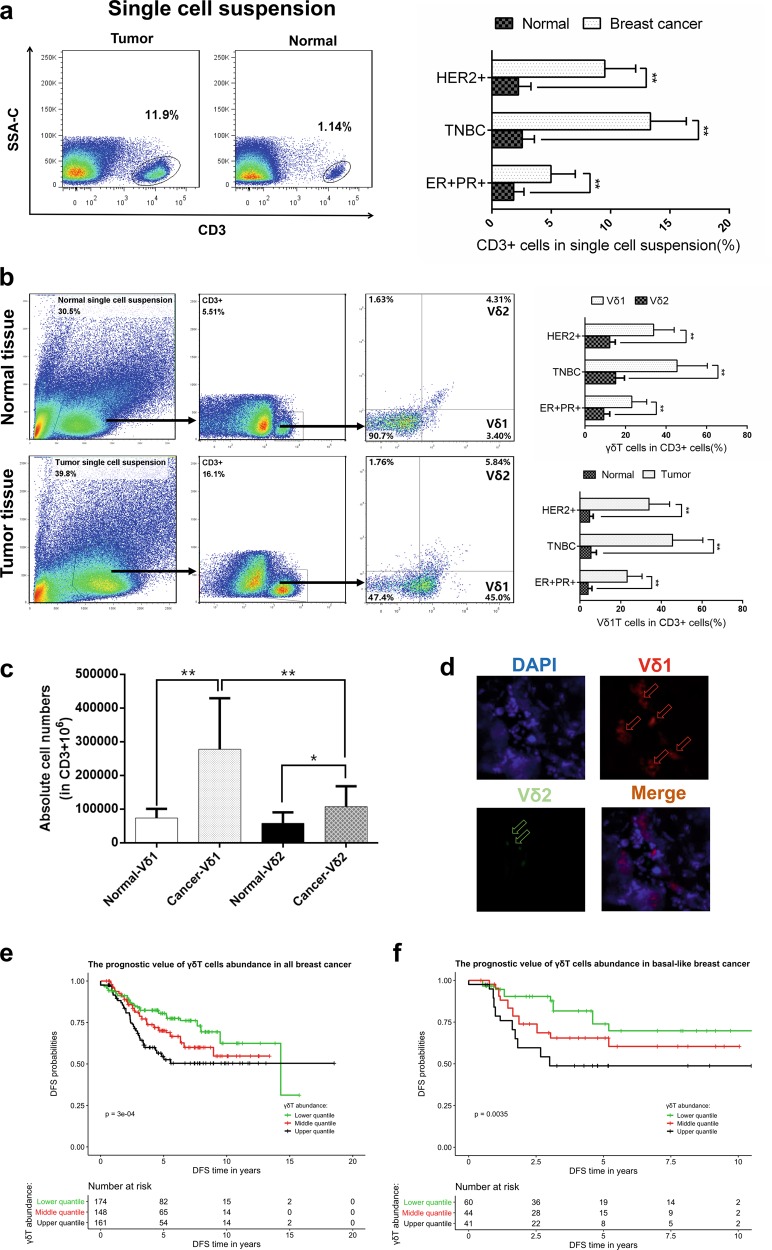
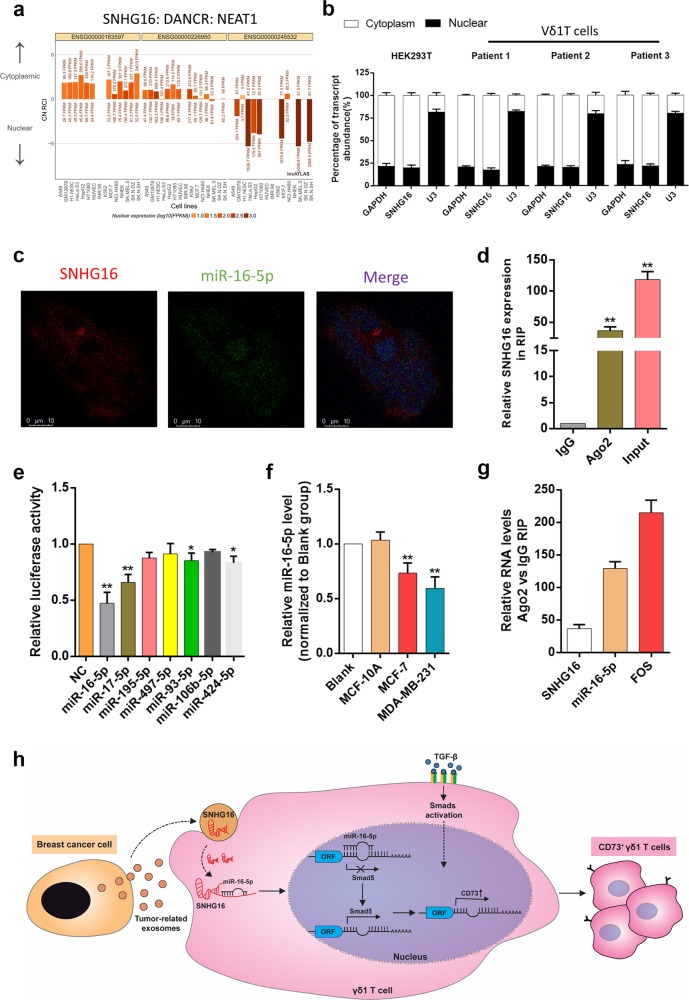
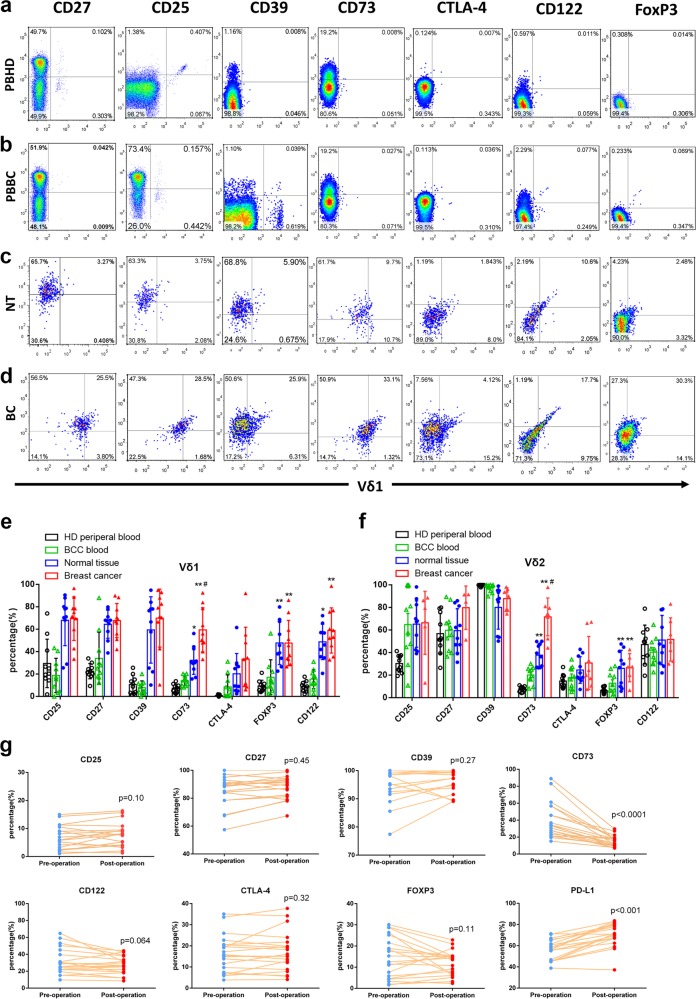
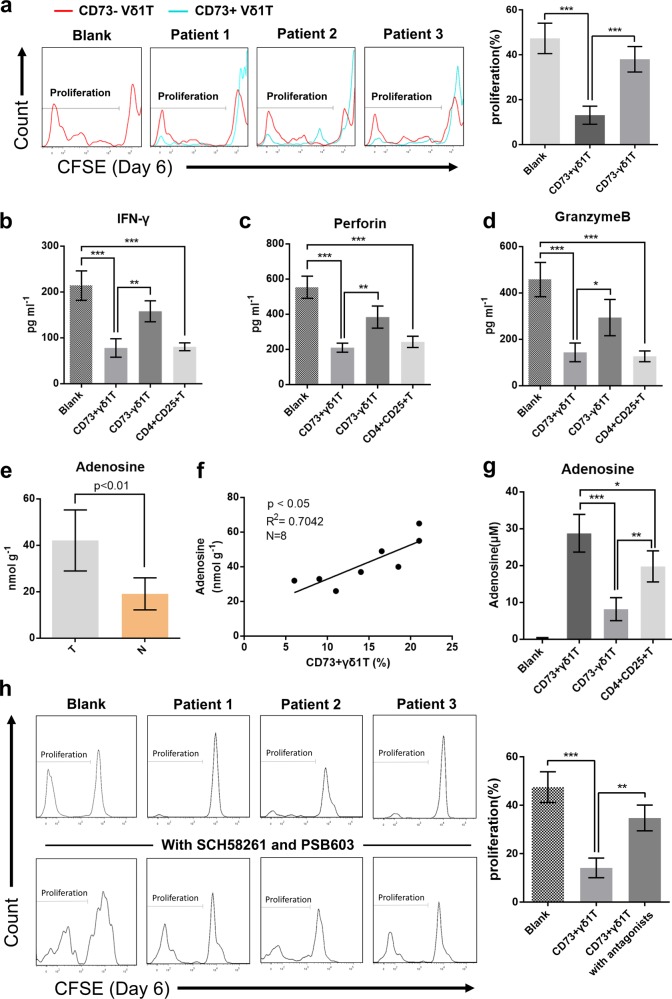
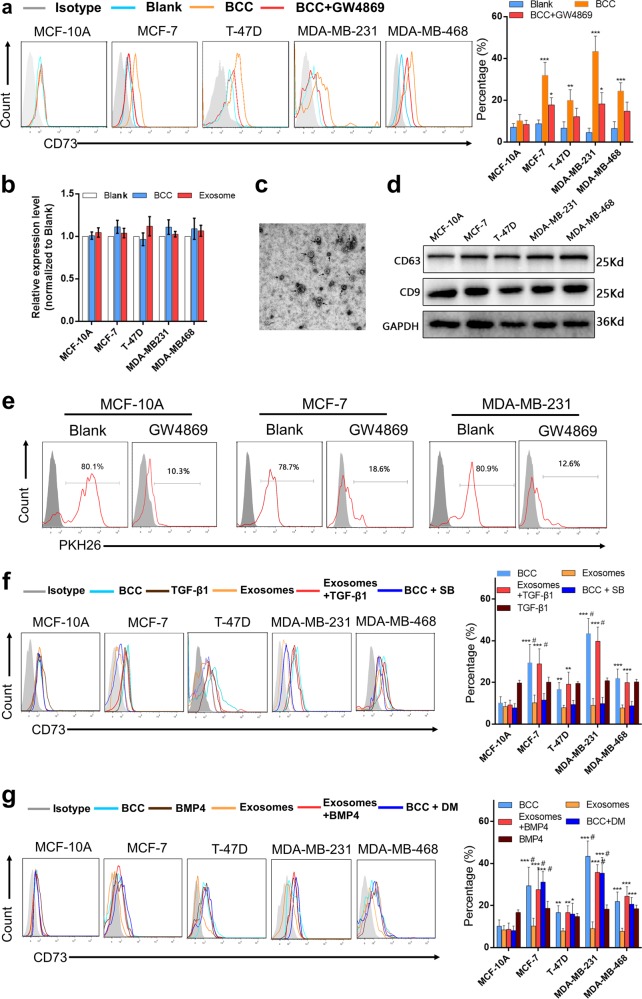
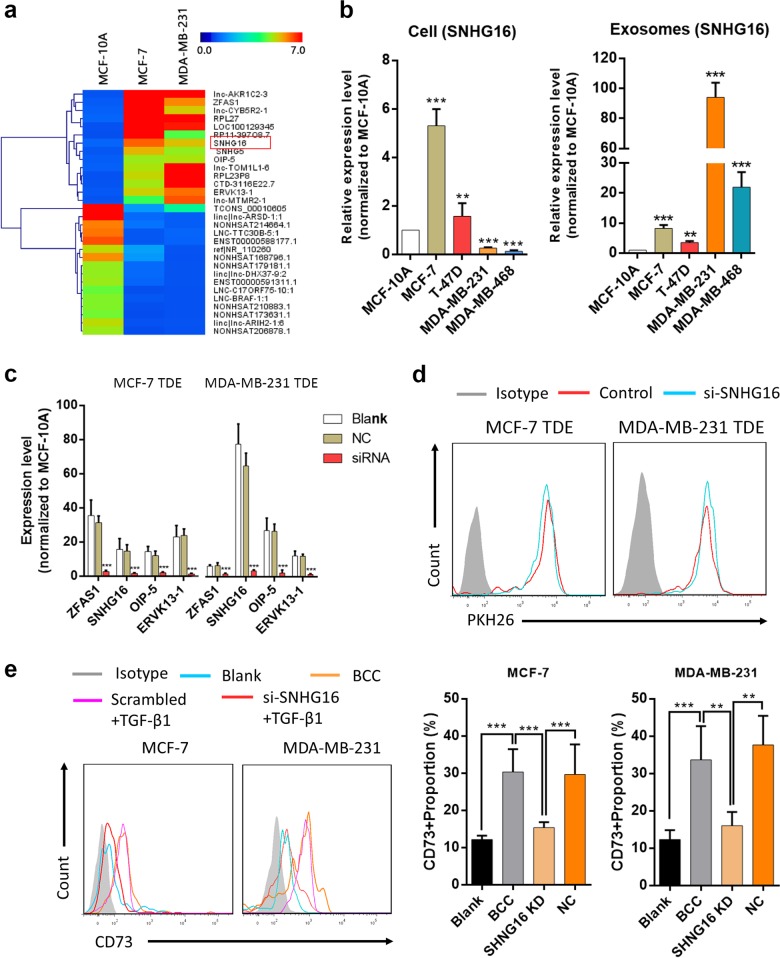
γδT cells have been reported to exert immunosuppressive functions in multiple solid malignant diseases, but their immunosuppressive functional subpopulation in breast cancer (BC) is still undetermined. Here, we collected 40 paired BC and normal tissue samples from Chinese patients for analysis. First, we showed that γδT1 cells comprise the majority of CD3+ T cells in BC; next, we found that CD73+γδT1 cells were the predominant regulatory T-cell (Treg) population in BC, and that their prevalence in peripheral blood was also related to tumour burden. In addition, CD73+γδT1 cells exert an immunosuppressive effect via adenosine generation. We also found that BC could modulate CD73 expression on γδT cells in a non-contact manner. The microarray analysis and functional experiments indicated that breast tumour cell-derived exosomes (TDEs) could transmit lncRNA SNHG16, which upregulates CD73 expression, to Vδ1 T cells. Regarding the mechanism, SNHG16 served as a ceRNA by sponging miR-16-5p, which led to the derepression of its target gene SMAD5 and resulted in potentiation of the TGF-β1/SMAD5 pathway to upregulate CD73 expression in Vδ1 T cells. Our results showed that the BC-derived exosomal SNHG16/miR-16-5p/SMAD5-regulatory axis potentiates TGF-β1/SMAD5 pathway activation, thus inducing CD73 expression in Vδ1 T cells. Our results first identify the significance of CD73+Vδ1 Tregs in BC, and therapy targeting this subpopulation or blocking TDEs might have potential for BC treatment in the future.
γδT 细胞在多种实体恶性肿瘤中被报道具有免疫抑制功能,但它们在乳腺癌(BC)中的免疫抑制功能亚群仍未确定。在这里,我们收集了 40 对来自中国患者的 BC 和正常组织样本进行分析。首先,我们表明 γδT1 细胞构成了 BC 中 CD3+T 细胞的主要部分;接下来,我们发现 CD73+γδT1 细胞是 BC 中主要的调节性 T 细胞(Treg)群体,其在外周血中的患病率也与肿瘤负担有关。此外,CD73+γδT1 细胞通过产生腺苷发挥免疫抑制作用。我们还发现,BC 可以以非接触的方式调节 γδT 细胞上的 CD73 表达。微阵列分析和功能实验表明,乳腺癌细胞衍生的外泌体(TDEs)可以将 lncRNA SNHG16 传递给 Vδ1 T 细胞,从而上调 CD73 表达。就机制而言,SNHG16 作为 ceRNA 通过海绵 miR-16-5p,从而解除其靶基因 SMAD5 的抑制作用,并导致 TGF-β1/SMAD5 途径激活,从而增强 Vδ1 T 细胞中 CD73 的表达。我们的结果表明,BC 衍生的外泌体 SNHG16/miR-16-5p/SMAD5 调节轴增强 TGF-β1/SMAD5 途径的激活,从而诱导 Vδ1 T 细胞中 CD73 的表达。我们的研究结果首次确定了 CD73+Vδ1 Treg 在 BC 中的意义,靶向该亚群或阻断 TDEs 的治疗方法可能在未来具有治疗 BC 的潜力。