Department of Internal Medicine, University of Nebraska Medical Center, Omaha, NE 68198, USA.
Research Service, Veterans' Affairs Nebraska-Western Iowa Health Care System, Omaha, NE 68105, USA.
Biomolecules. 2020 Apr 27;10(5):669. doi: 10.3390/biom10050669.
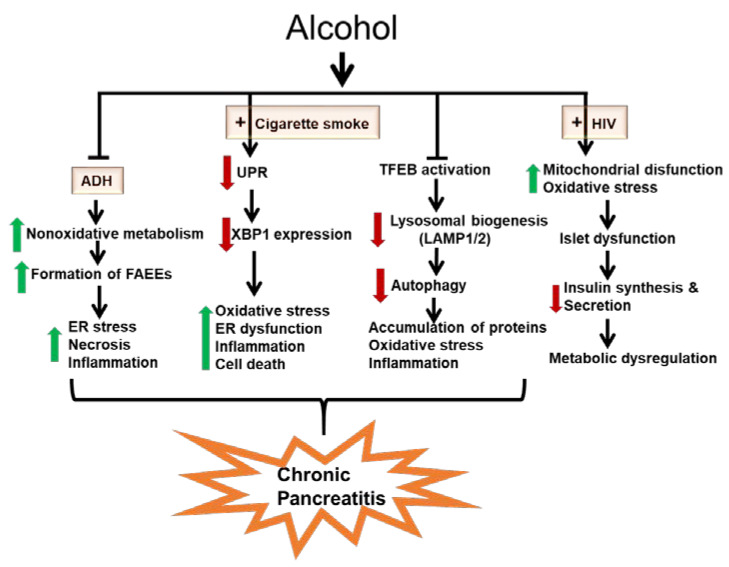
Chronic excessive alcohol use is a well-recognized risk factor for pancreatic dysfunction and pancreatitis development. Evidence from in vivo and in vitro studies indicates that the detrimental effects of alcohol on the pancreas are from the direct toxic effects of metabolites and byproducts of ethanol metabolism such as reactive oxygen species. Pancreatic dysfunction and pancreatitis development are now increasingly thought to be multifactorial conditions, where alcohol, genetics, lifestyle, and infectious agents may determine the initiation and course of the disease. In this review, we first highlight the role of nonoxidative ethanol metabolism in the generation and accumulation of fatty acid ethyl esters (FAEEs) that cause multi-organellar dysfunction in the pancreas which ultimately leads to pancreatitis development. Further, we discuss how alcohol-mediated altered autophagy leads to the development of pancreatitis. We also provide insights into how alcohol interactions with other co-morbidities such as smoking or viral infections may negatively affect exocrine and endocrine pancreatic function. Finally, we present potential strategies to ameliorate organellar dysfunction which could attenuate pancreatic dysfunction and pancreatitis severity.
慢性过量饮酒是胰腺功能障碍和胰腺炎发展的公认危险因素。来自体内和体外研究的证据表明,酒精对胰腺的有害影响来自乙醇代谢的代谢物和副产物如活性氧的直接毒性作用。胰腺功能障碍和胰腺炎的发展现在被认为是多因素的情况,其中酒精、遗传、生活方式和感染因子可能决定疾病的开始和进程。在这篇综述中,我们首先强调了非氧化乙醇代谢在脂肪酸乙酯(FAEE)生成和积累中的作用,FAEE 导致胰腺多细胞器功能障碍,最终导致胰腺炎的发展。此外,我们还讨论了酒精介导的自噬改变如何导致胰腺炎的发生。我们还提供了一些见解,说明酒精与其他合并症(如吸烟或病毒感染)的相互作用如何可能对外分泌和内分泌胰腺功能产生负面影响。最后,我们提出了改善细胞器功能障碍的潜在策略,这可能会减轻胰腺功能障碍和胰腺炎的严重程度。