Federal Research and Clinical Centre of Physical-Chemical Medicine of Federal Medical Biological Agency, 1a Malaya Pirogovskaya Str, Moscow, 119435, Russia.
Koltzov Institute of Developmental Biology, Russian Academy of Sciences, 26 Vavilov str, Moscow, 119334, Russia.
BMC Genomics. 2020 Apr 29;21(1):331. doi: 10.1186/s12864-020-6748-0.
Salivary cell secretion (SCS) plays a critical role in blood feeding by medicinal leeches, making them of use for certain medical purposes even today.
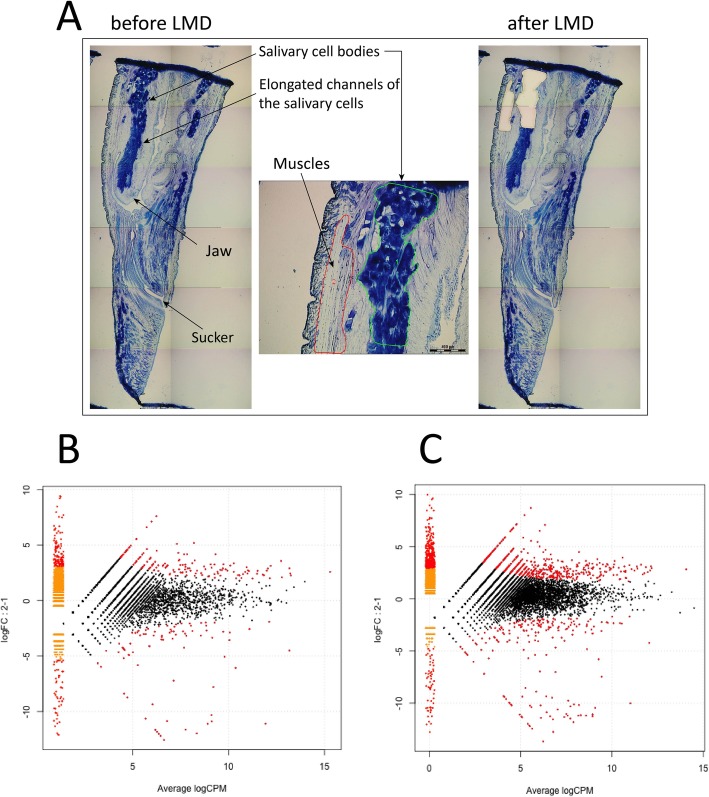
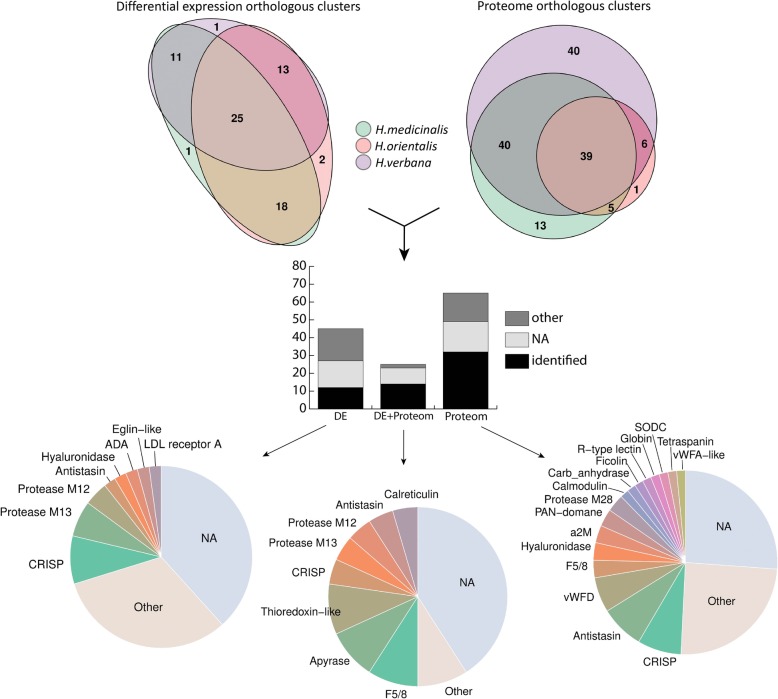
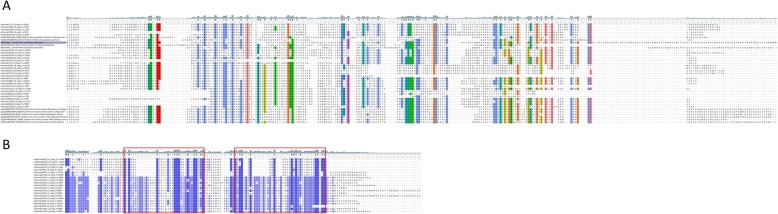
We annotated the Hirudo medicinalis genome and performed RNA-seq on salivary cells isolated from three closely related leech species, H. medicinalis, Hirudo orientalis, and Hirudo verbana. Differential expression analysis verified by proteomics identified salivary cell-specific gene expression, many of which encode previously unknown salivary components. However, the genes encoding known anticoagulants have been found to be expressed not only in salivary cells. The function-related analysis of the unique salivary cell genes enabled an update of the concept of interactions between salivary proteins and components of haemostasis.
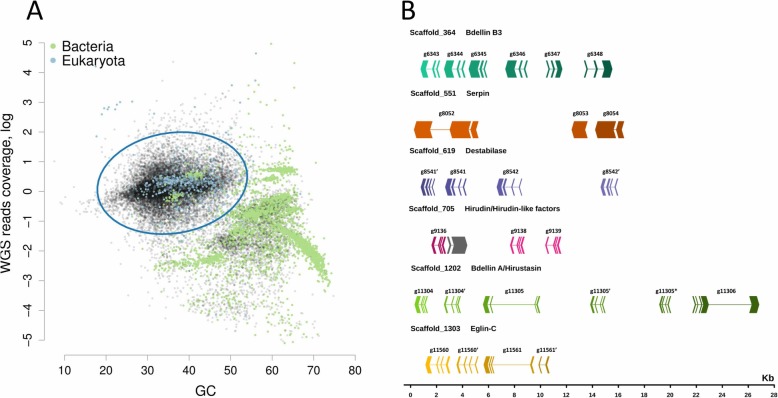
Here we report a genome draft of Hirudo medicinalis and describe identification of novel salivary proteins and new homologs of genes encoding known anticoagulants in transcriptomes of three medicinal leech species. Our data provide new insights in genetics of blood-feeding lifestyle in leeches.
唾液细胞分泌(SCS)在医用水蛭的吸血过程中起着至关重要的作用,即使在今天,它们也被用于某些医疗目的。
我们对医用水蛭基因组进行了注释,并对从三种密切相关的水蛭物种(医用水蛭、东方医用水蛭和扁山蛭)分离的唾液细胞进行了 RNA-seq 分析。通过蛋白质组学验证的差异表达分析鉴定了唾液细胞特异性基因表达,其中许多基因编码以前未知的唾液成分。然而,编码已知抗凝剂的基因不仅在唾液细胞中表达。对独特的唾液细胞基因的功能相关分析使我们更新了唾液蛋白与止血成分之间相互作用的概念。
在这里,我们报告了医用水蛭的基因组草案,并描述了在三种医用水蛭物种的转录组中鉴定到新型唾液蛋白和已知抗凝剂基因的新同源物。我们的数据为水蛭吸血生活方式的遗传学提供了新的见解。