Department of Obstetrics and Gynecology, The Second Affiliated Hospital of Wenzhou Medical University, Wenzhou, Zhejiang 325027, China.
Biomed Res Int. 2020 Apr 12;2020:2170606. doi: 10.1155/2020/2170606. eCollection 2020.
To explore the potential role of the transforming growth factor-beta (TGF-) subtypes in the prognosis of ovarian cancer patients. . The prognostic roles of individual TGF- subtypes in women with ovarian cancer were retrieved from the Kaplan-Meier plotter (KM plotter) database. In addition, the Oncomine database and immunohistochemistry were used to observe the mRNA and protein expression of TGF- subtypes between human ovarian carcinoma and normal ovarian samples, respectively.
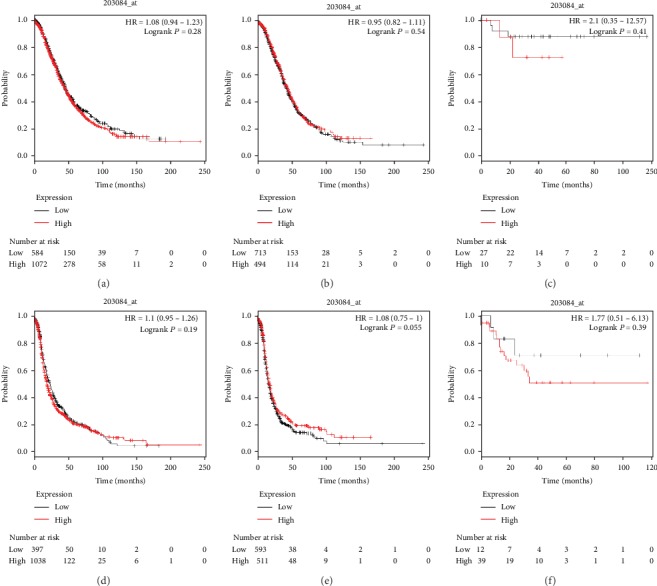
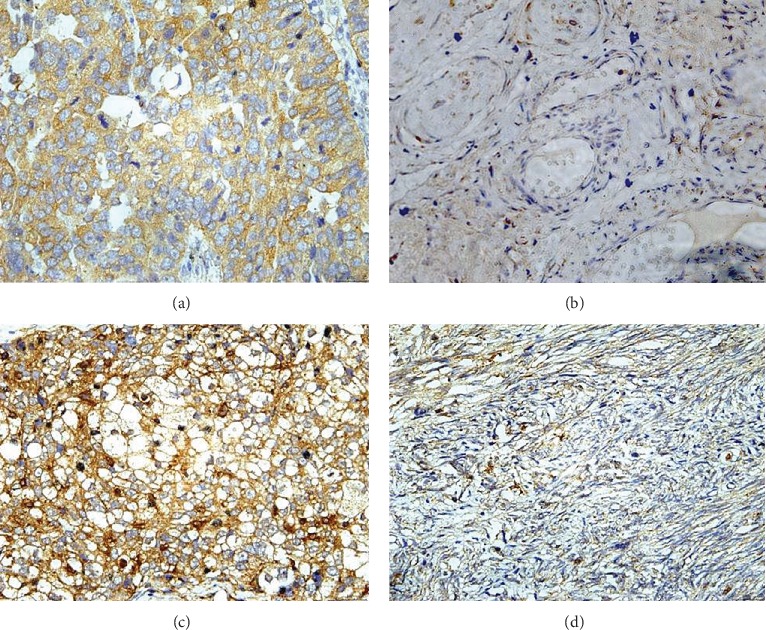
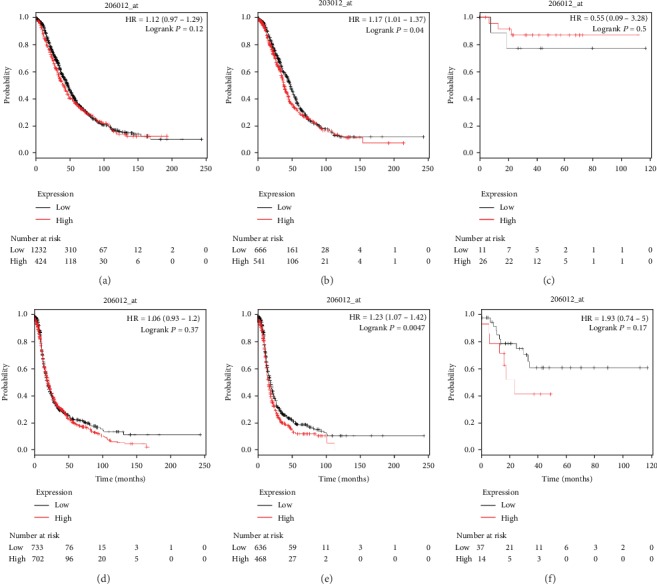
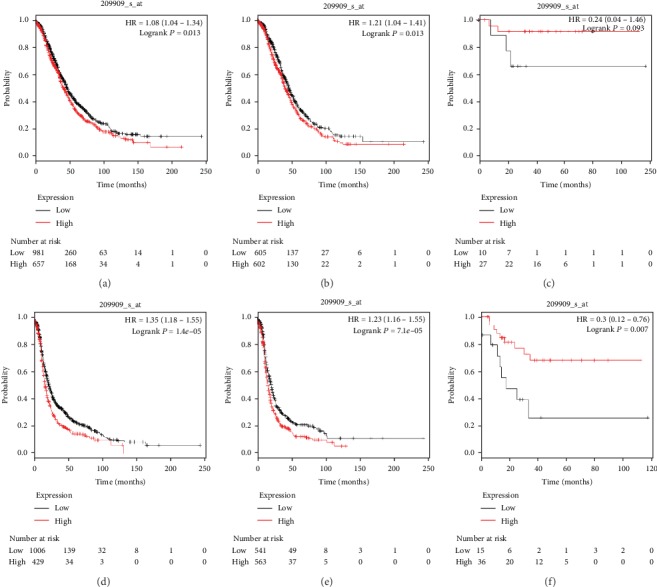
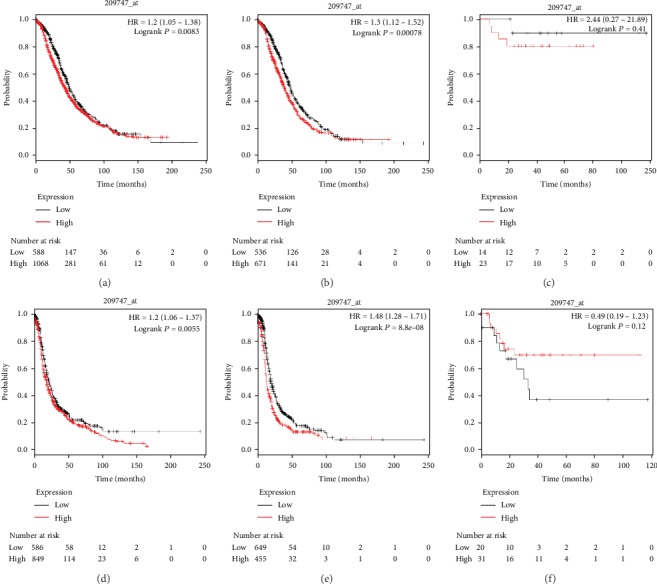
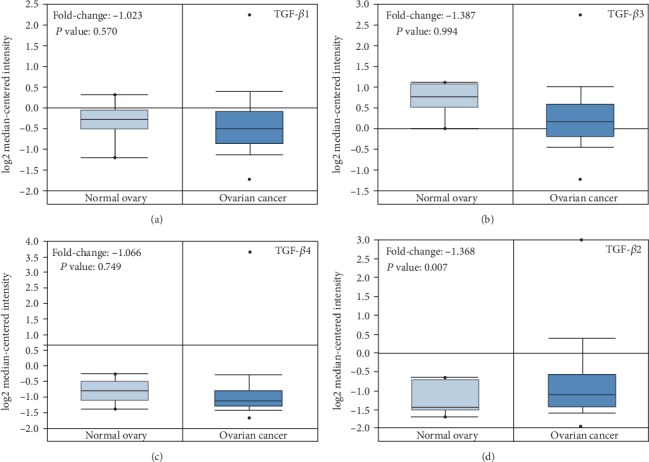
TGF-1 and TGF-4 were totally uncorrelated with survival outcomes in women with ovarian cancer. Increased TGF-2 and TGF-3 mRNA expression was markedly related to unfavorable prognosis, especially in women with serous, poorly differentiated, and late-stage ovarian carcinoma. High expression levels of TGF-2 were related to worse progression-free survival (PFS) while TGF-3 was linked to unfavorable overall survival (OS) and PFS in women with TP53-mutated ovarian cancer. TGF-2 was associated with poor OS and PFS from treatment with chemotherapy with platins, Taxol, or a platin+Taxol. However, overexpression of TGF-3 was associated with poor OS from the use of platins and poor PFS of Taxol or a platin+Taxol in women with ovarian carcinoma. Furthermore, the expression of TGF-2 mRNA and protein was higher but only TGF-3 mRNA expression was higher in cancerous tissues than in normal ovarian samples.
Higher expression of TGF-2 functioned as a significant predictor of poor prognosis in women with ovarian cancer, especially those with TP53 mutations or who were undergoing chemotherapy with platins, Taxol, or a platin+Taxol.
探讨转化生长因子-β(TGF-β)亚型在卵巢癌患者预后中的潜在作用。方法:从 Kaplan-Meier 绘线器(KM 绘线器)数据库中检索个体 TGF-β亚型在卵巢癌女性患者中的预后作用。此外,还使用 Oncomine 数据库和免疫组织化学观察 TGF-β亚型在人类卵巢癌和正常卵巢样本中的 mRNA 和蛋白表达。
TGF-β1 和 TGF-β4 与卵巢癌女性的生存结局完全无关。TGF-β2 和 TGF-β3 mRNA 表达增加与不良预后显著相关,尤其是在浆液性、低分化和晚期卵巢癌患者中。TGF-β2 高表达与无进展生存期(PFS)较差相关,而 TGF-β3 与 TP53 突变型卵巢癌患者的总生存期(OS)和 PFS 不良相关。TGF-β2 与含铂、紫杉醇或铂+紫杉醇化疗的不良 OS 和 PFS 相关。然而,TGF-β3 过表达与含铂的不良 OS 和紫杉醇或铂+紫杉醇的不良 PFS 相关。此外,与正常卵巢组织相比,TGF-β2 mRNA 和蛋白表达更高,但只有 TGF-β3 mRNA 表达更高。
TGF-β2 高表达是卵巢癌女性预后不良的显著预测因子,尤其是那些 TP53 突变或接受含铂、紫杉醇或铂+紫杉醇化疗的患者。