Southgate Harriet E D, Chen Lindi, Tweddle Deborah A, Curtin Nicola J
Wolfson Childhood Cancer Research Centre, Newcastle Centre for Cancer, Translational and Clinical Research Institute, Faculty of Medical Sciences, Newcastle University, Newcastle Upon Tyne NE1 7RU, UK.
Newcastle Centre for Cancer, Translational and Clinical Research Institute, Faculty of Medical Sciences, Newcastle University, Newcastle Upon Tyne NE2 4HH, UK.
Cancers (Basel). 2020 Apr 28;12(5):1095. doi: 10.3390/cancers12051095.
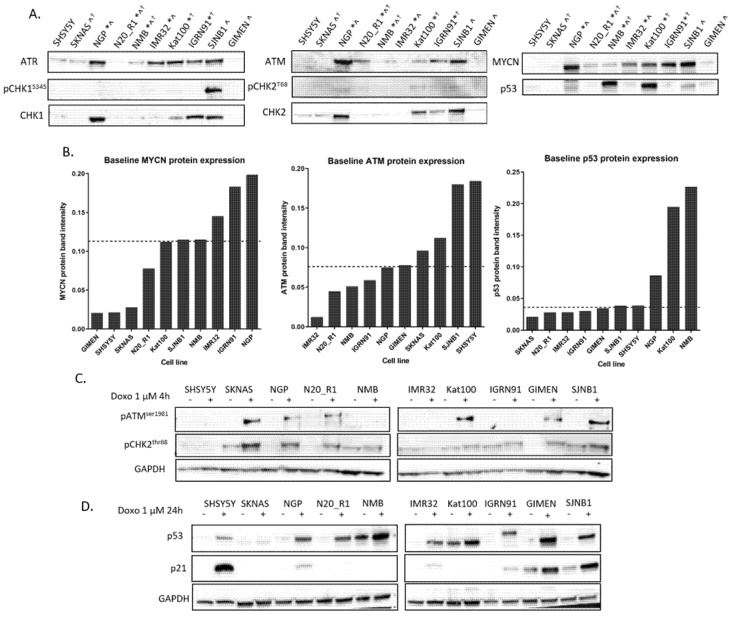
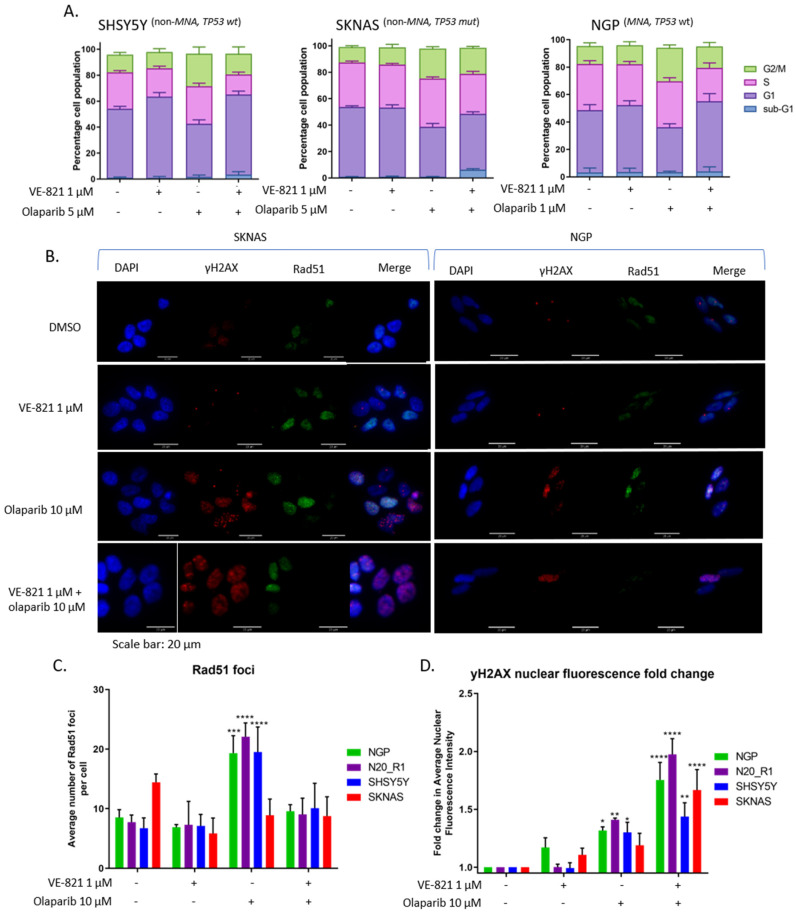
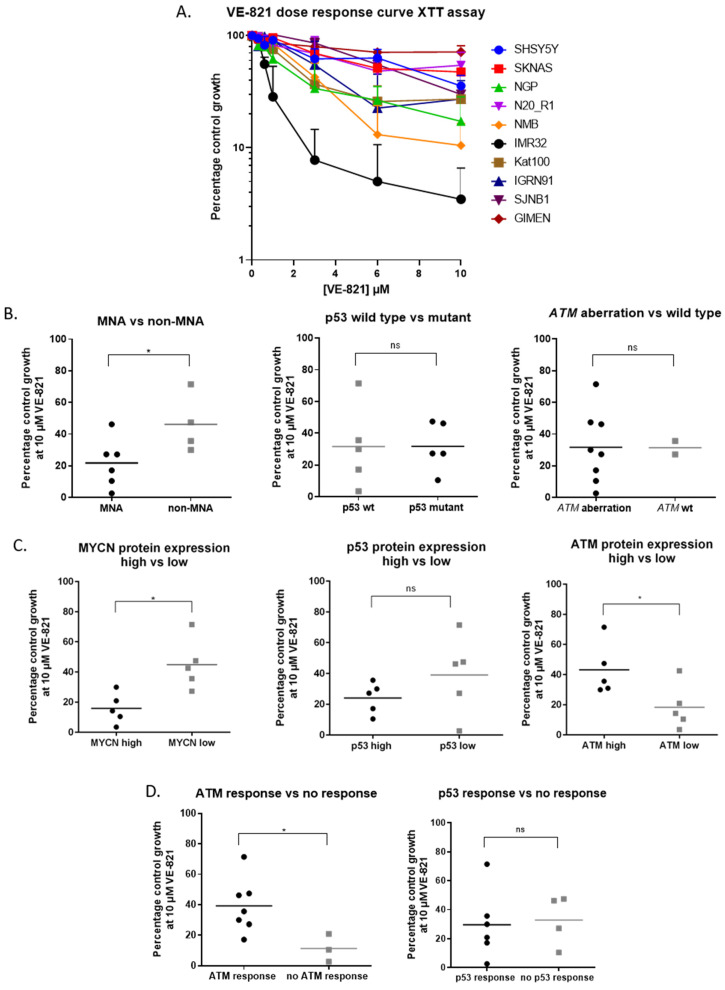
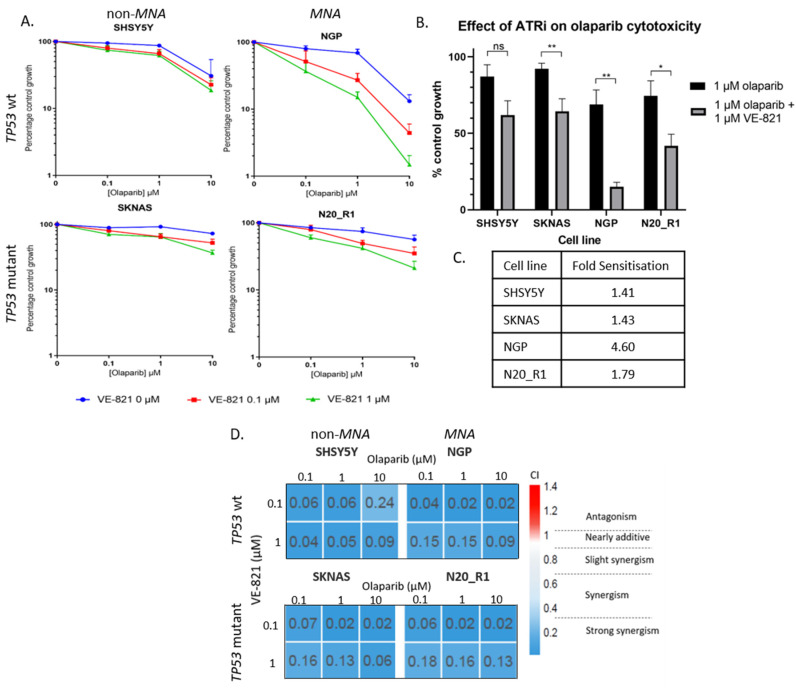
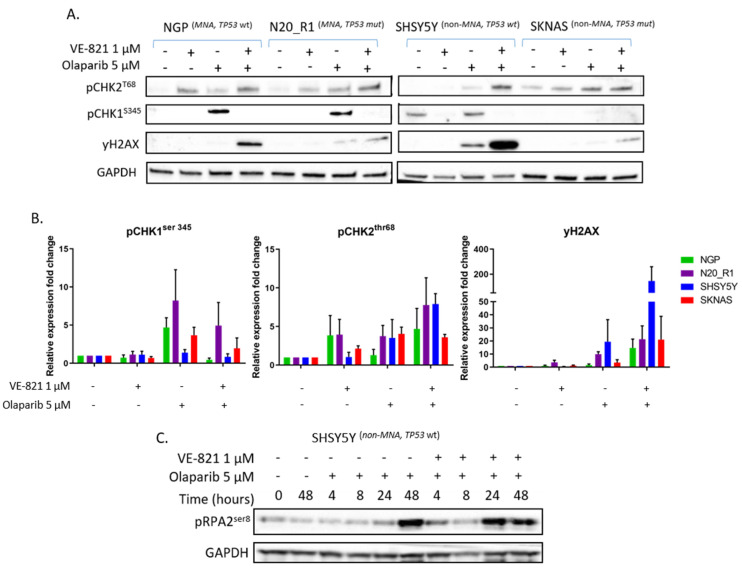
High risk neuroblastoma (HR-NB) is one the most difficult childhood cancers to cure. These tumours frequently present with DNA damage response (DDR) defects including loss or mutation of key DDR genes, oncogene-induced replication stress (RS) and cell cycle checkpoint dysfunction. Aim: To identify biomarkers of sensitivity to inhibition of Ataxia telangiectasia and Rad3 related (ATR), a DNA damage sensor, and poly (ADP-ribose) polymerase (PARP), which is required for single strand break repair. We also hypothesise that combining ATR and PARP inhibition is synergistic. Single agent sensitivity to VE-821 (ATR inhibitor) and olaparib (PARP inhibitor), and the combination, was determined using cell proliferation and clonogenic assays, in HR-NB cell lines. Basal expression of DDR proteins, including ataxia telangiectasia mutated (ATM) and ATR, was assessed using Western blotting. CHK1 and H2AX phosphorylation was assessed using Western blotting to determine ATR activity and RS, respectively. RS and homologous recombination repair (HRR) activity was also measured by γH2AX and Rad51 foci formation using immunofluorescence. amplification and/or low ATM protein expression were associated with sensitivity to VE-821 ( < 0.05). VE-821 was synergistic with olaparib (CI value 0.04-0.89) independent of or ATM status. Olaparib increased H2AX phosphorylation which was further increased by VE-821. Olaparib-induced Rad51 foci formation was reduced by VE-821 suggesting inhibition of HRR. RS associated with amplification, ATR loss or PARP inhibition increases sensitivity to the ATR inhibitor VE-821. These findings suggest a potential therapeutic strategy for the treatment of HR-NB.
高危神经母细胞瘤(HR-NB)是最难治愈的儿童癌症之一。这些肿瘤常常存在DNA损伤反应(DDR)缺陷,包括关键DDR基因的缺失或突变、癌基因诱导的复制应激(RS)以及细胞周期检查点功能障碍。目的:鉴定对共济失调毛细血管扩张症和Rad3相关蛋白(ATR,一种DNA损伤传感器)以及单链断裂修复所需的聚(ADP-核糖)聚合酶(PARP)抑制敏感的生物标志物。我们还假设联合抑制ATR和PARP具有协同作用。使用细胞增殖和克隆形成试验,在HR-NB细胞系中测定了对VE-821(ATR抑制剂)和奥拉帕尼(PARP抑制剂)单药以及联合用药的敏感性。使用蛋白质免疫印迹法评估DDR蛋白(包括共济失调毛细血管扩张症突变蛋白(ATM)和ATR)的基础表达。使用蛋白质免疫印迹法分别评估CHK1和H2AX的磷酸化,以确定ATR活性和RS。还通过免疫荧光法检测γH2AX和Rad51灶形成来测量RS和同源重组修复(HRR)活性。MYCN扩增和/或低ATM蛋白表达与对VE-821敏感相关(P<0.05)。无论MYCN状态如何,VE-821与奥拉帕尼具有协同作用(CI值为0.04 - 0.89)。奥拉帕尼增加了H2AX磷酸化,而VE-821进一步增强了这种作用。VE-821减少了奥拉帕尼诱导的Rad51灶形成,提示对HRR的抑制作用。与MYCN扩增、ATR缺失或PARP抑制相关的RS增加了对ATR抑制剂VE-821的敏感性。这些发现提示了一种治疗HR-NB的潜在治疗策略。