Institute for Organic Chemistry and Chemical Biology, Goethe-University Frankfurt, Max-von-Laue-Str. 7, 60438 Frankfurt, Germany.
Molecules. 2020 Apr 28;25(9):2057. doi: 10.3390/molecules25092057.
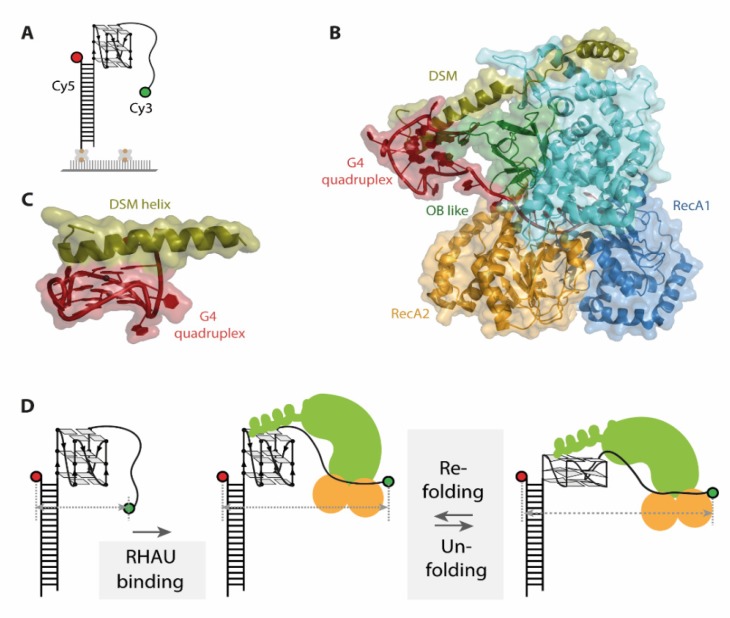
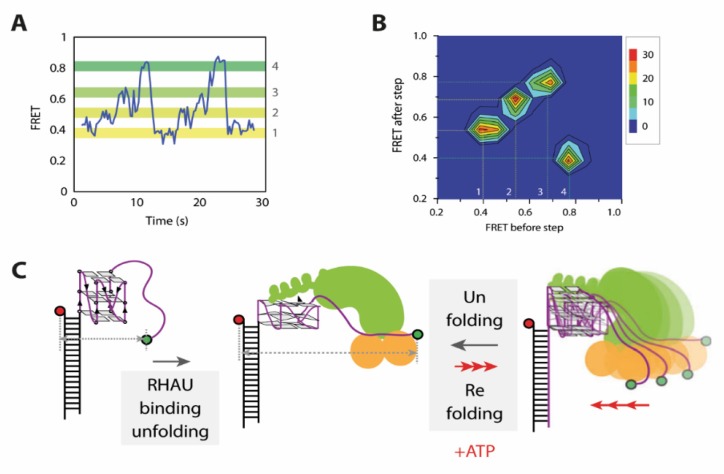
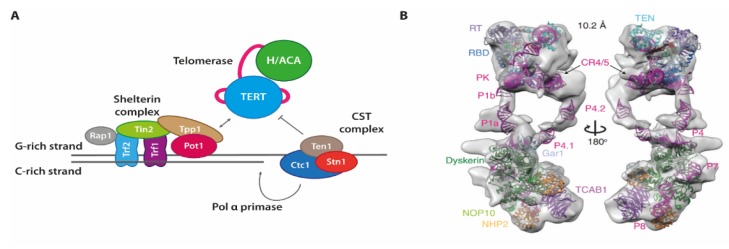
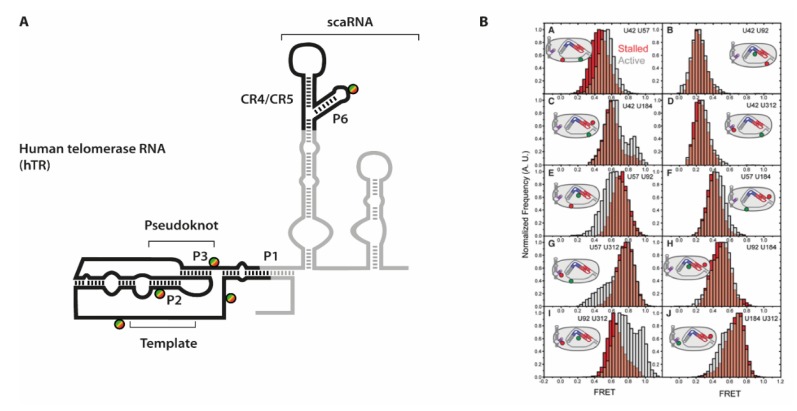
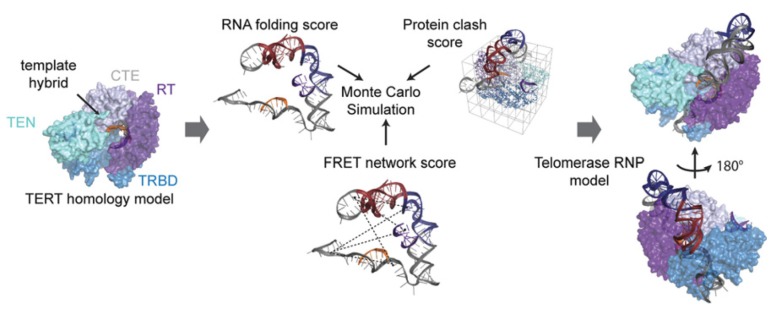
RNA-protein complexes (RNPs) are essential components in a variety of cellular processes, and oftentimes exhibit complex structures and show mechanisms that are highly dynamic in conformation and structure. However, biochemical and structural biology approaches are mostly not able to fully elucidate the structurally and especially conformationally dynamic and heterogeneous nature of these RNPs, to which end single molecule Förster resonance energy transfer (smFRET) spectroscopy can be harnessed to fill this gap. Here we summarize the advantages of strategic smFRET studies to investigate RNP dynamics, complemented by structural and biochemical data. Focusing on recent smFRET studies of three essential biological systems, we demonstrate that investigation of RNPs on a single molecule level can answer important functional questions that remained elusive with structural or biochemical approaches alone: The complex structural rearrangements throughout the splicing cycle, unwinding dynamics of the G-quadruplex (G4) helicase RHAU, and aspects in telomere maintenance regulation and synthesis.
RNA-蛋白质复合物(RNPs)是多种细胞过程中的重要组成部分,通常具有复杂的结构,并表现出高度动态的构象和结构机制。然而,生化和结构生物学方法大多无法完全阐明这些 RNPs 的结构,特别是构象动态和异质性,为此,单分子Förster 共振能量转移(smFRET)光谱学可用于填补这一空白。在这里,我们总结了战略 smFRET 研究的优势,以研究 RNP 动力学,辅以结构和生化数据。我们专注于三个基本生物系统的最近 smFRET 研究,证明在单分子水平上研究 RNPs 可以回答仅通过结构或生化方法难以解决的重要功能问题:剪接循环中的复杂结构重排、G-四链体(G4)解旋酶 RHAU 的解旋动力学以及端粒维持调控和合成方面。