Chapman Alexander D, Darby Stephen E, Hồng Hoàng M, Tompkins Emma L, Van Tri P D
1Geography & Environment, University of Southampton, Southampton, SO17 1BJ UK.
2Research Institute for Climate Change, Can Tho University, Can Tho, Vietnam.
Clim Change. 2016;137(3):593-608. doi: 10.1007/s10584-016-1684-3. Epub 2016 Apr 30.
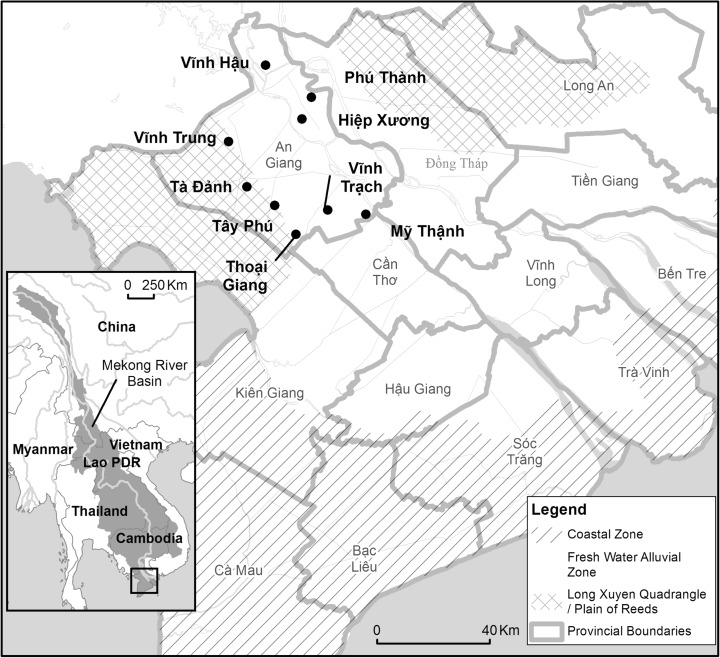
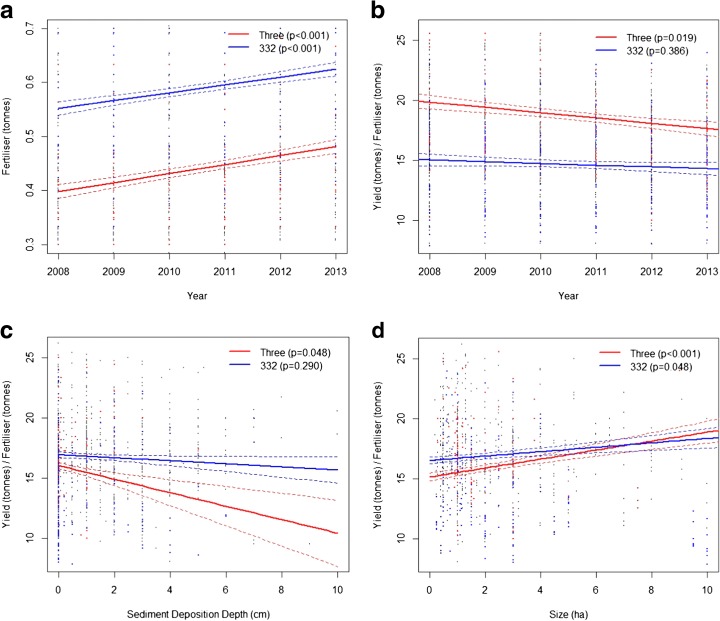
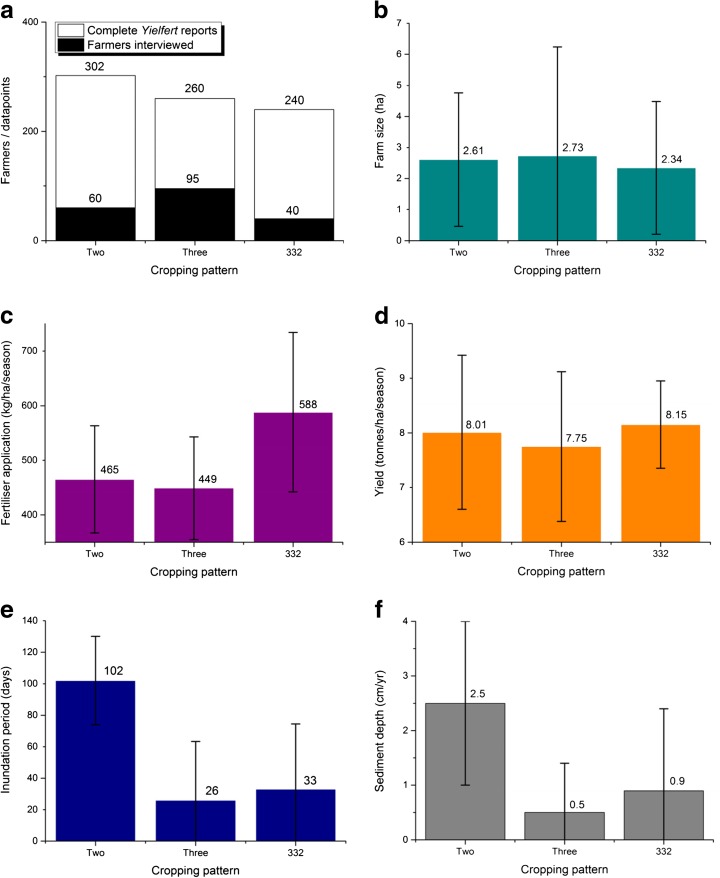
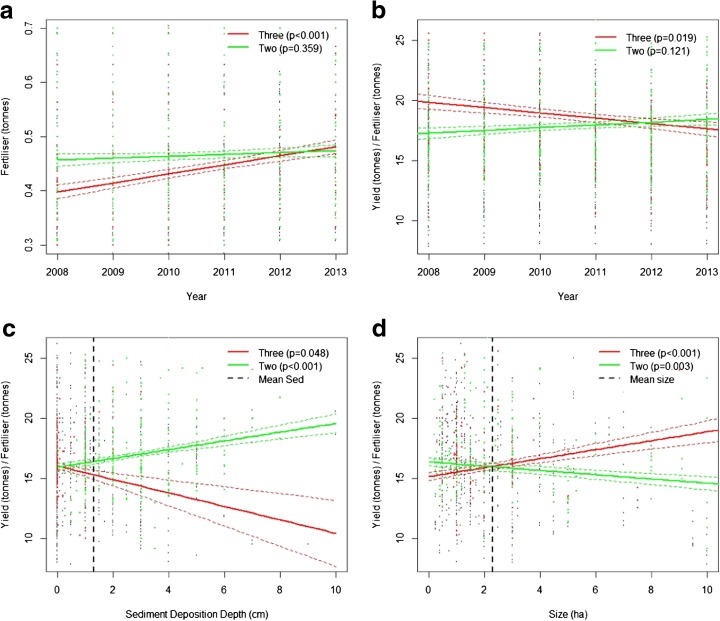
Deltas around the globe are facing a multitude of intensifying environmental change and development-linked pressures. One key concern is the reduction in the quantity of suspended sediment reaching and building floodplains. Sediment deposition provides multiple services to deltaic social-ecological systems, in particular, countering the subsidence of the delta-body, and providing plentiful nutrients. Experiencing particularly rapid change is the Vietnamese Mekong Delta (VMD). In An Giang Province an increasing number of high dyke rings, which exclude the flood and facilitate triple rice-cropping, simultaneously prevent much of the sediment load from reaching the floodplain. This paper explores the trade-offs implicit in the decision to shift from (i) doublecropping (higher sediment deposition) to (ii) triple cropping (lower sediment deposition) by asking: what is the impact of the shift on VMD farmers? Is it sustainable? And what is the significance of the associated sediment exclusion? A novel survey of An Giang rice farmers was conducted, investigating key agricultural practices, and uniquely, the farmers' estimates of annual sediment deposition depth. The survey elicits some key changes under the adapted system (ii), particularly, unsustainable trajectories in the yield to fertiliser ratio which penalise land-poor farmers. Furthermore, the value (to farmers) of the sediment contribution to agricultural fertilisation which is lost due to triple-cropping is estimated at USD 15 (±5) million annually. We argue that our growing understanding of the importance of sediment in the deltaic social-ecological system may be revealing an emergent risk; arising from conflicting long and short-term adaptation and agricultural development objectives.
全球范围内的三角洲正面临着众多日益加剧的环境变化和与发展相关的压力。一个关键问题是到达和堆积在洪泛平原的悬浮沉积物数量减少。沉积物的沉积为三角洲社会生态系统提供了多种服务,特别是抵消三角洲主体的下沉,并提供丰富的养分。越南湄公河三角洲(VMD)的变化尤为迅速。在安江省,越来越多的高堤坝圈排除了洪水并促进了三季稻种植,同时也阻止了大量沉积物进入洪泛平原。本文通过以下问题探讨了从(i)双季种植(沉积物沉积量较高)转向(ii)三季种植(沉积物沉积量较低)这一决策中隐含的权衡:这种转变对VMD农民有何影响?是否可持续?相关沉积物排除的意义是什么?对安江稻农进行了一项新颖的调查,调查了关键的农业实践,独特的是,还调查了农民对年沉积物沉积深度的估计。该调查揭示了在适应系统(ii)下的一些关键变化,特别是肥料产量比的不可持续轨迹,这对土地贫瘠的农民不利。此外,由于三季种植而损失的沉积物对农业施肥的价值(对农民而言)估计为每年1500万美元(±500万美元)。我们认为,我们对沉积物在三角洲社会生态系统中的重要性的认识不断加深,可能揭示了一种新出现的风险;这种风险源于长期和短期适应目标与农业发展目标之间的冲突。