Water Systems and Global Change Group, Wageningen University, Droevendaalsesteeg 3, 6700 AA, Wageningen, The Netherlands.
Public Administration and Policy Group, Wageningen University, Hollandseweg 1, 6706 KN, Wageningen, The Netherlands.
Ambio. 2018 Oct;47(6):635-649. doi: 10.1007/s13280-017-1009-4. Epub 2018 Feb 24.
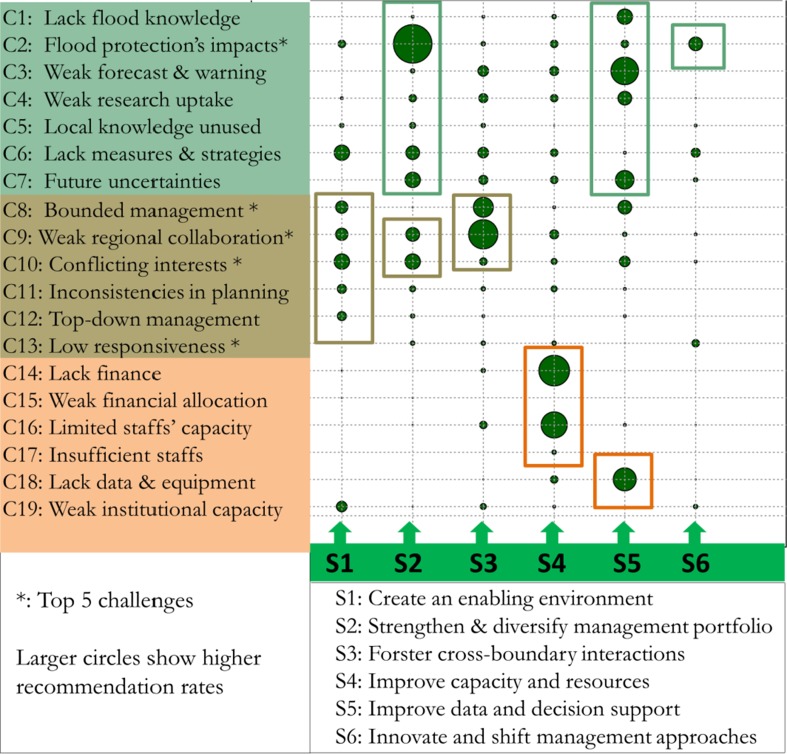
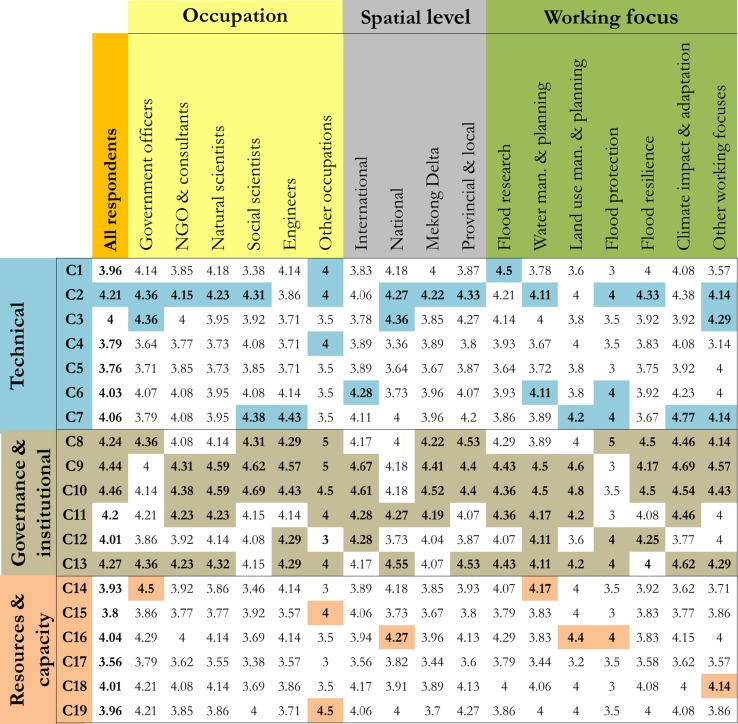
Climate change and accelerating socioeconomic developments increasingly challenge flood-risk management in the Vietnamese Mekong River Delta-a typical large, economically dynamic and highly vulnerable delta. This study identifies and addresses the emerging challenges for flood-risk management. Furthermore, we identify and analyse response solutions, focusing on meaningful configurations of the individual solutions and how they can be tailored to specific challenges using expert surveys, content analysis techniques and statistical inferences. Our findings show that the challenges for flood-risk management are diverse, but critical challenges predominantly arise from the current governance and institutional settings. The top-three challenges include weak collaboration, conflicting management objectives and low responsiveness to new issues. We identified 114 reported solutions and developed six flood management strategies that are tailored to specific challenges. We conclude that the current technology-centric flood management approach is insufficient given the rapid socioecological changes. This approach therefore should be adapted towards a more balanced management configuration where technical and infrastructural measures are combined with institutional and governance resolutions. Insights from this study contribute to the emerging repertoire of contemporary flood management solutions, especially through their configurations and tailoring to specific challenges.
气候变化和加速的社会经济发展给越南湄公河三角洲的洪水风险管理带来了越来越多的挑战——这是一个典型的大型、经济活跃且高度脆弱的三角洲。本研究确定并解决了洪水风险管理方面的新挑战。此外,我们还确定并分析了应对解决方案,重点关注各个解决方案的有意义配置,以及如何使用专家调查、内容分析技术和统计推断来针对特定挑战进行调整。研究结果表明,洪水风险管理面临的挑战是多样的,但主要挑战还是来自于当前的治理和体制环境。排在前三位的挑战包括合作薄弱、管理目标冲突以及对新问题的反应迟缓。我们共发现了 114 种已报告的解决方案,并制定了 6 种针对特定挑战的洪水管理策略。我们的结论是,考虑到快速的社会生态变化,当前以技术为中心的洪水管理方法是不够的。因此,该方法应该进行调整,形成一个更加平衡的管理配置,将技术和基础设施措施与体制和治理决议结合起来。本研究的见解有助于形成当代洪水管理解决方案的新兴方案库,特别是通过其配置和针对特定挑战的调整。