Department of Thoracic Surgery, Union Hospital, Tongji Medical College of Huazhong University of Science and Technology, Wuhan, China.
George Whipple Lab for Cancer Research, Departments of Urology and Pathology and the Wilmot Cancer Center, University of Rochester Medical Center, Rochester, NY, USA.
Mol Oncol. 2020 Aug;14(8):1779-1799. doi: 10.1002/1878-0261.12701. Epub 2020 Jun 28.
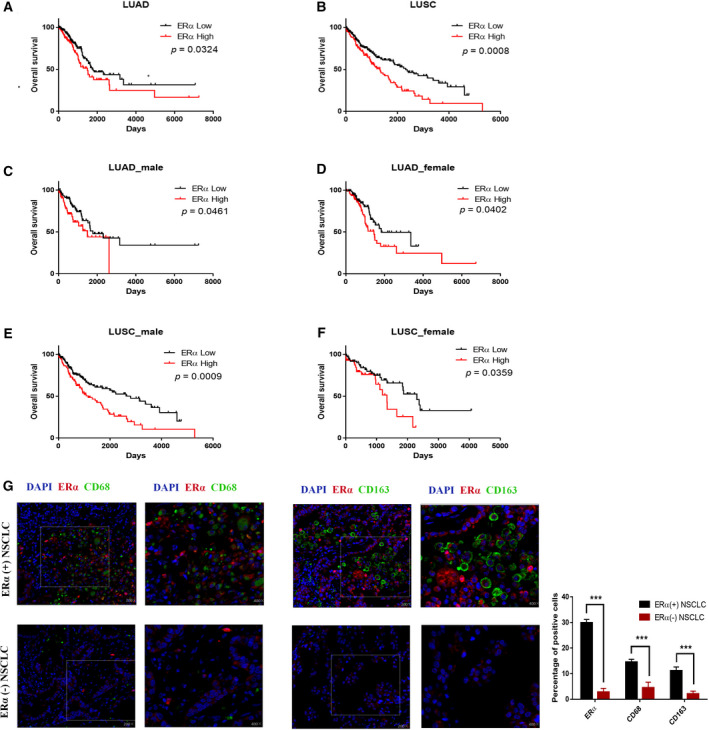
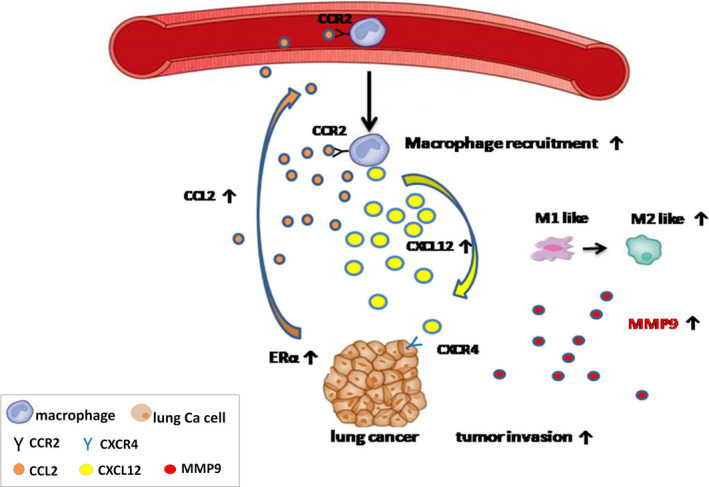
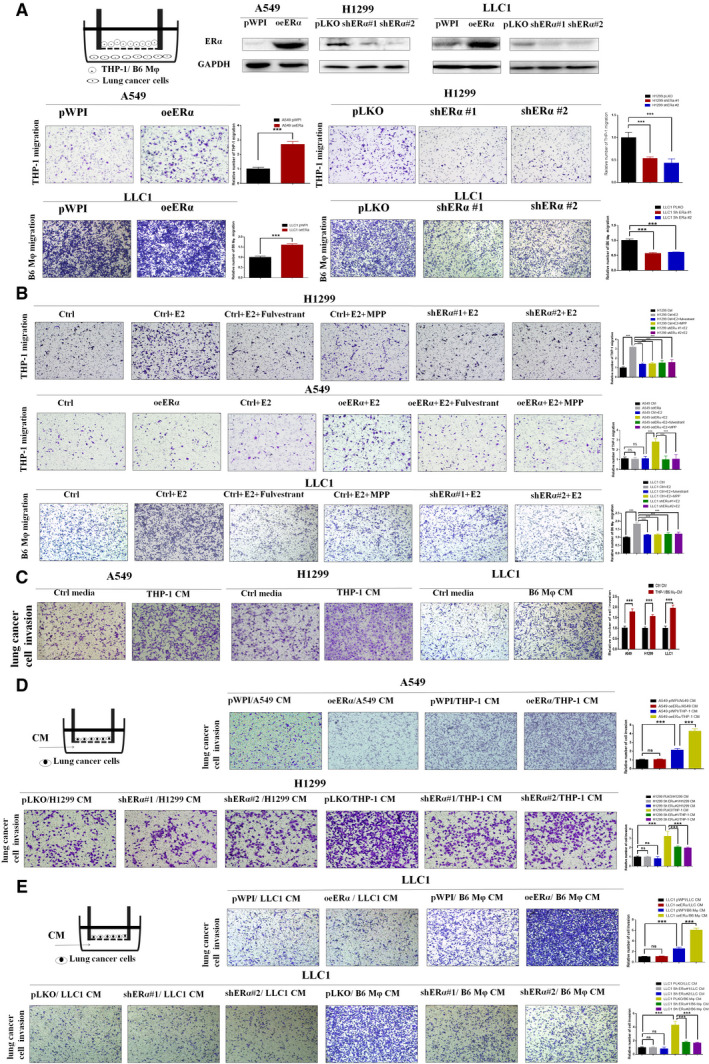
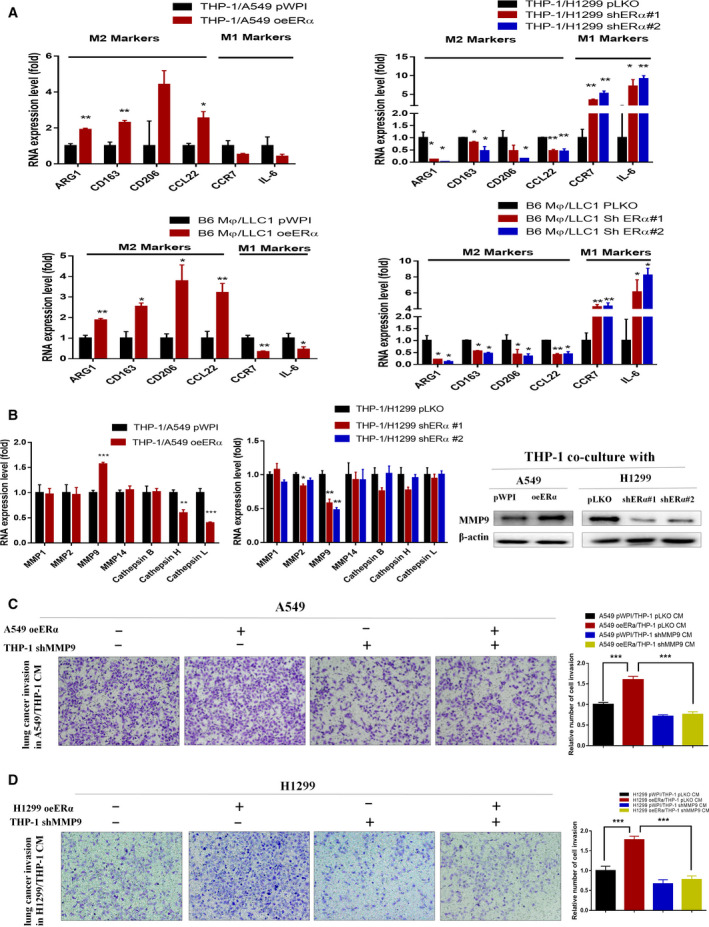
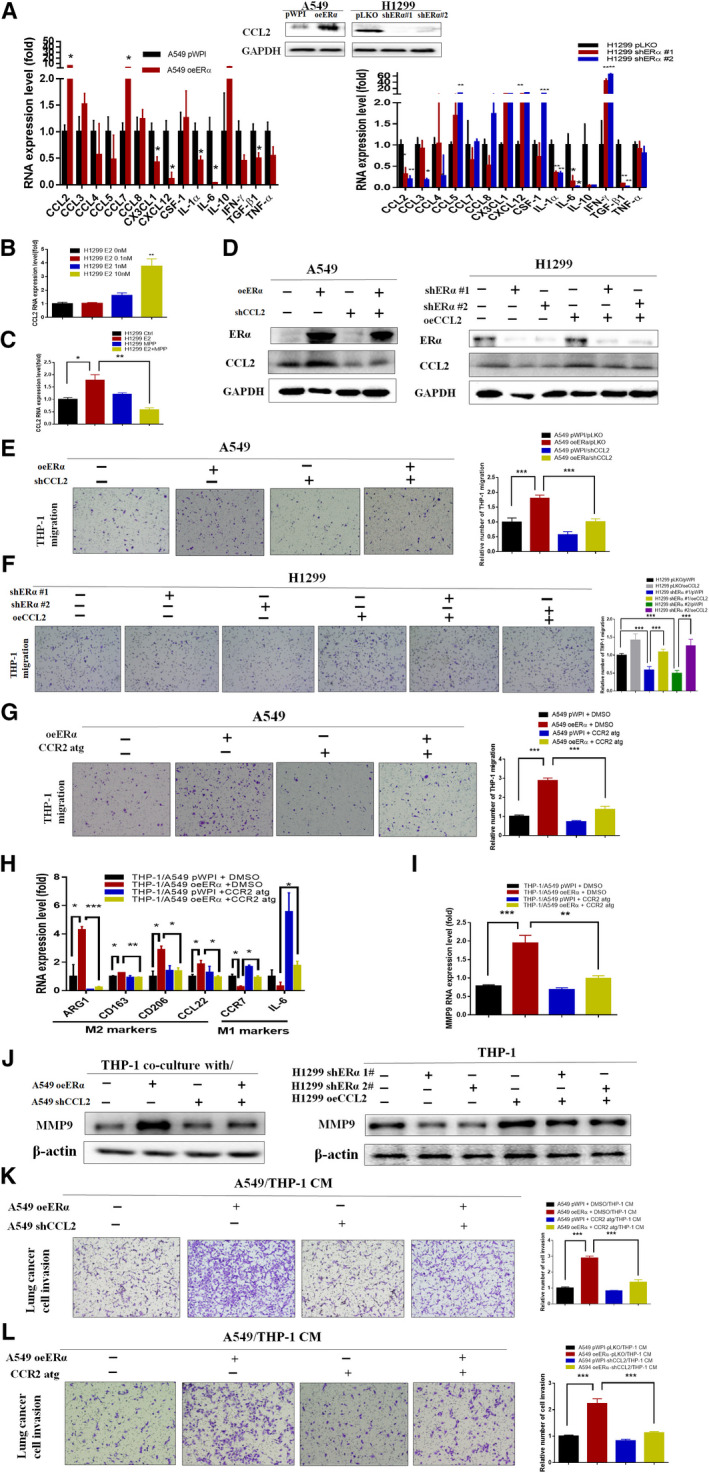
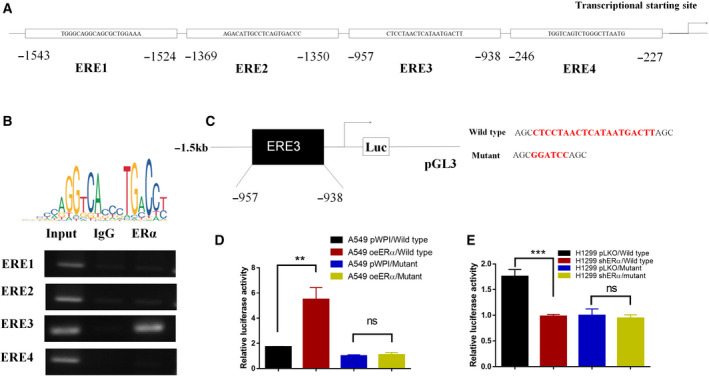
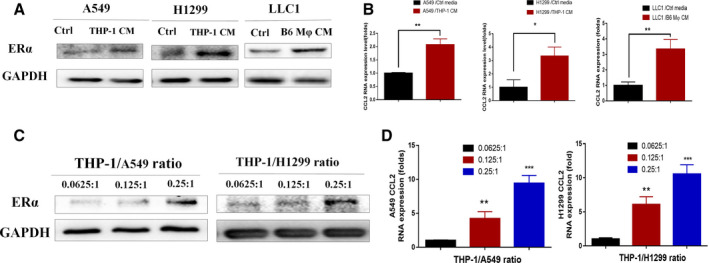
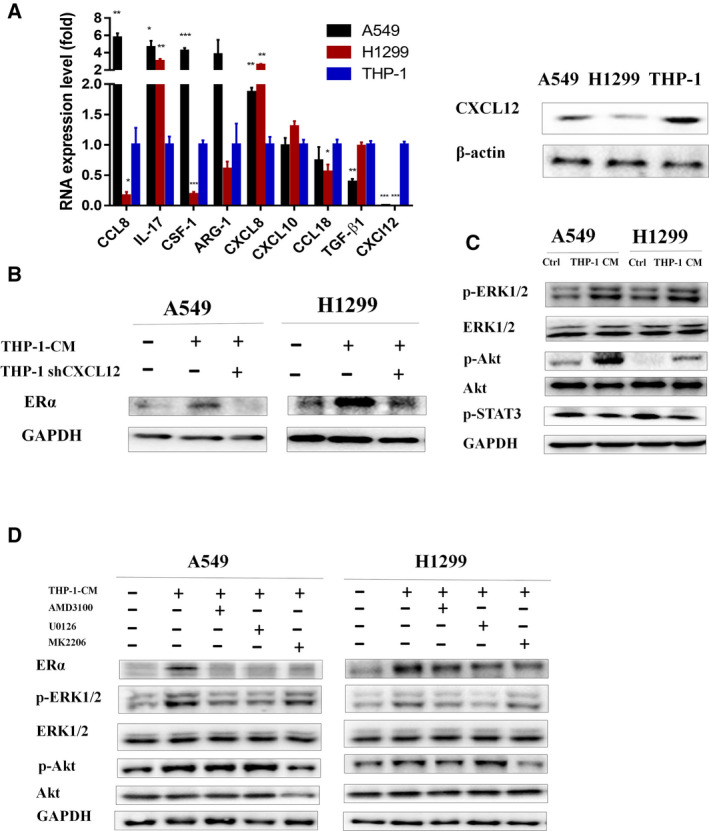
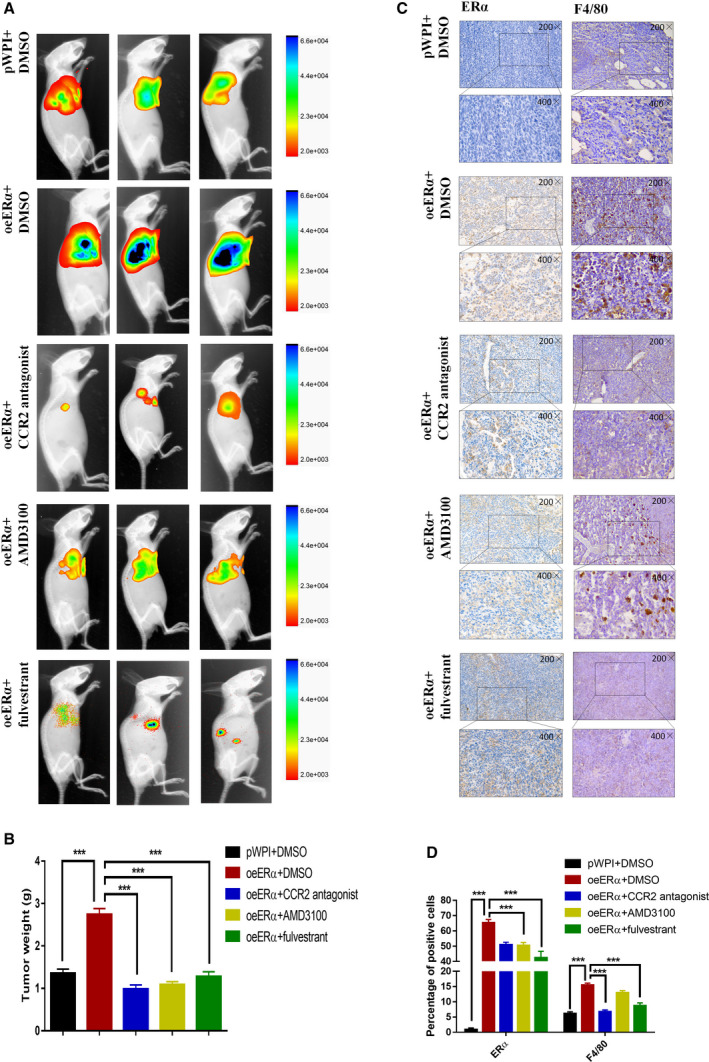
Data analysis of clinical samples suggests that higher estrogen receptor α (ERα) expression could be associated with worse overall survival in some patients with non-small-cell lung cancer (NSCLC). Immunofluorescence results further showed that higher ERα expression was linked to larger numbers of infiltrated macrophages in NSCLC tissues. However, the detailed mechanisms underlying this phenomenon remain unclear. Results from in vitro studies with multiple cell lines revealed that, in NSCLC cells, ERα can activate the CCL2/CCR2 axis to promote macrophage infiltration, M2 polarization, and MMP9 production, which can then increase NSCLC cell invasion. Mechanistic studies using chromatin immunoprecipitation and promoter luciferase assays demonstrated that ERα could bind to estrogen response elements (EREs) on the CCL2 promoter to increase CCL2 expression. Furthermore, ERα-increased macrophage infiltration can induce a positive feedback mechanism to increase lung cancer cell ERα expression via the up-regulation of the CXCL12/CXCR4 pathway. Targeting these newly identified pathways, NSCLC ERα-increased macrophage infiltration or the macrophage-to-NSCLC CXCL12/CXCR4/ERα signal, with anti-estrogens or CCR2/CXCR4 antagonists, may help in the development of new alternative therapies to better treat NSCLC.
临床样本数据分析表明,某些非小细胞肺癌(NSCLC)患者中,较高的雌激素受体α(ERα)表达可能与总体生存率降低相关。免疫荧光结果进一步表明,ERα表达较高与 NSCLC 组织中浸润的巨噬细胞数量较多有关。然而,这种现象背后的详细机制仍不清楚。多项细胞系的体外研究结果表明,在 NSCLC 细胞中,ERα 可以激活 CCL2/CCR2 轴,促进巨噬细胞浸润、M2 极化和 MMP9 产生,从而增加 NSCLC 细胞的侵袭性。使用染色质免疫沉淀和启动子荧光素酶测定的机制研究表明,ERα 可以结合 CCL2 启动子上的雌激素反应元件(EREs)来增加 CCL2 的表达。此外,ERα 增加的巨噬细胞浸润可以通过上调 CXCL12/CXCR4 通路来诱导正反馈机制,从而增加肺癌细胞 ERα 的表达。通过使用抗雌激素或 CCR2/CXCR4 拮抗剂靶向这些新鉴定的通路,抑制 NSCLC 中 ERα 增加的巨噬细胞浸润或巨噬细胞到 NSCLC 的 CXCL12/CXCR4/ERα 信号,可能有助于开发新的替代疗法,以更好地治疗 NSCLC。