Cordeliers Research Center, Sorbonne University, Paris Dauphine University 05, INSERM, CNRS, F-75006, Paris, France; Saint-Antoine Research Center, Sorbonne University, INSERM, F-75012, Paris, France.
Cordeliers Research Center, Sorbonne University, Paris Dauphine University 05, INSERM, CNRS, F-75006, Paris, France.
Mol Metab. 2020 Sep;39:101007. doi: 10.1016/j.molmet.2020.101007. Epub 2020 Apr 28.
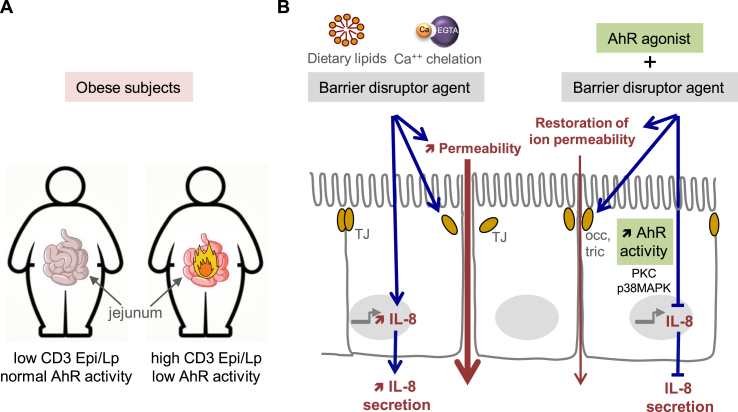
Obesity is characterized by systemic and low-grade tissue inflammation. In the intestine, alteration of the intestinal barrier and accumulation of inflammatory cells in the epithelium are important contributors of gut inflammation. Recent studies demonstrated the role of the aryl hydrocarbon receptor (AhR) in the maintenance of immune cells at mucosal barrier sites. A wide range of ligands of external and local origin can activate this receptor. We studied the causal relationship between AhR activation and gut inflammation in obesity.
Jejunum samples from subjects with normal weight and severe obesity were phenotyped according to T lymphocyte infiltration in the epithelium from lamina propria and assayed for the mRNA level of AhR target genes. The effect of an AhR agonist was studied in mice and Caco-2/TC7 cells. AhR target gene expression, permeability to small molecules and ions, and location of cell-cell junction proteins were recorded under conditions of altered intestinal permeability.
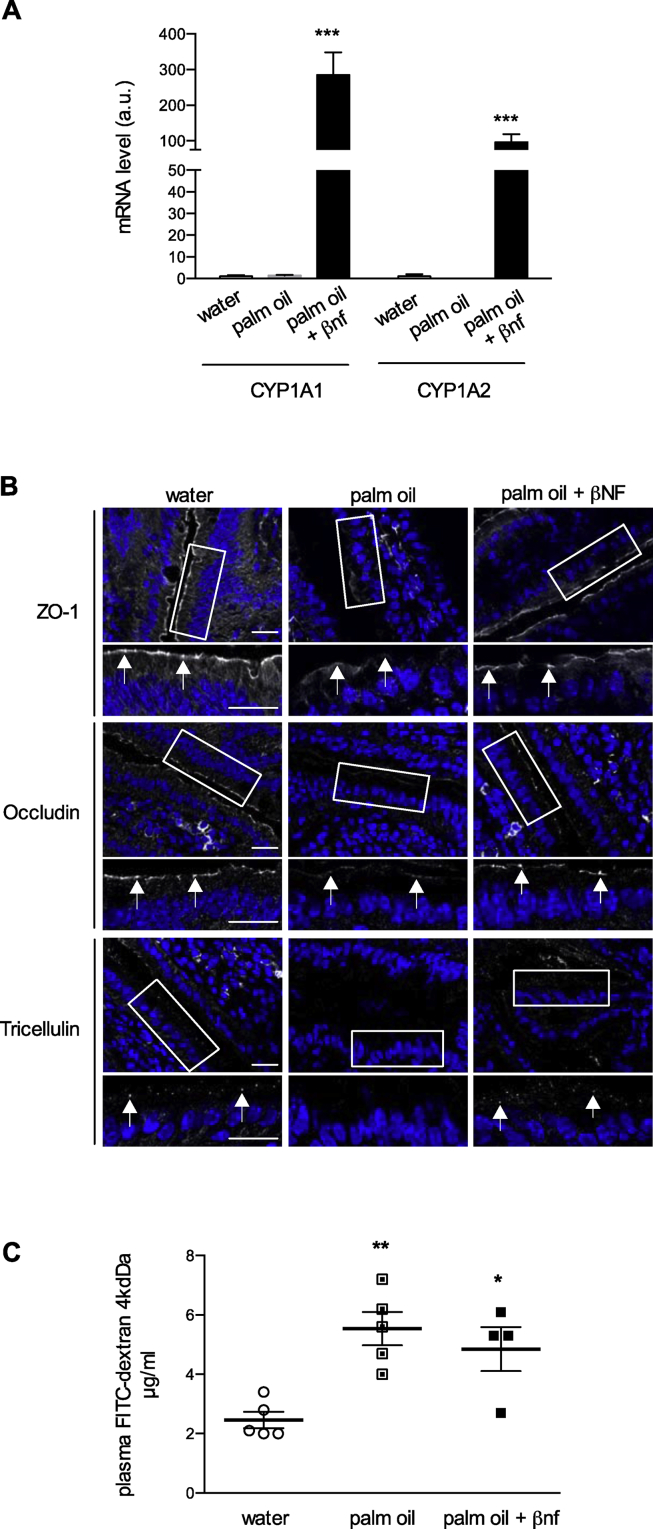
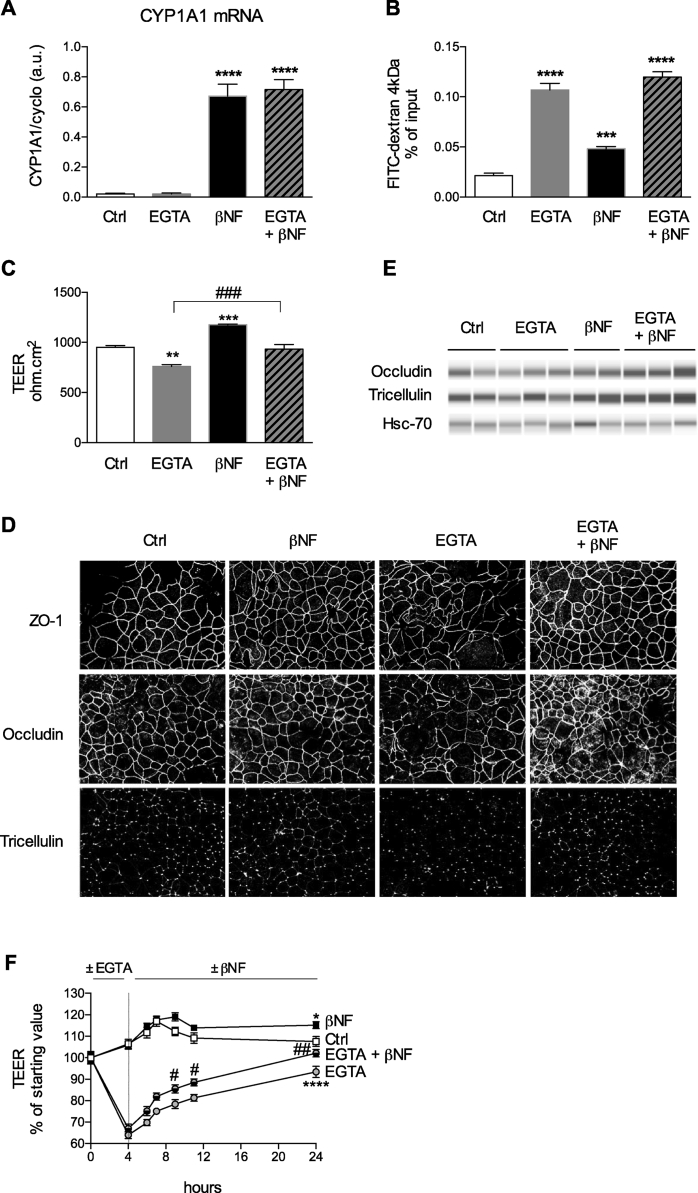
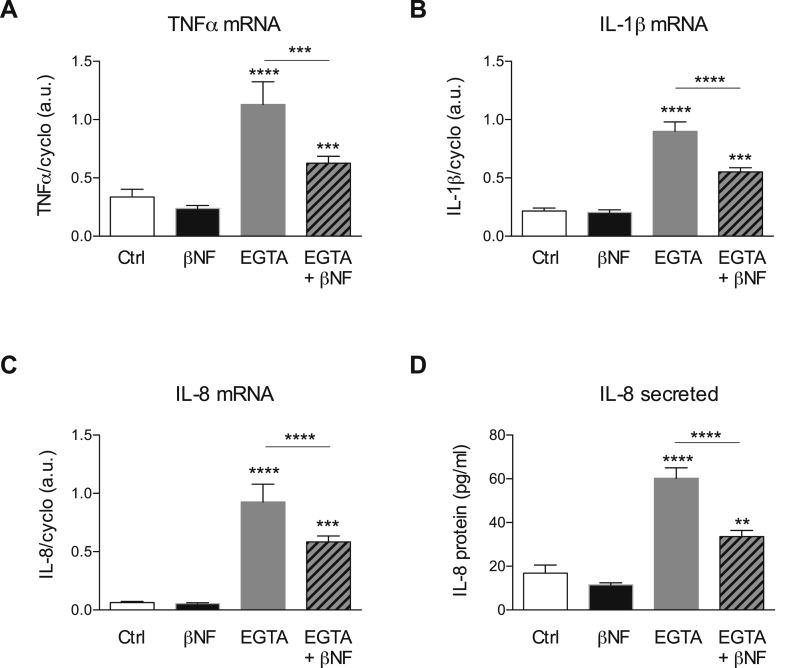
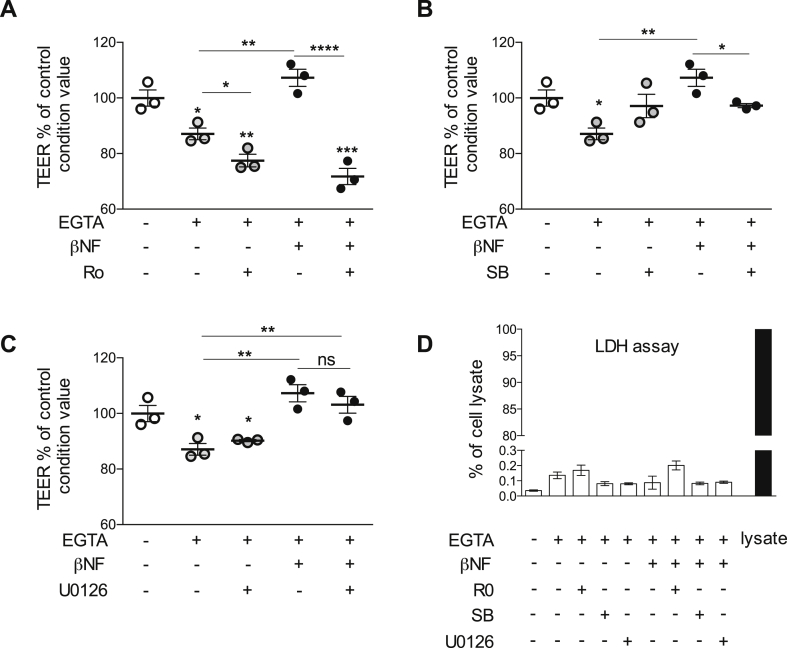
We showed that a low AhR tone correlated with a high inflammatory score in the intestinal epithelium in severe human obesity. Moreover, AhR activation protected junctional complexes in the intestinal epithelium in mice challenged by an oral lipid load. AhR ligands prevented chemically induced damage to barrier integrity and cytokine expression in Caco-2/TC7 cells. The PKC and p38MAPK signaling pathways were involved in this AhR action.
The results of these series of human, mouse, and cell culture experiments demonstrate the protective effect of AhR activation in the intestine targeting particularly tight junctions and cytokine expression. We propose that AhR constitutes a valuable target to protect intestinal functions in metabolic diseases, which can be achieved in the future via food or drug ligands.
肥胖的特征是全身性和低水平的组织炎症。在肠道中,肠屏障的改变和上皮中炎症细胞的积累是肠道炎症的重要贡献因素。最近的研究表明,芳香烃受体(AhR)在维持粘膜屏障部位的免疫细胞中起作用。大量的外部和局部来源的配体可以激活这个受体。我们研究了 AhR 激活与肥胖相关的肠道炎症之间的因果关系。
根据固有层上皮中 T 淋巴细胞浸润,对正常体重和严重肥胖受试者的空肠样本进行表型分析,并检测 AhR 靶基因的 mRNA 水平。在改变肠道通透性的条件下,研究 AhR 激动剂对小鼠和 Caco-2/TC7 细胞的影响。记录 AhR 靶基因表达、小分子和离子通透性以及细胞-细胞连接蛋白的位置。
我们表明,在严重人类肥胖的肠道上皮中,AhR 低表达与高炎症评分相关。此外,AhR 激活可保护小鼠在口服脂质负荷下肠道上皮的连接复合体。AhR 配体可防止化学诱导的屏障完整性损伤和 Caco-2/TC7 细胞中细胞因子的表达。PKC 和 p38MAPK 信号通路参与了这种 AhR 作用。
这些人体、小鼠和细胞培养实验的结果证明了 AhR 激活在肠道中的保护作用,特别是针对紧密连接和细胞因子表达。我们提出,AhR 是保护代谢性疾病中肠道功能的一个有价值的靶点,可以通过食物或药物配体在未来实现。