Manipal College of Dental Sciences, Manipal Academy of Higher Education, Mangalore, India.
Department of Oral Pathology and Microbiology, Manipal College of Dental Sciences, Manipal Academy of Higher Education, Mangalore, India.
J Med Syst. 2020 May 2;44(6):109. doi: 10.1007/s10916-020-01567-w.
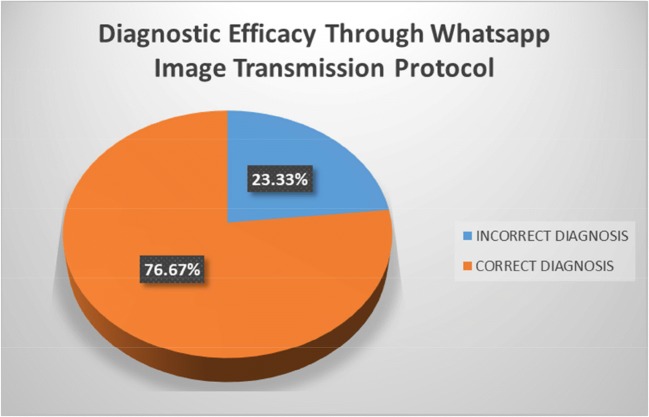
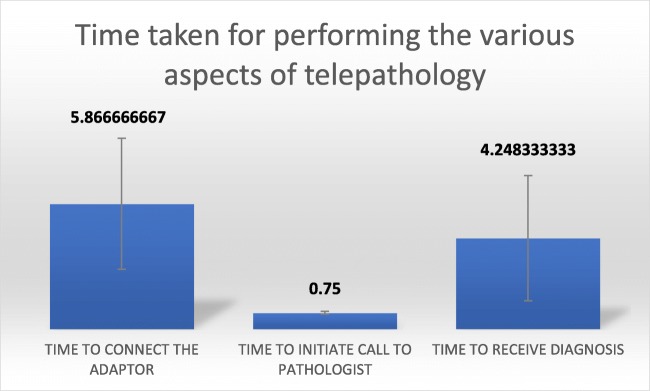
Telepathology is in its nascent stages in India. Video calling applications in mobile phones can be efficiently used to transmit static and live field microscopic images hastening low cost telepathology. To evaluate the efficiency of WhatsApp® Video Calling for dynamic microscopy in distant diagnosis. Thirty haematoxylin and eosin stained slides of common pathologies were retrieved from the archives of Department of Oral Pathology and Microbiology, coded with relevant history and given to three untrained investigators. The investigators then connected a mobile phone with VOIP facility to a microscope using a custom adaptor. Dynamic fields were transferred to three independent pathologists via WhatsApp® video call. The pathologists attempted to diagnose the lesion based on the live field video over their display screen (phone). Audio quality was found to be better than that of video. In 70% of the cases, pathologists could render a diagnosis (13% gave a confirmed diagnosis, 57.7% gave a probable diagnosis). The average time taken for connecting the adaptor, connecting the call to the pathologist and then receiving the diagnosis was 9:30 min. In addition, proper history taking and staining of the tissue slides were critical to arrive at the diagnosis. WhatsApp® free VOIP facility helped untrained investigators to send the live-field pathologic fields to a specialist rendering histopathological diagnosis. The factors affecting the diagnosis included network stability, clarity of images transmitted, staining quality and contrast of nuclear details of the stain. The history, clinico-pathologic correlation, transmission of static images, training of the person transmitting the images plays a vital role in rendering accurate diagnosis. Telepathology over WhatsApp® video calling could be used as an efficient screening tool to identify suspicious lesions and follow-up critical cases.
远程病理学在印度尚处于起步阶段。移动电话中的视频通话应用程序可有效地用于传输静态和实时现场显微镜图像,从而加快低成本远程病理学的发展。评估 WhatsApp®视频通话在远程诊断中用于动态显微镜的效率。从口腔病理学和微生物学系的档案中检索了 30 张常见病理的苏木精和伊红染色载玻片,用相关病史对其进行编码,并分发给 3 名未经训练的调查员。然后,调查员使用定制适配器将具有 VOIP 功能的手机与显微镜连接起来。通过 WhatsApp®视频通话将动态字段传输给 3 位独立的病理学家。病理学家试图根据实时现场视频在其显示屏(手机)上诊断病变。音频质量比视频质量好。在 70%的病例中,病理学家可以做出诊断(13%给出了确诊诊断,57.7%给出了可能的诊断)。连接适配器,将电话连接到病理学家然后接收诊断的平均时间为 9:30 分钟。此外,适当的病史记录和组织切片染色对于做出诊断至关重要。WhatsApp®免费的 VOIP 功能可帮助未经培训的调查员将实时病理领域发送给专家,以进行组织病理学诊断。影响诊断的因素包括网络稳定性,传输图像的清晰度,染色质量和核染色细节的对比度。病史,临床病理相关性,静态图像的传输,图像传输人员的培训在做出准确诊断方面起着至关重要的作用。通过 WhatsApp®视频通话进行远程病理学检查可以用作有效的筛查工具,以识别可疑病变并对关键病例进行随访。