Liu Xia, Zhou Yayun, Peng Jiamin, Xie Bei, Shou Qiyang, Wang Jianchao
The Second Clinical Medical College, Zhejiang Chinese Medical University, Hangzhou, China.
Department of Clinical Laboratory, Tongde Hospital of Zhejiang Province, Hangzhou, China.
Front Pharmacol. 2020 Apr 17;11:495. doi: 10.3389/fphar.2020.00495. eCollection 2020.
Pancreatic cancer is one of the most aggressive malignancies. Bufalin, a traditional Chinese medicine, has been used to treat pancreatic cancer as an antitumor agent although the mechanism by which it exerts its effects is still unclear. c-Myc has been found to be overexpressed in more than half of human cancers including pancreatic cancer. However, the role of c-Myc in pancreatic cancer cells and its influence in bufalin-treated pancreatic cancer are yet to be clarified. The present study aimed to investigate the role of c-Myc in the antitumor activity of bufalin in pancreatic cancer.
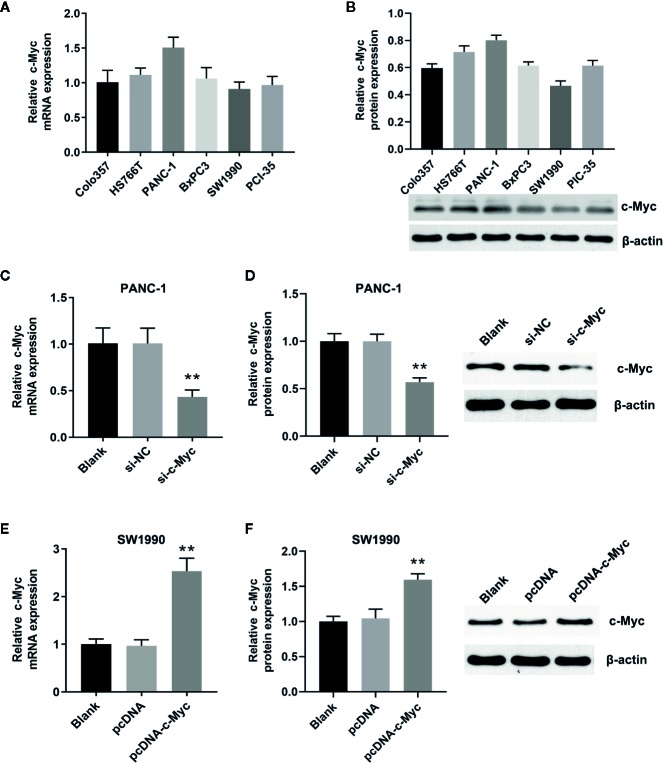
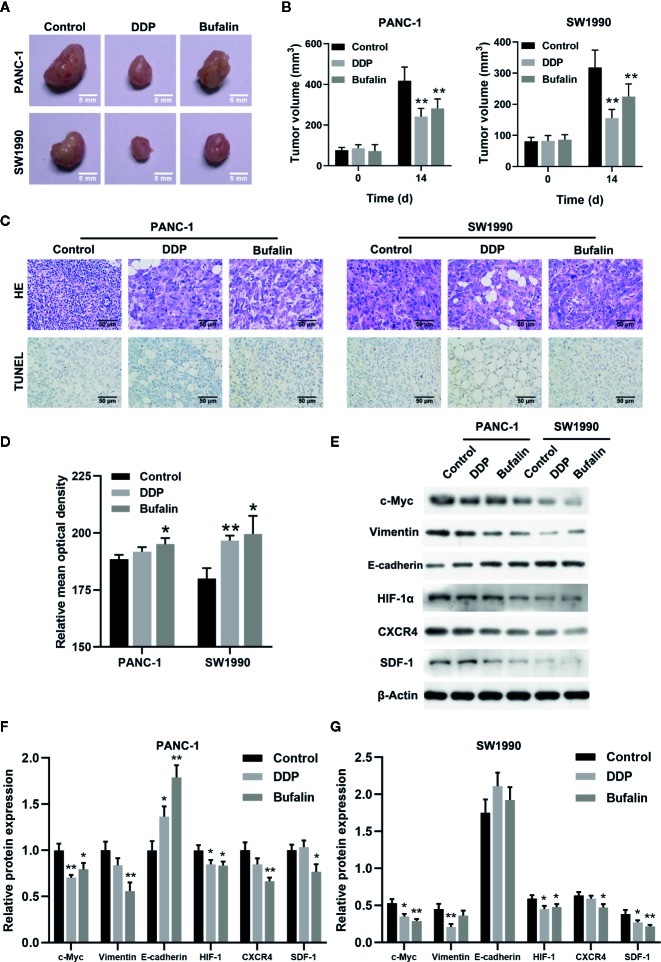
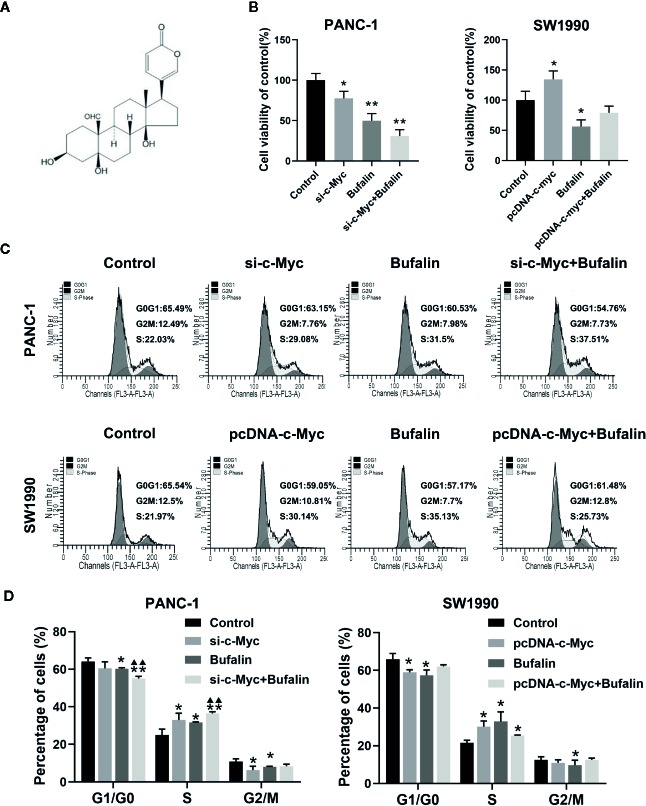
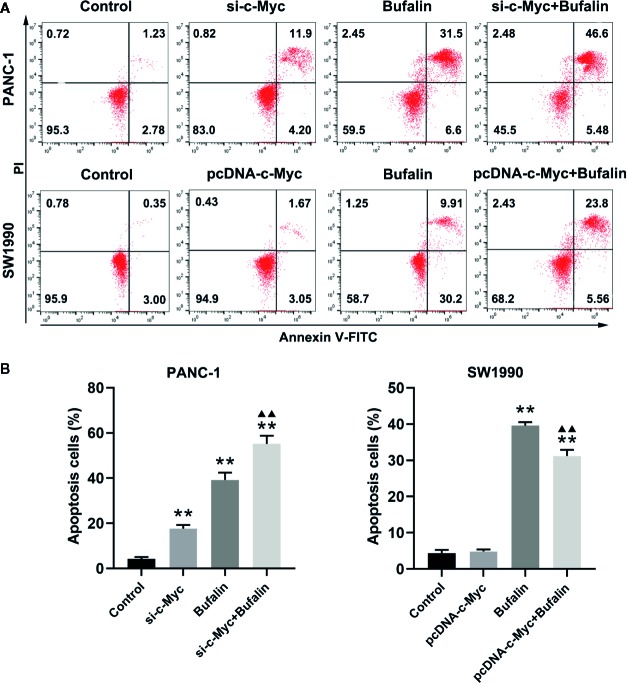
c-Myc siRNA and overexpression plasmid were transfected into pancreatic cancer cells to construct the cell models. c-Myc expression was detected quantitative real-time polymerase chain reaction and western blot. The effect of c-Myc on bufalin-induced inhibition of cell proliferation was detected CCK-8 assay. Cell apoptosis and the cell cycle were analyzed flow cytometry. Cell invasion and migration was detected Transwell and wound healing assays, respectively. In addition, the effect of bufalin on the suppression of tumor growth was studied in nude mice model subcutaneously injected with PANC-1 and SW1990 cells. Hematoxylin-eosin and terminal deoxynucleotidyl transferase dUTP nick-end labeling assay were used to evaluate pathological changes . The expression of HIF-1α/SDF-1/CXCR4 were detected western blot.
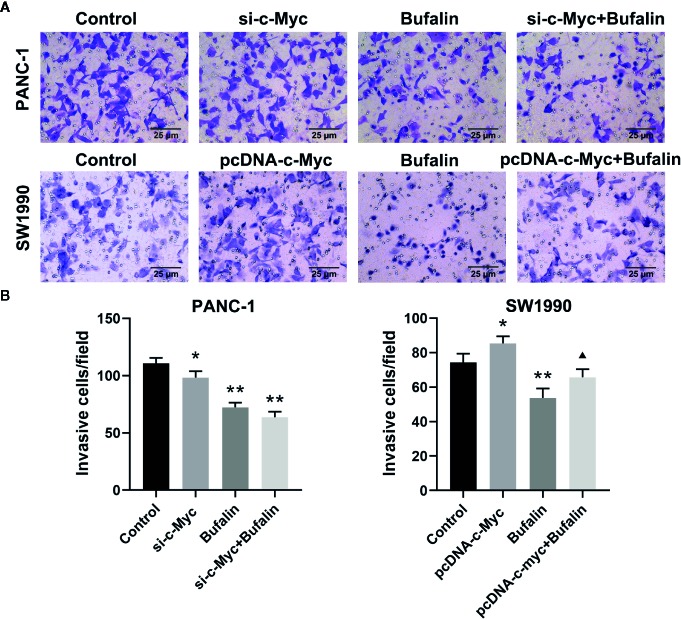
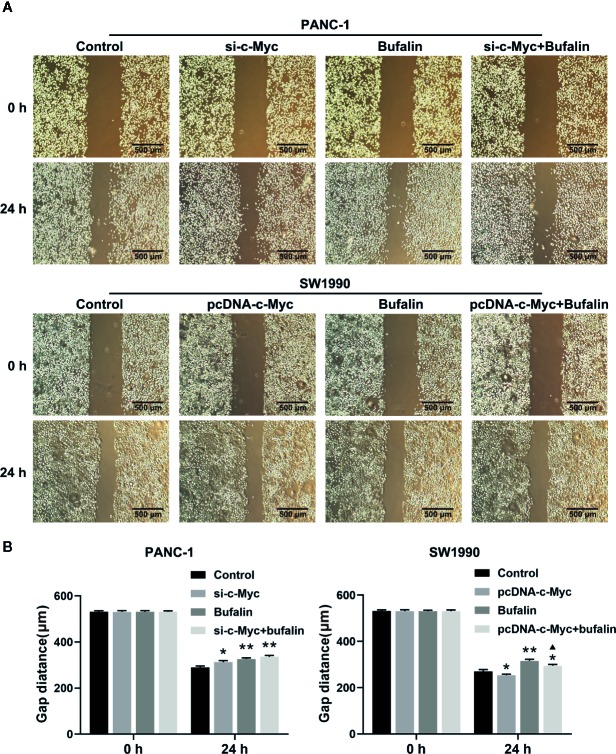
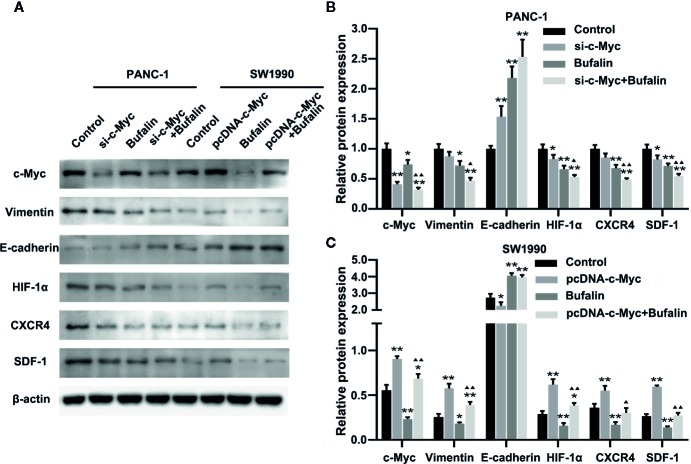
CCK-8 assay showed that bufalin could inhibit the proliferation of pancreatic cancer cell, and c-Myc downregulation enhanced this effect. Similarly, c-Myc downregulation enhanced the effect of bufalin on cell cycle arrest, apoptosis, and the invasion and migration of pancreatic cancer cell . Further mechanism assay showed that c-Myc enhances the effect by regulating the HIF-1α/SDF-1/CXCR4 signaling pathway. The studies verified the results that c-Myc enhances the effect of bufalin through regulation of the HIF-1α/SDF-1/CXCR4 pathway.
Downregulation of c-Myc enhanced the antitumor activity of bufalin in pancreatic cancer cells by suppressing the HIF-1α/SDF-1/CXCR4 pathway. These findings indicate that c-Myc inhibitors could enhance the clinical therapeutic effect of bufalin and may expand the clinical application of bufalin accordingly.
胰腺癌是侵袭性最强的恶性肿瘤之一。蟾毒灵作为一种中药,已被用作治疗胰腺癌的抗肿瘤药物,但其作用机制仍不清楚。已发现c-Myc在包括胰腺癌在内的一半以上人类癌症中过度表达。然而,c-Myc在胰腺癌细胞中的作用及其在蟾毒灵治疗胰腺癌中的影响尚待阐明。本研究旨在探讨c-Myc在蟾毒灵对胰腺癌的抗肿瘤活性中的作用。
将c-Myc siRNA和过表达质粒转染到胰腺癌细胞中构建细胞模型。通过定量实时聚合酶链反应和蛋白质免疫印迹法检测c-Myc的表达。采用CCK-8法检测c-Myc对蟾毒灵诱导的细胞增殖抑制作用的影响。通过流式细胞术分析细胞凋亡和细胞周期。分别采用Transwell法和伤口愈合试验检测细胞侵袭和迁移能力。此外,在皮下注射PANC-1和SW1990细胞的裸鼠模型中研究蟾毒灵对肿瘤生长抑制的作用。采用苏木精-伊红染色和末端脱氧核苷酸转移酶dUTP缺口末端标记法评估病理变化。通过蛋白质免疫印迹法检测HIF-1α/SDF-1/CXCR4的表达。
CCK-8法显示,蟾毒灵可抑制胰腺癌细胞的增殖,下调c-Myc可增强此作用。同样,下调c-Myc可增强蟾毒灵对胰腺癌细胞周期阻滞、凋亡以及侵袭和迁移的作用。进一步的机制研究表明,c-Myc通过调节HIF-1α/SDF-1/CXCR4信号通路增强其作用。体内研究验证了c-Myc通过调节HIF-1α/SDF-1/CXCR4途径增强蟾毒灵作用的结果。
下调c-Myc通过抑制HIF-1α/SDF-1/CXCR4途径增强了蟾毒灵对胰腺癌细胞的抗肿瘤活性。这些发现表明,c-Myc抑制剂可增强蟾毒灵的临床治疗效果,并可能相应扩大蟾毒灵的临床应用。