Bartel Marta, Markowska Katarzyna, Strawski Marcin, Wolska Krystyna, Mazur Maciej
University of Warsaw, Department of Chemistry, Pasteura 1, 02-093 Warsaw, Poland.
University of Warsaw, Department of Biology, Miecznikowa 1, 02-093 Warsaw, Poland.
Beilstein J Nanotechnol. 2020 Apr 14;11:620-630. doi: 10.3762/bjnano.11.49. eCollection 2020.
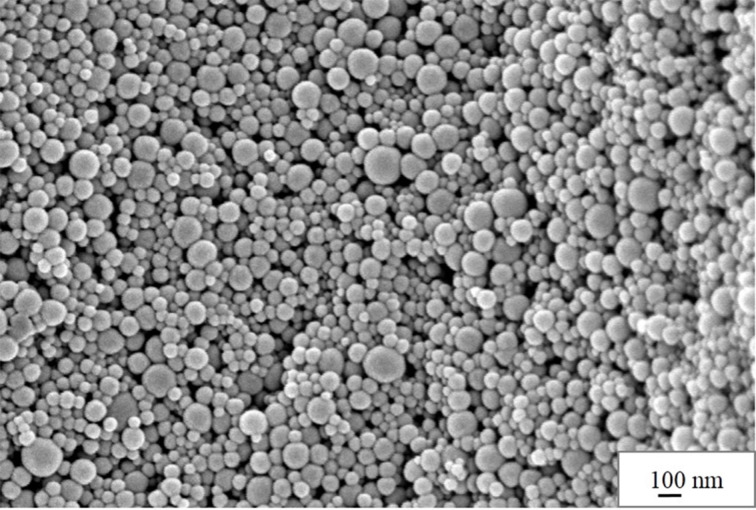
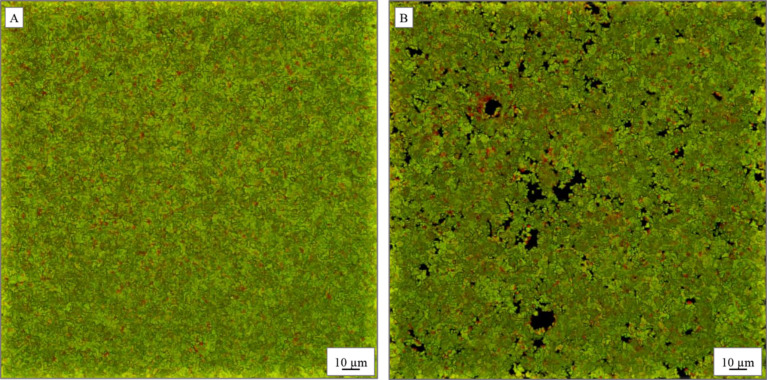
We report on the synthesis of composite nanobeads with antibacterial properties. The particles consist of polystyrene cores that are surrounded by sulfonic gel shells with embedded silver nanoparticles. The nanocomposite beads are prepared by sulfonation of polystyrene particles followed by accumulation of silver ions in the shell layer and subsequent reduction with sodium borohydride. The resulting material has been characterized by electron microscopy, vibrational and X-ray photoelectron spectroscopy and several other experimental techniques. It was shown that sodium borohydride reduces silver ions embedded in the gel layer producing silver nanoparticles but also transforms a fraction of sulfonic groups in the polymer to moieties with sulfur in a lower oxidation state, likely thiols. It is hypothesized that the generated thiol groups are anchoring the nanoparticles in the gel shell of the nanobeads stabilizing the whole structure. The silver-decorated nanobeads appear to be a promising material with considerable antimicrobial activity and were tested against and . The determined minimum inhibitory (MIC) and minimum biofilm inhibitory (MBIC) concentrations are comparable to those of non-incorporated silver nanoparticles.
我们报道了具有抗菌性能的复合纳米珠的合成。这些颗粒由聚苯乙烯核组成,其周围是嵌入了银纳米颗粒的磺酸凝胶壳。通过对聚苯乙烯颗粒进行磺化,随后使银离子在壳层中积累,并用硼氢化钠进行还原,制备出纳米复合珠。所得材料已通过电子显微镜、振动和X射线光电子能谱以及其他几种实验技术进行了表征。结果表明,硼氢化钠还原嵌入凝胶层中的银离子生成银纳米颗粒,但同时也将聚合物中的一部分磺酸基团转化为氧化态较低的含硫部分,可能是硫醇。据推测,生成的硫醇基团将纳米颗粒锚定在纳米珠的凝胶壳中,从而稳定整个结构。银修饰的纳米珠似乎是一种具有相当抗菌活性的有前途的材料,并针对……进行了测试。所确定的最低抑菌(MIC)浓度和最低生物膜抑制(MBIC)浓度与未掺入的银纳米颗粒相当。